
Attractions along the Kilembe trail of the Rwenzori Mountains
Frequently Asked Questions about the Rwenzori Central Circuit Trail
August 17, 2026Attractions along the Kilembe trail of the Rwenzori Mountains
Attractions along the Kilembe trail of the Rwenzori Mountains
Attractions along the Kilembe trail of the Rwenzori Mountains make this southern route one of the most rewarding mountain adventures in Uganda. The trail climbs through the beautiful Nyamwamba Valley, passing rushing waterfalls, thick forests, giant heathers, alpine valleys, unusual plants, high passes and views of the snow-covered peaks of the Rwenzori. Rather than offering one attraction, the route presents a changing collection of landscapes as altitude increases.
The Kilembe Trail is especially attractive because its vegetation changes clearly from one zone to another. A trek can begin in a warm, green forest and end in a cold world of giant lobelias, rocky ridges and glaciers. The route also gives travelers opportunities to see mountain birds and wildlife while enjoying some of the most dramatic scenery in the Rwenzori Mountains.
For nature lovers, photographers, birdwatchers and hikers, the journey is about much more than reaching Margherita Peak. The waterfalls, valleys, forests, plants, birds, lakes and viewpoints each add a different experience. The mountain seems to reveal a new attraction after every climb.
The Nyamwamba Valley and the Southern Gateway
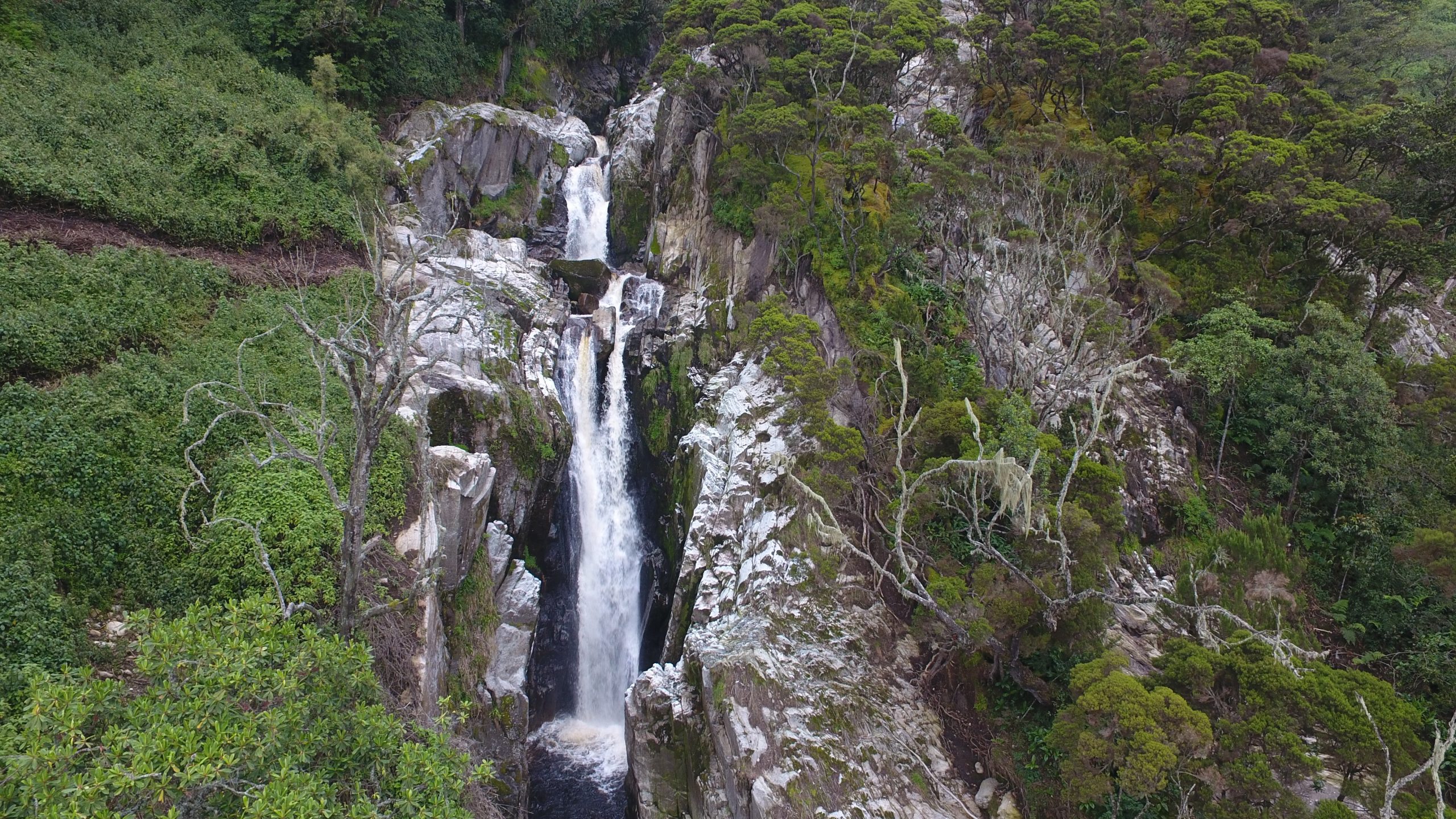
The Nyamwamba Valley is one of the defining landscapes of the southern approach to the Rwenzori. The trail follows this beautiful mountain environment as it rises from the lower slopes toward the high country. Green hills, streams, thick vegetation and steep valley walls create an impressive beginning to the trek.
Water is one of the strongest features of this section. Rainfall on the Rwenzori feeds numerous streams that rush down the slopes, creating waterfalls and pools along the route. The sound of flowing water often accompanies hikers as they climb higher.
The valley is also important because it introduces trekkers to the scale of the mountain. Looking back from higher sections, the lower valleys gradually spread out below, while the surrounding ridges become more dramatic.
Wildlife can also make the early part of the journey exciting. Forest birds move through the canopy, while monkeys and other small animals may appear along quieter sections of the trail. Sightings are never guaranteed, but a patient trekker can find plenty to observe.
Another attraction is the changing weather. Mist can settle over the valley, sunlight can break through the forest and clouds can move quickly across the ridges. These changes give the same landscape a different appearance throughout the day.
For travelers who want to understand the Rwenzori before entering its high-altitude world, the Nyamwamba Valley provides a beautiful introduction.
Waterfalls of the Kilembe Trail
Waterfalls are among the most memorable natural attractions on the southern route. The steep slopes and heavy rainfall create a network of streams that tumble through rocks, forests and narrow valleys. Each waterfall has its own setting, making the journey feel like a series of discoveries.
Kamalha Falls is an impressive example. Rushing water moves through a rocky landscape covered with moss and thick mountain vegetation. The green surroundings make the waterfall particularly attractive for photography, especially when mist hangs around the rocks.
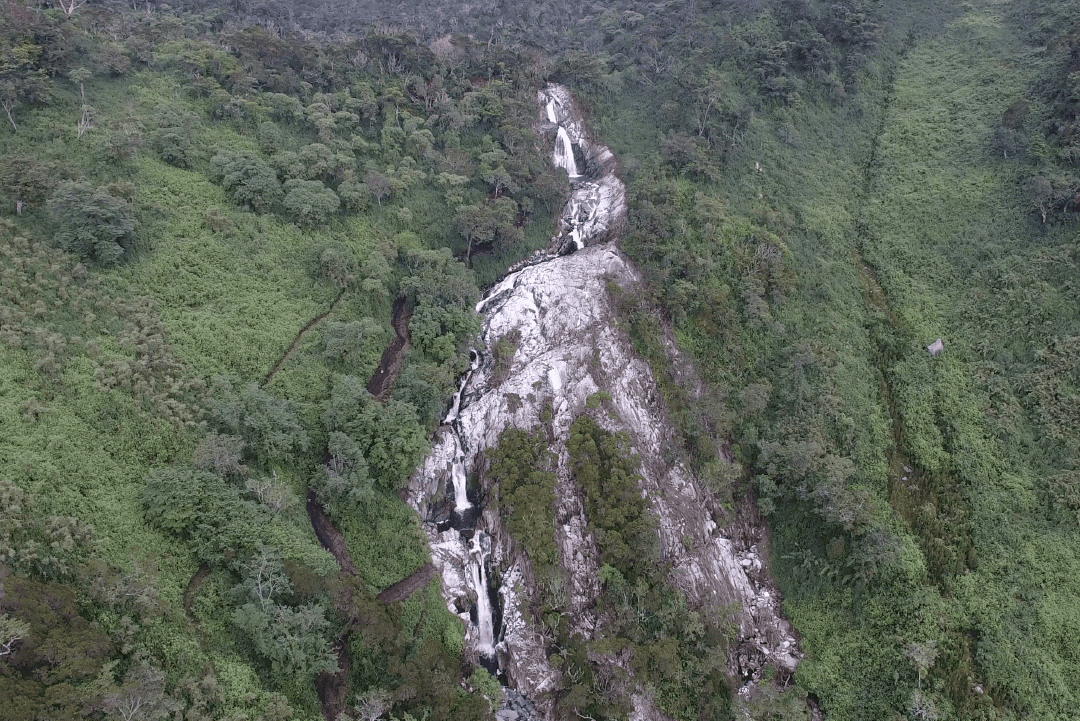
The Nyamwamba Falls and Plozza Falls add more drama to the route. Their stronger drops show the power of the river system as water moves from the high mountain toward the lower valleys. During wetter periods, the sound of rushing water can become a major part of the trekking experience.
Other beautiful cascades include Cathy’s Falls and Engwe Falls, which are tucked into steep, vegetation-covered sections of the valley. Ferns, mosses and wet rocks create a cool and almost untouched atmosphere around these areas.
These waterfalls are not simply places to stop for photographs. They help explain the Rwenzori ecosystem. Snow, ice, rain and mountain streams all contribute to the water systems that eventually reach the valleys below.
For hikers, the waterfalls also provide natural resting points. After a demanding climb, sitting beside cold mountain water and listening to the rushing river can be one of the quiet highlights of the day.
Tropical Forest, Bamboo and the First Vegetation Changes
One of the greatest attractions of the Kilembe route is the way vegetation changes with altitude. The lower section begins in a lush tropical forest filled with tall trees, ferns, mosses and climbing plants. The forest is cool, green and often misty.
As the trail rises, the bamboo zone becomes more noticeable. Tall bamboo creates narrow corridors along the trail, and the thick vegetation can make the surroundings feel hidden from the outside world. This section is also an interesting habitat for birds and forest animals.
Sine Camp lies within the lower mountain environment and is close to Enock’s Falls, which is located shortly before the camp. The combination of forest, flowing water and mountain vegetation makes this an attractive overnight area.
Above the bamboo, the landscape gradually changes again. The forest becomes more open, and giant heather begins to dominate. This clear sequence of rainforest, bamboo, heather and Afro-alpine vegetation is one of the special features of the route.
The vegetation is not only beautiful; it also tells the story of altitude. Plants that thrive in warm lower forests cannot survive in the cold upper mountain. Instead, each zone has its own plants adapted to the conditions.
A careful trekker can therefore treat the trail as a natural journey through several ecosystems, with every zone offering something different to see.
Giant Heather, Moss Forests and Kalalama Camp
The heather zone gives the Kilembe Trail a completely different appearance. Giant heather trees rise from the slopes, with thick moss and long lichen hanging from their branches. In misty weather, these trees can look almost ancient, creating a quiet and mysterious atmosphere.
Kalalama Camp, at about 3,147 metres, sits within this heather environment. From the camp, trekkers can enjoy views toward Kilembe and parts of the surrounding landscape, including the lower lakes and plains when the weather is clear.
The plants in this zone are also fascinating. Giant heathers stand beside smaller shrubs, mosses, grasses and flowering plants. The thick growth creates a soft green appearance across the mountain slopes.
One of the best experiences is walking through the forest when clouds are moving between the trees. The mist can reduce visibility for a few minutes before suddenly lifting and revealing a distant ridge.
This is also a good section for birdwatching. Small mountain birds can move quietly through the branches, so trekkers should listen as much as they look. A guide familiar with the area can make the experience more rewarding by identifying bird calls and pointing out hidden species.
The heather zone shows why the Rwenzori is often described as a mountain of unusual landscapes. It does not look like a typical African highland forest. Its moss-covered trees and changing light give it a character of its own.
Mutinda Camp and the Spectacular Lookout
Higher on the trail, the heather zone opens toward the moorland around Mutinda Camp. This is one of the most scenic areas of the southern route, with giant heathers, lobelias, streams and mountain ridges surrounding the trail.
Above the camp stands Mutinda Lookout, a popular viewpoint that offers wide views across the southern Rwenzori landscape. Clear mornings can reveal the valleys below, the Kasese area and distant mountain ridges. The viewpoint is also an excellent place to appreciate how much altitude has been gained since leaving the lower forest.
The lookout is attractive because the landscape changes dramatically around it. Instead of looking through dense trees, hikers stand in a more open environment where ridges and valleys can stretch into the distance.
Weather can make the experience even more exciting. Clouds may cover the landscape and then suddenly separate, revealing peaks for only a few minutes. This creates a sense of anticipation that is common on high mountain trails.
Streams flowing through the surrounding valleys add another layer of beauty. Their paths can be followed as they descend through the vegetation toward lower parts of the mountain.
For trekkers who enjoy photography, Mutinda Lookout is one of the places where a wide-angle view can capture the scale of the Rwenzori. It is also an excellent point for simply stopping, breathing and appreciating the landscape.
Giant Lobelias, Senecios and the Afro-Alpine Zone
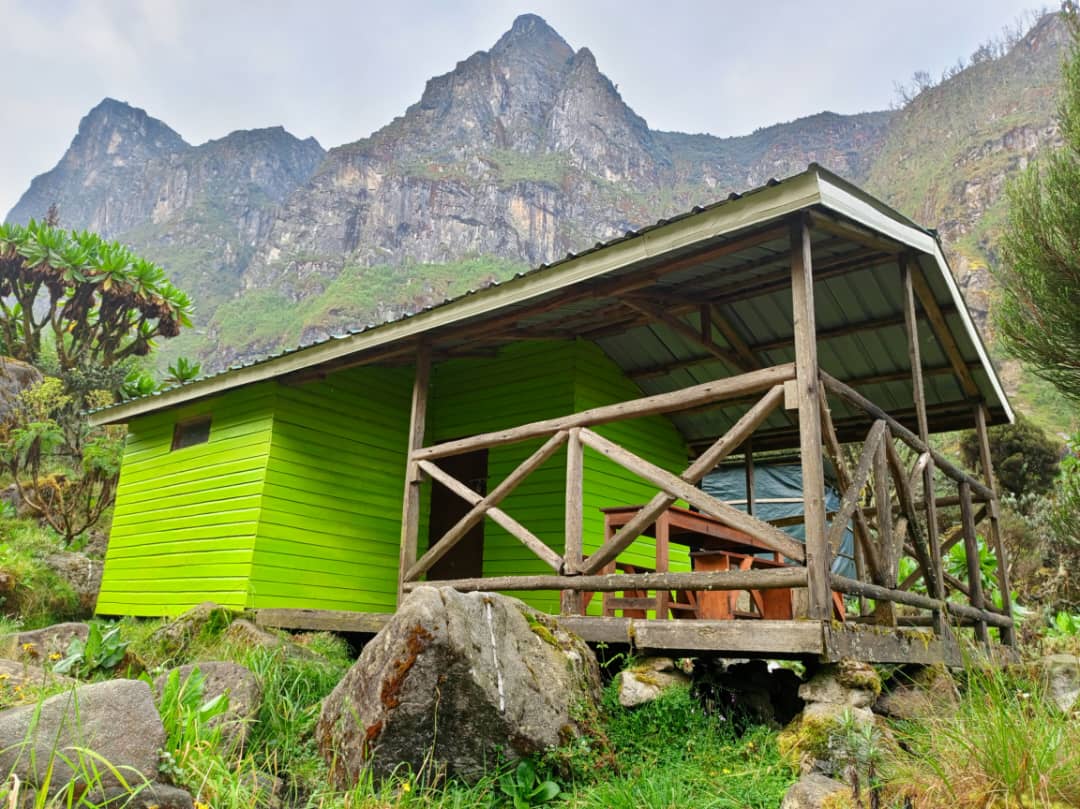
After Mutinda, the trail enters a more open and unusual world. The Afro-alpine zone is famous for giant lobelias, giant senecios, tussock grasses, everlasting flowers and wet moorland. The plants here look very different from those found in the forests below.
Giant lobelias are among the most striking plants on the mountain. Their tall forms rise above the surrounding vegetation and create dramatic silhouettes against the mist. Giant senecios add another unusual shape to the landscape, giving the high slopes a prehistoric appearance.
The route between Mutinda and Bugata includes wet and boggy sections, where tussock grasses and alpine plants grow across the valley floor. This landscape is part of what makes the Kilembe route distinctive.
At Bugata Camp, the altitude is around 4,100 metres, and the environment is firmly within the Afro-alpine zone. Views toward the Nyamugasani Valley, alpine lakes and surrounding peaks add to the attraction.
The plants have developed special ways of coping with cold nights, strong sunlight and changing weather. Their large size helps some species retain heat and moisture in an environment that can be surprisingly harsh.
Walking among these plants is one of the moments when trekkers truly feel that they have entered a high mountain environment. The forest is now far below, and the landscape becomes wider, colder and more dramatic.
Alpine Lakes, Nyamugasani Valley and Bamwanjara Pass
The upper sections of the route bring hikers closer to the alpine valleys and high mountain lakes. The Nyamugasani Valley is especially attractive, with its rugged surroundings, wet valleys and high-altitude water bodies. These landscapes reflect the powerful geological and glacial forces that have shaped the Rwenzori over thousands of years.
Lakes and tarns in the high country add beautiful points of contrast to the rocky slopes. On calm days, the water can reflect nearby ridges and clouds, creating photographs that look completely different from the forest scenes below.
The route also reaches Bamwanjara Pass, one of the major high points on the Kilembe Trail. The pass rises to roughly 4,400 metres and provides impressive views of the surrounding high peaks.
From this height, the landscape becomes much more open. The vegetation is shorter, the air is colder and rocky ridges dominate the horizon. When the clouds clear, snow and ice on the higher peaks can become visible.
This is also where the scale of the Rwenzori becomes especially powerful. The trekker can look across valleys that seem far below while standing among some of the highest landscapes in Uganda.
The combination of alpine lakes, open moorland, steep valleys and high passes makes this section one of the most scenic parts of the entire trek.
Birdwatching and Wildlife on the Mountain
The Kilembe Trail is not only a mountain route. It is also a rewarding destination for birdwatchers. The changing vegetation creates habitats for different species, from forest birds in the lower zones to high-altitude species around the moorland.
The Scarlet-tufted Sunbird is one of the birds worth watching for. Its strong association with high-altitude vegetation, especially giant lobelias, makes it particularly interesting for bird lovers exploring the upper mountain.
Another special species is the Rwenzori Batis, an Albertine Rift mountain bird found in montane forest and bamboo habitats. Its dark and white plumage and active behavior can make it an exciting find for patient birdwatchers.
The Regal Sunbird is another colorful species associated with the Albertine Rift montane forests. Males show brilliant green, red and yellow coloring, making a close sighting particularly memorable.
Other birds that may attract attention include the White-crested Turaco, Ross’s Turaco and Mountain Oriole. The turacos are especially exciting because flashes of bright color can appear suddenly as birds move between trees.
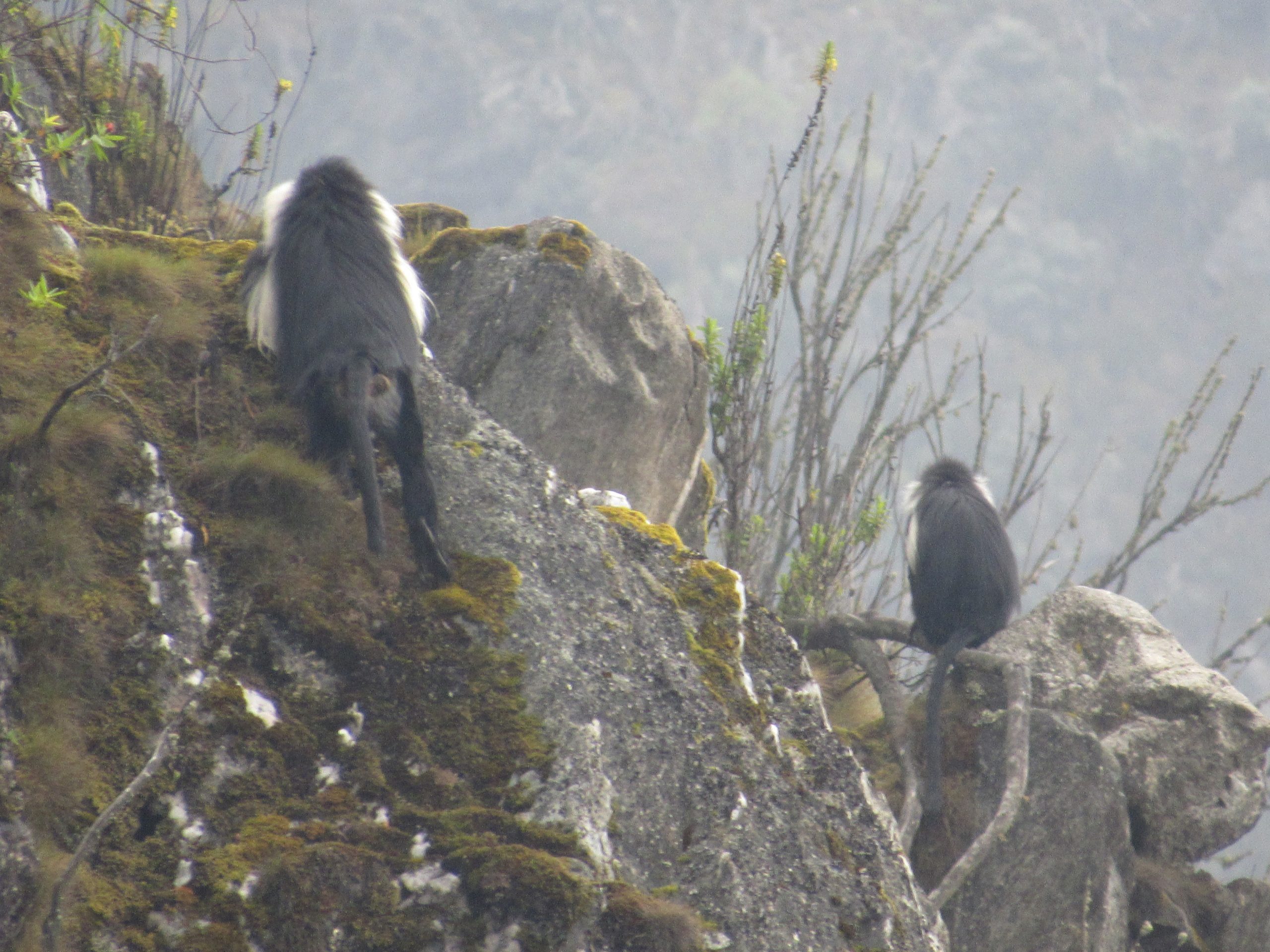
Wildlife adds further interest. Monkeys may be seen in the forest, while duikers and other mountain animals can sometimes move through the vegetation. Wildlife sightings are unpredictable, so the best approach is to walk quietly and let the guide know when you want to focus on nature.
From High Ridges to the Snow-Capped Peaks
As the trail approaches the highest sections, the landscape becomes increasingly rocky. Vegetation becomes smaller and more scattered, while bare rock, cliffs and high ridges become the dominant features.
Views toward Mount Baker and Mount Stanley add a powerful sense of scale. These peaks form part of the central Rwenzori massif and are among the major objectives connected with longer mountain circuits. The Kilembe route can therefore serve as a gateway to a much wider high-altitude adventure.
The glacier and snow environment near the highest sections provides one of the greatest contrasts on the journey. A trekker who began among tropical trees can eventually find ice and snow on an equatorial African mountain.
This final environment is demanding. Cold temperatures, steep terrain, altitude and rapidly changing weather require careful preparation. Proper equipment and experienced mountain guides are essential for anyone continuing toward the highest peaks.
The beauty here is raw rather than gentle. There are fewer trees, fewer flowers and less shelter, but the enormous rock walls and distant snowfields create a landscape that feels almost unreal.
For many trekkers, this is the point where the entire journey comes together. The waterfalls, forests, bamboo, heather, lobelias, valleys and passes have gradually led to the high mountain world.
Why the Kilembe Route Is a Complete Mountain Experience
The greatest attraction of the southern Kilembe route is its variety. Within one trek, travelers can experience tropical rainforest, bamboo forest, giant heather woodland, Afro-alpine moorland, high valleys, alpine lakes, rocky passes and glacial landscapes.
Each vegetation zone brings a new character. The lower forest is rich and green, the bamboo zone feels enclosed and mysterious, the heather forests look ancient, and the upper moorland is filled with giant plants that seem perfectly suited to another world.
Waterfalls such as Kamalha, Nyamwamba, Plozza, Cathy’s and Engwe add movement and sound to the journey. Mutinda Lookout and Bamwanjara Pass provide dramatic viewpoints, while the high valleys and lakes create peaceful places among the rugged terrain.
Birdwatchers have another reason to take the route slowly. Species such as the Scarlet-tufted Sunbird, Rwenzori Batis, Regal Sunbird and mountain turacos can turn an ordinary section of trail into an exciting wildlife encounter.
Ultimately, the Kilembe Trail is much more than a path toward a summit. It is a journey through one of East Africa’s most remarkable mountain ecosystems. Every change in altitude reveals another landscape, another plant, another view or another sound. By the time trekkers reach the high peaks, they have already experienced the many natural attractions that make the Rwenzori Mountains truly unforgettable.

