

7 Days Rwenzori hike with three peaks via the central circuit
7 Days Rwenzori Hike with Three Peaks via the Central Circuit is an unforgettable mountain adventure designed for travelers seeking a challenging and rewarding experience in the heart of Uganda. This expedition takes you deep into the spectacular Rwenzori Mountains, a legendary range known for its dramatic landscapes, misty forests, giant vegetation, alpine valleys, rocky ridges, and high-altitude glaciers.
Beginning at Nyakalengija, the journey follows the scenic Central Circuit through changing vegetation zones and some of the most impressive sections of the Rwenzori. Along the way, hikers have opportunities to encounter unique mountain wildlife and birds while enjoying views of towering peaks, beautiful valleys, and high-altitude lakes.
What makes this adventure particularly special is the opportunity to reach three remarkable summits: Vittorio Emanuele Peak on Mount Speke, Margherita Peak on Mount Stanley, and Mount Baker. The highlight is reaching Margherita Peak at 5,109 metres, the highest point in the Rwenzori Mountains and one of Africa’s great mountaineering achievements.
With experienced mountain guides, porters, chefs, park rangers, mountain accommodation, meals, and essential technical climbing equipment included, this seven-day adventure combines wilderness, endurance, and unforgettable high-altitude scenery into one remarkable Rwenzori experience.
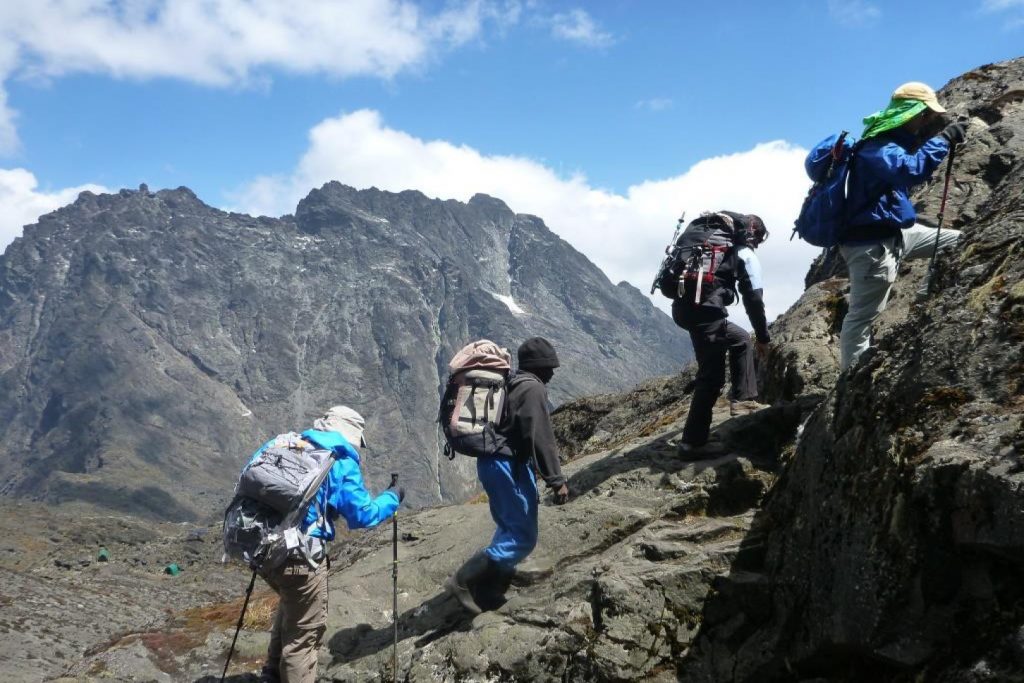 Trip overview of 7 Days Rwenzori hike with three peaks via the central circuit
- Day 1: Nyakalengija (1,615m) – Nyabitaba Camp (2,651m)
- Day 2: Nyabitaba – John Matte Camp (3,505m)
- Day 3: John Matte – Bujuku Camp (3,962m)
- Day 4: Bujuku – Mount Speke, Vittorio Emanuele Peak (4,890m) – Elena Camp (4,541m)
- Day 5: Elena Hut – Margherita Peak (5,109m) – Kitandara Camp (4,430m)
- Day 6: Kitandara Lakes – Mount Baker – Guy Yeoman Camp (3,505m)
- Day 7: Guy Yeoman – Nyabitaba – Nyakalengija (1,615m)
Detailed Itinerary of 7 Days Rwenzori hike with three peaks via the central circuit
Day 1: Nyakalengija (1,615m) – Nyabitaba Camp (2,651m)
Your Central Circuit adventure starts at the Rwenzori Mountaineering Services offices in Nyakalengija. You should arrive in the morning to give enough time to complete registration, organise rented equipment, and meet your guides and porters.
From Nyakalengija, the trail initially passes through cultivated farmland before entering Rwenzori National Park. The route then continues into dense tropical forest, following the Mubuku River and crossing the Mahoma River tributary.
The trail gradually becomes steeper as you climb towards the ridge leading to Nyabitaba Camp. The forest is rich in wildlife and birdlife, and you may hear chimpanzees or encounter black-and-white colobus monkeys and blue monkeys. Birdwatchers may also spot the colourful Rwenzori turaco.
The first day’s trek generally takes about 5–6 hours, depending on the pace of the group, trail conditions, and weather.
Overnight: Nyabitaba Hut
Meal Plan: Lunch and dinner
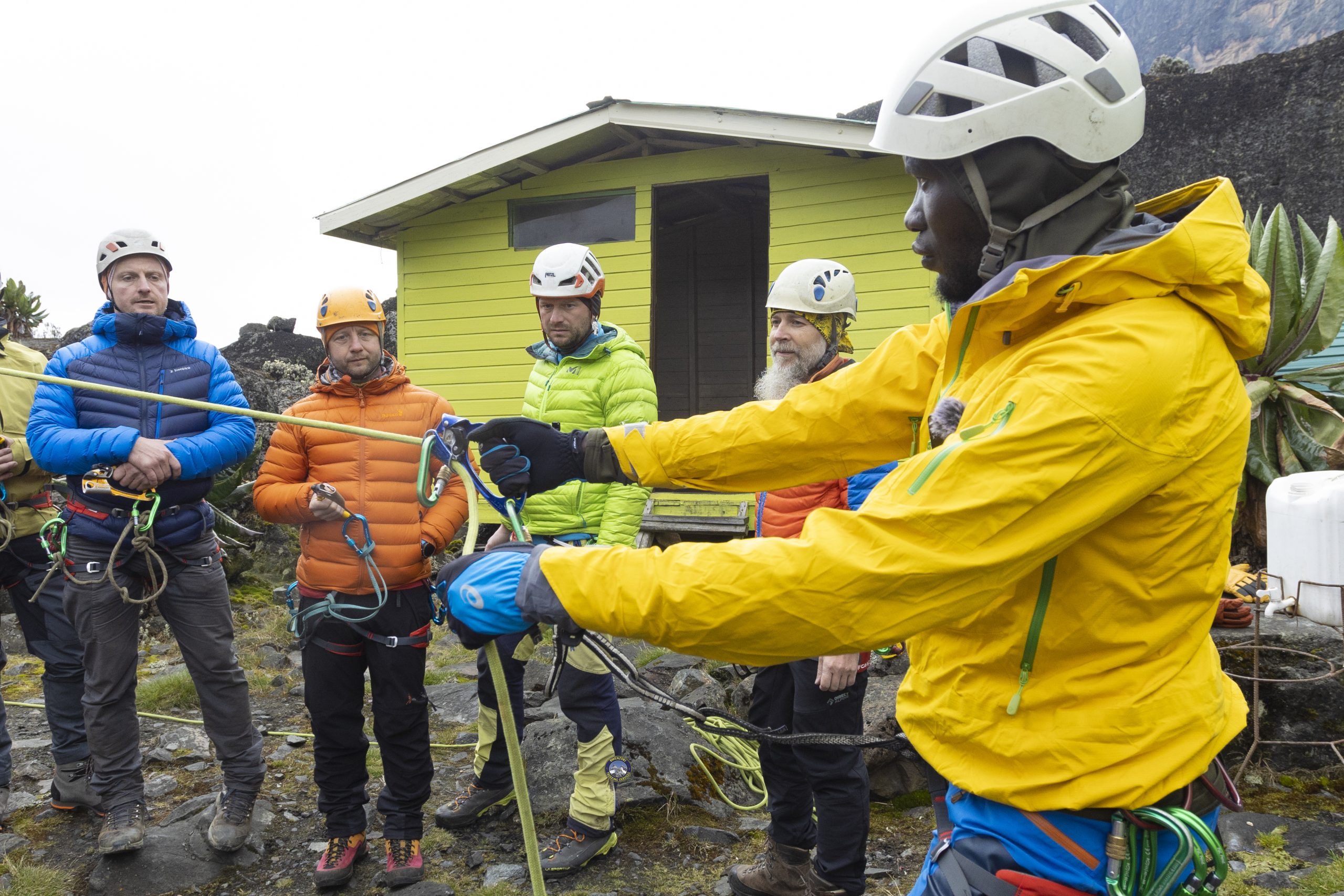 Day 2: Nyabitaba – John Matte Camp (3,505m)
After breakfast, leave Nyabitaba and descend through the forest towards the Kurt Shafer Bridge, located near the meeting point of the Mubuku and Bujuku Rivers.
From here, the trail enters the bamboo zone and continues across a long section of slippery, moss-covered rocks. This part can be physically demanding, particularly when the trail is wet.
The hike continues towards the Nyamuleju rock shelter, from where there can be impressive views towards Mount Stanley and Mount Speke when visibility is good. As you gain elevation, the vegetation changes noticeably, with giant heathers, lobelias, and giant groundsels becoming more prominent.
The final section involves crossing a boggy area before reaching John Matte Hut, where you will have dinner and rest for the night.
- The day’s hike takes approximately 5–6 hours.
- Overnight: John Matte Hut
Meal Plan: Breakfast, lunch and dinner
Day 3: John Matte – Bujuku Camp (3,962m)
The morning begins with a descent from John Matte Hut towards the Bujuku River. After crossing the river, the trail enters the Lower Bigo Bog, an area known for its giant lobelias and challenging wet terrain.
The bog is crossed by carefully moving between tussocks and boardwalked sections where available. Despite the improvements along parts of the trail, hikers should still expect muddy and wet conditions.
The route continues through the Upper Bigo Bog towards Bujuku Lake. When the weather is clear, the area provides beautiful views of Mount Baker to the south and Mount Stanley to the west.
Bujuku Hut lies in a dramatic valley beneath Mount Baker and Mount Speke and provides an important opportunity for acclimatisation before higher-altitude summit attempts.
After reaching camp, enjoy dinner and settle in for the night.
The hike takes approximately 4–5 hours.
Overnight: Bujuku Hut
Meal Plan: Breakfast, lunch and dinner
Day 4: Bujuku – Mount Speke, Vittorio Emanuele Peak (4,890m) – Elena Camp (4,541m)
After an early breakfast at Bujuku Camp, begin the demanding ascent towards Vittorio Emanuele Peak, one of the summits of Mount Speke. At 4,890 metres, this is one of the highest points in the Rwenzori Mountains.
The climb takes you through rugged alpine terrain, rocky ridges, and sections requiring careful scrambling. As you gain altitude, the landscape becomes increasingly dramatic, with giant groundsels, lobelias, moss-covered rocks, and high mountain scenery surrounding the trail.
Weather permitting, the ascent provides impressive views of Mount Stanley, Lake Bujuku, Mount Baker, and the valleys carved by ancient glaciers.
Reaching Vittorio Emanuele Peak is a major achievement and offers wide-ranging views across the Rwenzori massif.
After completing the peak section, descend towards Bujuku Camp for a short rest and lunch before continuing towards Elena Hut.
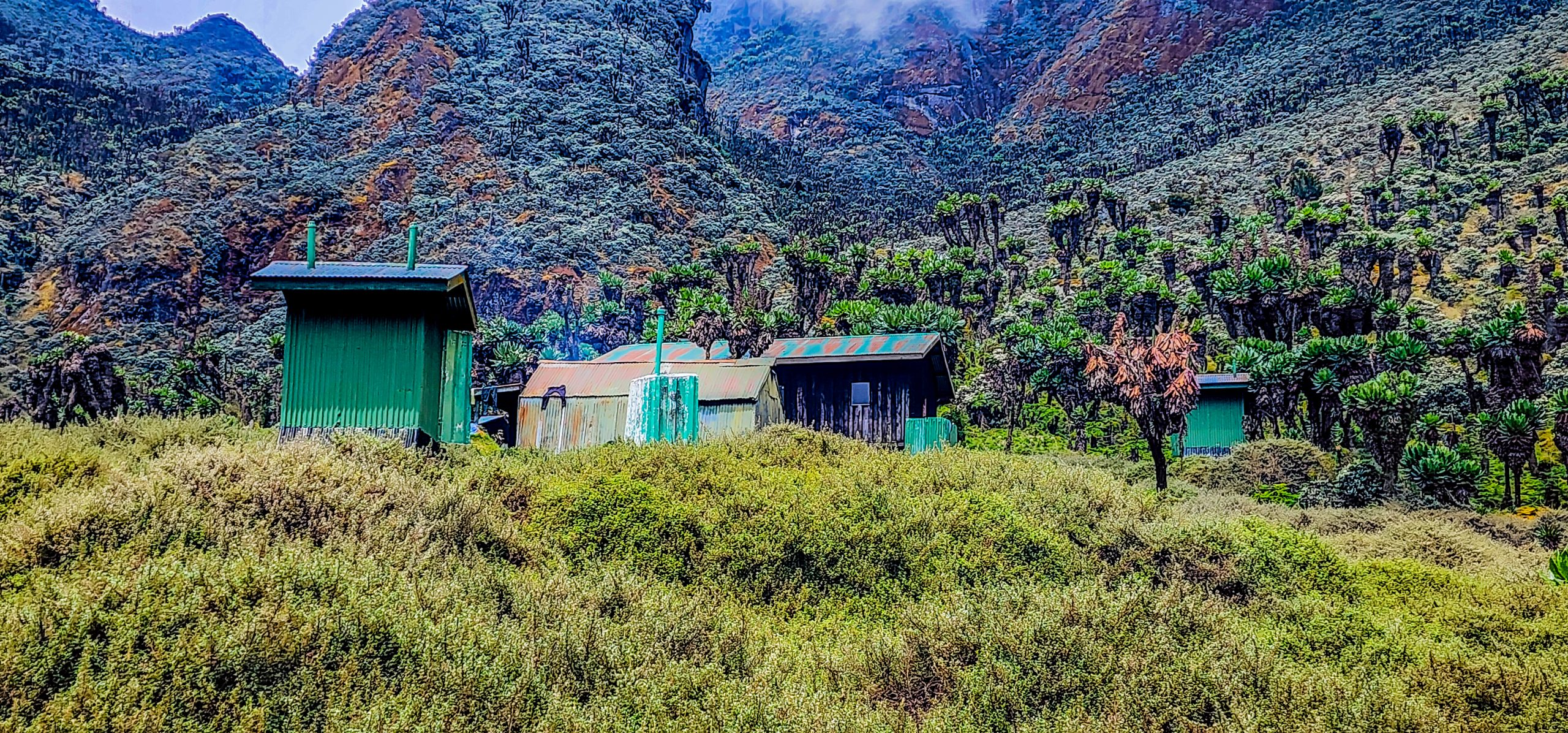 The route from Bujuku climbs through wet and rugged terrain along the slopes west of Lake Bujuku before entering the spectacular Groundsel Gully. The trail then climbs towards Elena Hut along a steep and rocky section with large boulders.
At the trail junction, one route continues towards Elena Hut and Mount Stanley, while the other crosses Scott-Elliot Pass towards Kitandara.
Hikers preparing for the Margherita Peak summit attempt will spend the night at the cold, high-altitude Elena Hut.
The day’s activities take approximately 7–8 hours, depending on weather, fitness, and pace.
Overnight: Elena Hut
Meal Plan: Breakfast, lunch and dinner
Day 5: Elena Hut – Margherita Peak (5,109m) – Kitandara Camp (4,430m)
This is the major summit day of the expedition. The climb towards Margherita Peak, 5,109 metres, begins very early, usually before sunrise. Starting early can provide better conditions on the upper mountain while allowing sufficient time for the summit attempt and descent.
The ascent is challenging and involves glacier travel, steep rocky terrain, ice, exposed sections, and areas where rope protection may be required. The route crosses the Stanley Plateau before continuing towards the summit.
Depending on weather, trail conditions, and the pace of the group, reaching Margherita Peak can take approximately 4–5 hours from Elena Hut.
Altitude, cold temperatures, wind, fog, ice, and steep terrain make this a demanding section. Proper acclimatisation, technical equipment, and guidance are therefore essential.
After reaching the summit, begin the descent back to Elena Hut, which normally takes around 2–3 hours.
After lunch and a short recovery period at Elena, continue down towards Scott-Elliot Pass at approximately 4,372 metres. The pass provides spectacular views towards Bujuku Lake and Mount Speke.
The trail then descends through the afro-alpine zone, characterised by rough boulders and sparse vegetation, before reaching the beautiful Kitandara Lakes.
Continue to Kitandara Hut for dinner and overnight.
Overnight: Kitandara Hut
Meal Plan: Breakfast, lunch and dinner
Day 6: Kitandara Lakes – Mount Baker – Guy Yeoman Camp (3,505m)
After an early breakfast, leave Kitandara and begin the climb towards Fresh Field Pass.
The trail crosses steep, rocky and sometimes muddy terrain. From Fresh Field Pass, the route continues through the afro-alpine zone, where giant senecio plants and other specialised high-altitude vegetation dominate the landscape.
The climb towards Mount Baker provides impressive views across the Rwenzori landscape, including the Congolese side of the mountain range and Mount Stanley.
After reaching the Mount Baker section and taking time to enjoy the scenery and photographs, descend back towards Fresh Field Pass for lunch.
The trek then continues downhill towards Guy Yeoman Camp, located at approximately 3,505 metres. Dinner and overnight will be at the camp.
Overnight: Guy Yeoman Camp
Meal Plan: Breakfast, lunch and dinner
Day 7: Guy Yeoman – Nyabitaba – Nyakalengija (1,615m)
After breakfast, begin the final day of the Central Circuit.
The trail descends from Guy Yeoman through the Kichuchu area, featuring steep and sometimes muddy sections. Beyond Kichuchu, the route crosses the Mubuku River in places and continues through bamboo vegetation.
The trail eventually reconnects with Nyabitaba Camp, where you can take a break and have lunch before continuing the final descent.
From Nyabitaba, descend through the forest towards Nyakalengija and the Mihunga Gate, completing the Central Circuit.
At the park gate, successful hikers who have completed the Margherita Peak climb will receive their summit certificates.
Your 7 Days Rwenzori Hike with Three Peaks via the Central Circuit ends at Nyakalengija.
Safari Highlight: End of Safari
Price Includes
- Rwenzori National Park entrance fees
- Ice-climbing and technical equipment, including ice axe, crampons, helmet, harness and ropes
- Rubber/gumboots for the appropriate sections of the trek
- Mountain accommodation in wooden huts with mattresses
- Full-board meals during the mountain trek
- Ranger guides
- Professional mountain guides
- Porters
- Chefs
Price Excludes
- Ground transportation: We can arrange transportation at USD 700 for both ways, equivalent to USD 350 each way
- Accommodation on the night before the trek at either Ruboni Community Camp or Snow Heights, which we can arrange and book for you
- Uganda visa
- International and domestic air tickets
- Warm clothing and rain gear
- Personal trekking equipment
- Tips and gratuities
- Personal expenses
- Any other services or items not specifically mentioned under inclusions
 Uganda Visa and Yellow Fever Requirements
Travellers entering Uganda generally need an appropriate visa, which can be applied for online through the official Uganda immigration portal.
Visa application: https://visas.immigration.go.ug/
Travellers should also ensure that they meet Uganda’s yellow fever vaccination requirements and carry the relevant vaccination certificate where required.
Rwenzori Mountains Packing List
The Rwenzori Mountains present several different environments during a single trek. You may move from tropical rainforest and bamboo forest to giant heather, afro-alpine vegetation, bogs, rocky ridges, snow and glaciers.
For this reason, your equipment needs to be suitable for both wet tropical conditions and cold, high-altitude environments.
Technical Equipment for the Margherita Peak Climb
Rope
Ropes are important during technical sections of the Rwenzori climb, particularly around steep rock and glacier terrain. They allow the mountain team to protect hikers in exposed areas and during sections where maintaining a secure connection is necessary.
Crampons
Crampons provide traction on snow and ice. They are fitted to suitable climbing boots and help prevent slipping when crossing icy or glaciated sections near the summit.
Ice Axe
An ice axe provides additional balance and support on steep snow and icy terrain. It can also be used as an important safety tool for controlled movement and self-arrest in the event of a slip.
Harness
A climbing harness allows hikers to be safely connected to the rope system used by the mountain guides. It is particularly important on exposed technical sections and glacier terrain.
Helmet
A helmet provides protection against possible falling rocks or ice and offers additional protection during technical climbing sections where loose material may be present.
Personal Trekking Equipment
Climbing Boots
Waterproof climbing boots with good ankle support are essential. Rwenzori trails can be extremely wet and muddy at lower elevations, while higher sections can be cold, rocky and icy. Boots should also be suitable for use with crampons.
Waterproof Trekking Trousers
Waterproof or highly water-resistant trekking trousers protect against rain, mud, wet vegetation and cold conditions. Quick-drying material is particularly useful because rainfall is common on the mountain.
Cotton Shirts
Lightweight and breathable shirts are useful in the warmer, humid forest zones. They allow ventilation during strenuous hiking while providing a comfortable base layer.
Warm Woollen Jacket, Sweater or Poncho
Temperatures become considerably colder with increasing altitude. A warm insulating layer is especially important around the high camps and during early-morning summit attempts.
Waterproof Gloves
Waterproof gloves protect your hands against rain, cold wind, snow and ice. They are particularly useful when handling ropes, rocks and technical equipment.
Headlamp with Extra Batteries
Summit attempts begin very early, often before sunrise. A reliable headlamp is therefore essential for navigating dark trails, rocky sections and high-altitude terrain. Carry spare batteries because cold conditions can affect battery performance.
Trekking Backpack
A comfortable daypack should carry essential personal items such as water, snacks, rain gear, gloves and a camera. Since porters carry the heavier luggage, your personal backpack should remain manageable throughout the trek.
Sun Hat
Although the Rwenzori receives frequent rainfall, sunlight can be intense when the skies clear. A sun hat protects your head and face during exposed sections of the trail.
Handkerchiefs
Handkerchiefs are useful for wiping sweat, drying your hands and maintaining personal comfort during long days on the trail.
Snow Glasses or Sunglasses
UV-protective sunglasses are recommended at high altitude, particularly around snow and ice. Reflected sunlight can be intense and uncomfortable for the eyes.
Gaiters
Gaiters help prevent mud, water, vegetation and small debris from entering your boots. They are particularly useful in the muddy and wet sections of the Rwenzori trail.
Hiking or Trekking Pole
A trekking pole provides additional stability on steep, muddy and uneven terrain. It can be useful when crossing boggy sections and can reduce pressure on the knees during long descents.
Rainproof and Warm Gear
Rain can occur at different elevations and at almost any time. A waterproof jacket and trousers, combined with warm layers, help protect against both moisture and cold wind.
Woollen Socks
Warm woollen socks help insulate the feet and remain useful even when slightly damp. Carrying several pairs is recommended so that you can change into dry socks during the trek.
Jogging Suit and Sports Shoes
Lightweight clothing and comfortable shoes are useful at camp after a long day of hiking. Changing out of heavy trekking boots allows your feet and body to rest before the next day’s activities.
Sleeping Bag
A warm sleeping bag is essential because temperatures at high-altitude camps can become very cold and may fall below freezing. A suitable cold-weather sleeping bag helps you stay warm and get adequate rest.
Rubber Boots
Rubber boots are particularly useful in the wet and muddy lower sections of the mountain. They help protect your feet from water and deep mud before you transition to climbing boots for the higher, more technical terrain.
Why Proper Preparation Matters
The Rwenzori Mountains are unique because one expedition can take you through rainforest, bamboo forest, bogs, giant heather, afro-alpine vegetation, rocky ridges and glacial terrain.
Having the correct clothing and equipment is therefore not simply about comfort. Proper preparation helps you remain warm, dry, stable and protected as the environment changes throughout the climb.
Our mountain team also provides the essential technical equipment required for the Margherita Peak section, allowing you to concentrate on the trek while experienced guides and porters support you along the route.
Luggage Allowance
Pack carefully and bring only the items you genuinely need for the mountain trek. Any belongings that are not required on the mountain can be left safely with us or at your hotel.
Porters are provided to assist with carrying luggage during the expedition. Each trekker is permitted a maximum luggage weight of 15 kg, including food.
Any luggage exceeding the 15 kg allowance will be considered excess baggage and may attract an additional charge.
Travelling with a well-organised and appropriately sized pack will make the trek more comfortable and help you move more efficiently through the different environments of the Rwenzori Mountains.