

Rwenzori Mountains National Park: The Ultimate Ecotourism Destination in Uganda
Uganda is renowned for its extraordinary wildlife, diverse landscapes, and countless opportunities for adventure. From the sprawling savannahs to dense tropical forests, the country offers a variety of experiences that attract nature lovers and thrill-seekers alike. Among Uganda’s many natural treasures, Rwenzori Mountains National Park stands out as a crown jewel of ecotourism. Often called the “Mountains of the Moon,” the park is famous for its towering peaks, glacial valleys, and unique ecosystems that exist nowhere else in the world. It is a destination that offers more than just sightseeing; it provides visitors with a chance to explore nature responsibly while connecting with local communities and their rich cultural heritage.
Visitors to Rwenzori are treated to a landscape of incredible diversity, ranging from tropical rainfall forests to dense bamboo forests, heather forests and mist-covered valleys to alpine meadows dotted with giant lobelias and rare orchids. Wildlife enthusiasts can encounter endemic birds, primates, and other species adapted to this unique mountainous environment. Beyond adventure and wildlife, the park emphasizes sustainable travel practices, including eco-friendly lodges, guided nature walks, and community-led conservation projects. For anyone seeking breathtaking scenery, immersive wildlife experiences, and meaningful cultural interactions, Rwenzori Mountains National Park is the ultimate ecotourism destination in Uganda.
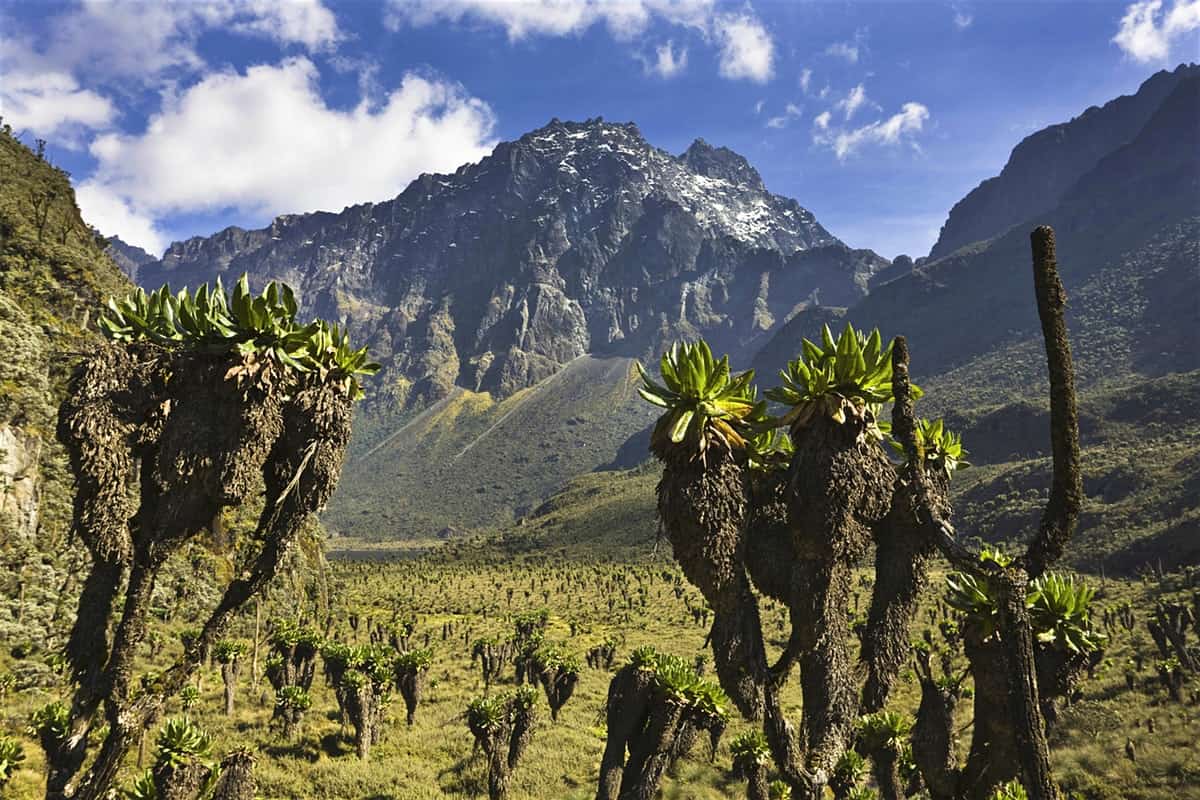 Majestic Peaks and Scenic Landscapes
Rwenzori Mountains National Park is home to some of Africa’s most impressive peaks, including the iconic Margherita Peak, which rises majestically to 5,109 meters. Trekking through the park offers an unforgettable journey across diverse ecosystems. Hikers begin their adventures in dense tropical forests, where towering trees provide shade and streams trickle along moss-covered rocks. As the trails ascend, the landscape gradually transforms into bamboo zones and misty alpine meadows, creating a striking contrast of colors and textures. Glacial valleys and waterfalls add to the park’s scenic charm, while snow-capped summits gleam in the distance, offering spectacular views and endless opportunities for photography.
The park caters to all levels of hikers, with trails ranging from gentle day walks to challenging multi-day treks that test endurance and skill. Along the paths, visitors encounter rare endemic plants, colorful flowers, and a variety of bird species, making each step a unique exploration of nature’s beauty. Ecotourists are guided to follow marked trails and practice responsible trekking, minimizing environmental impact while enjoying the adventure. By observing these guidelines, visitors help preserve fragile ecosystems, ensuring that the park’s breathtaking landscapes, wildlife, and plants remain protected for future generations to experience and cherish.
Unique Flora and Fauna
Rwenzori Mountains National Park is a sanctuary for some of Uganda’s most unique and diverse flora and fauna, making it a must-visit for nature lovers and ecotourists. The park’s lower tropical forests are alive with wildlife, including chimpanzees, elephants, and colobus monkeys. Visitors may hear the calls of primates echoing through the dense canopy while elephants roam quietly below. As hikers ascend to higher altitudes, the environment transforms into misty alpine zones, home to rare species such as the colorful Rwenzori turaco. Over 180 bird species thrive here, creating an unparalleled experience for birdwatchers and photographers.
Plant life is equally extraordinary. Towering giant lobelias, endemic to the Rwenzori region, rise above mosses, ferns, and delicate alpine flowers. Adding to the park’s charm are the everlasting flowers, with their bright, long-lasting blooms that withstand the high-altitude climate, giving trails vibrant bursts of color throughout the year. Ecotourism practices, including guided nature walks, ensure that visitors can admire these plants without causing harm. Knowledgeable rangers provide insights into the importance of conserving fragile ecosystems and protecting endangered species. By following sustainable guidelines, tourists help preserve the park’s incredible biodiversity, ensuring that both wildlife and unique plants, including the everlasting flowers, continue to enchant visitors for generations to come.
Adventure Activities with Minimal Impact
Adventure activities at Rwenzori Mountains National Park are carefully designed to allow visitors to experience thrill and exploration while minimizing their impact on the environment. Trekking and mountaineering remain the most popular activities, with trails ranging from short day hikes to challenging multi-day expeditions. Routes like the Kitandara Trail take hikers through alpine meadows, waterfalls, and glacial valleys, offering breathtaking views at every turn. Park authorities manage these trails to reduce soil erosion and prevent disturbance to fragile habitats, ensuring that nature remains intact for future visitors.
Camping within the park is another immersive experience, but it is conducted under strict eco-friendly guidelines. Campsites rely on composting toilets, solar energy, and efficient waste management systems to minimize ecological footprints. Visitors are encouraged to use reusable water bottles, avoid single-use plastics, and carry out any waste they bring in. These small but crucial practices allow tourists to enjoy adventure without harming the environment.
Beyond trekking, visitors can enjoy canoeing and bird watching around Mutanda Lake, following sustainable practices to protect waterways and aquatic habitats. By combining excitement with responsible tourism, Rwenzori Mountains National Park offers a unique way to connect with nature while actively preserving its extraordinary landscapes, wildlife, and ecosystems for generations to come.
Cultural Experiences and Community Engagement
Rwenzori Mountains National Park is not only a natural wonder but also a hub for cultural exploration, surrounded by the vibrant Bakonzo and Baamba communities. These local communities warmly welcome visitors, offering opportunities to learn about their rich traditions and way of life. Tourists can participate in traditional dances, listen to fascinating stories passed down through generations, and join craft-making workshops where they create souvenirs under the guidance of skilled artisans. Each cultural activity provides insight into how these communities live in harmony with the mountains and forests that sustain them.
Many tours in the region also integrate community-led conservation projects, allowing visitors to actively contribute to environmental preservation. Travelers may help with tree planting, trail maintenance, or wildlife monitoring initiatives, combining cultural learning with meaningful action. Supporting local businesses through guided tours, craft purchases, or participation in workshops ensures that tourism benefits the community economically while promoting sustainable practices.
 Ecotourism in Rwenzori Mountains National Park is built on partnerships between visitors, local communities, and park authorities. This approach ensures that cultural heritage is protected alongside natural resources. By engaging respectfully with the Bakonzo and Baamba people, tourists gain a deeper appreciation for the region’s traditions while helping safeguard both its cultural and ecological treasures for future generations.
Ecotourism Practices in Action
- Rwenzori Mountains National Park is recognized as a leading example of sustainable tourism in Africa. The park implements a range of ecotourism practices designed to protect its unique landscapes and wildlife. Visitors are guided along designated trails to prevent habitat damage, while wildlife is observed from safe distances to avoid disturbance. Lodges and campsites use solar energy, composting toilets, and recycling programs to minimize environmental impact. Local communities are actively involved in guiding, cultural programs, and conservation initiatives. Educational programs help tourists understand biodiversity, climate change, and responsible travel, ensuring that both nature and culture are preserved for generations as mentioned below.
- Waste management in Rwenzori Mountains National Park is a key part of its ecotourism efforts. Visitors are required to follow strict “carry-in, carry-out” policies, taking all their trash with them to keep the park clean. Campsites are designed to minimize environmental impact, using composting toilets, designated waste disposal areas, and biodegradable materials whenever possible. These measures prevent pollution, protect wildlife, and preserve fragile alpine and forest ecosystems. By responsibly managing waste and following park guidelines, tourists ensure that the pristine beauty of Rwenzori is maintained, allowing future visitors to experience the park’s remarkable landscapes and biodiversity safely and sustainably.
- Guided trails in Rwenzori Mountains National Park play a crucial role in sustainable tourism and environmental protection. Professional guides lead visitors along designated paths, ensuring that trekkers do not stray off-trail and damage fragile ecosystems. By staying on marked routes, tourists help prevent soil erosion, protect delicate plants, and avoid disturbing wildlife habitats. Guides also provide valuable information about the park’s unique flora, fauna, and geological features, enriching the visitor experience. This combination of safety, education, and conservation ensures that trekking in Rwenzori is both enjoyable and responsible, preserving the park’s natural beauty for future generations.
- Wildlife protection in Rwenzori Mountains National Park is an essential part of its ecotourism approach. Visitors are encouraged to observe animals from safe distances, ensuring that species such as colobus monkeys, and the rare Rwenzori turaco are not disturbed. Maintaining distance prevents stress or behavioral changes in wildlife and preserves natural feeding, breeding, and movement patterns. Professional guides educate tourists on animal behavior, highlighting responsible observation techniques. By following these rules, visitors can enjoy close encounters with the park’s unique fauna while actively supporting conservation efforts, helping ensure that Rwenzori’s remarkable wildlife continues to thrive for generations.
- Energy conservation in Rwenzori Mountains National Park is a key aspect of its sustainable tourism practices. Campsites and park facilities rely on solar power for lighting and basic energy needs, reducing reliance on fossil fuels and lowering carbon emissions. Visitors are encouraged to use eco-friendly cooking methods, such as communal stoves or fuel-efficient burners, which minimize firewood use and prevent deforestation. These practices help protect fragile alpine and forest ecosystems while promoting a low-impact visitor experience. By conserving energy and adopting sustainable methods, tourists contribute to preserving Rwenzori’s natural environment, ensuring that the park remains pristine for wildlife, plants, and future visitors.
- Community involvement in Rwenzori Mountains National Park is a key aspect of sustainable ecotourism. Local guides lead trekking groups, sharing knowledge about the mountains, wildlife, and plants, while providing employment opportunities for surrounding communities. Porters also play an essential role, assisting trekkers with equipment and food, and earning a livelihood that supports their families. Tourists can engage in cultural programs, such as traditional dances, storytelling, and craft workshops, while participating in community-led conservation projects like tree planting and trail maintenance. By supporting guides, porters, and local initiatives, visitors help preserve cultural heritage and natural resources sustainably.
- Education and awareness in Rwenzori Mountains National Park are central to its ecotourism mission. Visitors learn about the park’s unique ecosystems, including fragile glaciers, alpine meadows, and diverse wildlife, gaining a deeper understanding of their ecological importance. Rangers and guides provide insights on climate change, explaining how rising temperatures and melting glaciers affect habitats and species. Tourists also discover the value of biodiversity and sustainable practices that help protect these environments. Through educational programs, guided talks, and interactive experiences, visitors become more responsible travelers, equipped to support conservation efforts and ensure that Rwenzori’s natural beauty is preserved for future generations.
These ecotourism practices in Rwenzori Mountains National Park create a careful balance between adventure and conservation. By following guidelines such as staying on trails, observing wildlife safely, managing waste, using solar energy, and supporting local communities and porters, visitors can fully enjoy trekking, camping, and cultural experiences without harming the environment. This responsible approach ensures that the park’s glaciers, forests, wildlife, and unique flora are preserved for future generations to explore and appreciate.
Accessibility and Visitor Tips
Rwenzori Mountains National Park, situated in western Uganda near Kasese, is one of the country’s most accessible and remarkable natural destinations. Visitors can reach the park by road from Kampala or via Queen Elizabeth National Park, making it convenient for both domestic and international travelers. Multi-day trekking expeditions require the guidance of professional park guides, who ensure safety while protecting the delicate environment. For casual visitors or photography enthusiasts, shorter day hikes and scenic tours provide opportunities to enjoy the park’s stunning landscapes without the challenges of high-altitude trekking.
The ideal time to visit is during the dry seasons, from June to August and December to February, when trails are safer, waterfalls are flowing, and visibility is high. Hikers should carry warm clothing for cold alpine zones, sturdy footwear, reusable water bottles, and basic trekking gear. Camping at designated sites allows tourists to experience the mountains authentically while contributing directly to conservation and supporting local communities. These practices help preserve Rwenzori’s ecosystems for future generations.
Conclusion: Nature, Culture, and Sustainability in Harmony
Rwenzori Mountains National Park is far more than just a travel destination it is a complete ecotourism experience. Towering peaks, glacial valleys, lush forests, and rare alpine flora and fauna combine with immersive cultural experiences and thrilling adventure activities to create a unique, responsible, and unforgettable journey. Visitors can trek through misty forests, encounter endemic wildlife, explore alpine meadows, and participate in community-led cultural programs, all while following sustainable practices that protect the park’s delicate ecosystems.
Tourists leave not only with incredible memories and photographs but also with knowledge and a heightened sense of responsibility toward the environment. By supporting wildlife conservation, engaging with local communities, and participating in ecotourism initiatives, travelers actively contribute to the preservation of Rwenzori’s natural and cultural heritage. For anyone seeking awe-inspiring landscapes, meaningful adventure, and a chance to experience Uganda’s “Mountains of the Moon” responsibly, Rwenzori Mountains National Park is the ultimate ecotourism destination.