

Discover the Six Mountains of the Rwenzori and Their Spectacular Peaks
Discover the Six Mountains of the Rwenzori and Their Spectacular Peaks is a journey into one of Africa’s most extraordinary mountain systems. The Rwenzori Mountains sit along the border of Uganda and the Democratic Republic of Congo and are famous for their snow-covered peaks despite being near the equator. These mountains are often called the “Mountains of the Moon” because of their mysterious beauty and ancient legends.
The range is not a single peak but a collection of six main mountain massifs. Each one has its own character, height, valleys, glaciers, and climbing challenges. Together, they form the dramatic landscape of the Rwenzori Mountains National Park, a UNESCO World Heritage Site known for rare plants, unique wildlife, and alpine scenery found nowhere else in Africa.
In Discover the Six Mountains of the Rwenzori and Their Spectacular Peaks, we explore each massif in detail, including its major summits, elevation, and climbing highlights. From the towering heights of Mount Stanley to the rugged beauty of Mount Gessi, every mountain tells a different story. This guide is designed to help travelers, hikers, and nature lovers understand what makes this mountain range one of the most spectacular in the world.
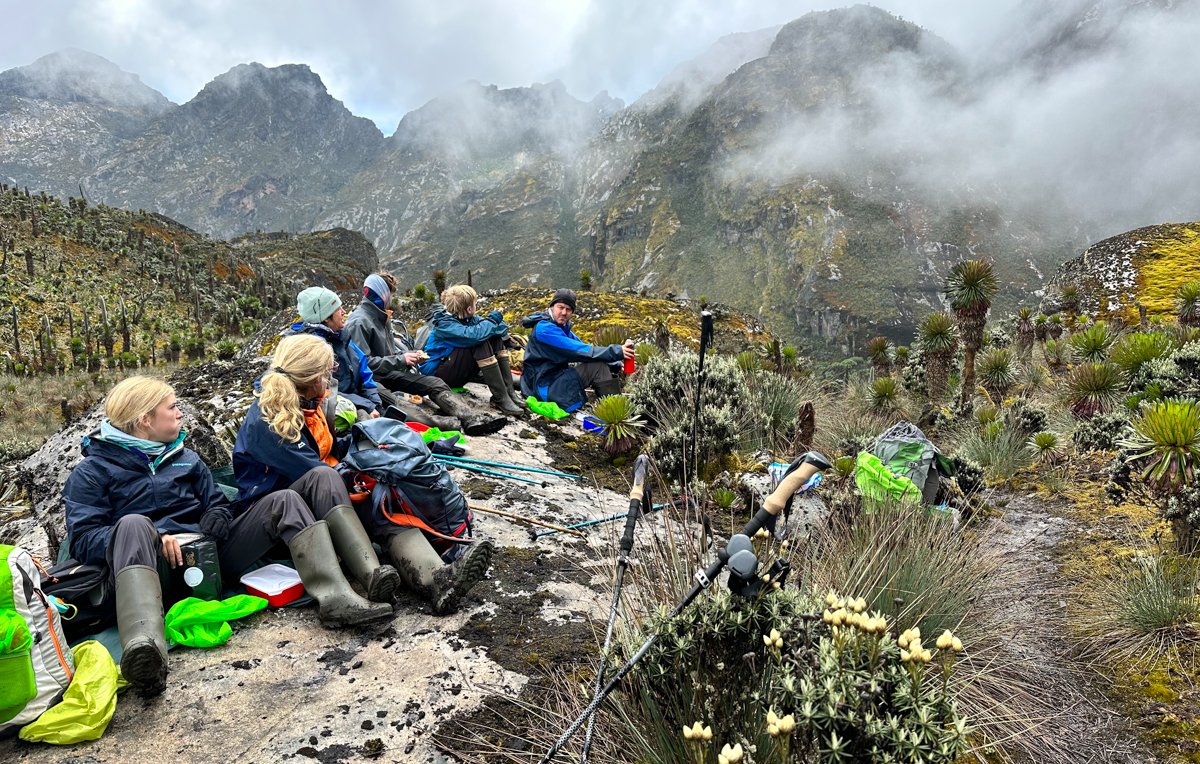 Mount Stanley – The Highest of the Rwenzoris
In Discover the Six Mountains of the Rwenzori and Their Spectacular Peaks, Mount Stanley stands as the tallest and most famous massif. It rises to 5,109 metres, making it the highest point in Uganda and the third-highest in Africa. It is part of the Rwenzori range’s central climbing circuit and attracts experienced mountaineers from around the world.
Mount Stanley has several important peaks. The most famous is Margherita Peak (5,109 m), which sits on Stanley’s summit ridge. It is covered with glaciers and requires technical climbing over ice and rock. Nearby is Alexandra Peak (5,091 m), another high summit connected by a narrow ridge. Other well-known peaks include Albert Peak (5,087 m), Savoia Peak (4,977 m), and Elena Peak (4,968 m).
Another notable summit is Cheptegei Peak, a recognized subsidiary peak of Mount Stanley. It lies within the massif’s rugged upper sections and adds to the complex network of ridges and high points that make Stanley one of the most technically demanding mountains in the Rwenzori range.
The mountain is known for its glacier fields, although these have reduced significantly in recent decades due to climate change. Early explorers, including the Duke of the Abruzzi in 1906, documented many of its routes, making Mount Stanley a historic climbing landmark.
Today, anyone reading Discover the Six Mountains of the Rwenzori and Their Spectacular Peaks will find Mount Stanley the most challenging yet rewarding peak of the entire range.
-
Mount Speke – The Elegant Ridge Mountain
Mount Speke is the second major/highest massif in Discover the Six Mountains of the Rwenzori and Their Spectacular Peaks. It reaches a height of 4,890 metres and is known for its long ridges and beautiful alpine views.
Unlike Mount Stanley, Mount Speke is less glaciated but still rugged and dramatic. Its highest peak is Vittorio Emanuele Peak (4,890 m), named after the Italian royal family. Other notable summits include Ensonga Peak (4,865 m) and Johnston Peak (4,834 m), which offer sweeping views across valleys and neighboring mountains.
Mount Speke is often approached through steep valleys filled with Afromontane forest, bamboo forest, and giant heather zones. As climbers ascend, the vegetation changes into rocky terrain and open alpine zones. This transition is one of the highlights for trekkers following Discover the Six Mountains of the Rwenzori and Their Spectacular Peaks.
Historically, Mount Speke was first explored in the early 20th century during European expeditions mapping the Rwenzori range. Today, it remains a favorite for climbers who want a challenging but slightly less technical alternative to Mount Stanley.
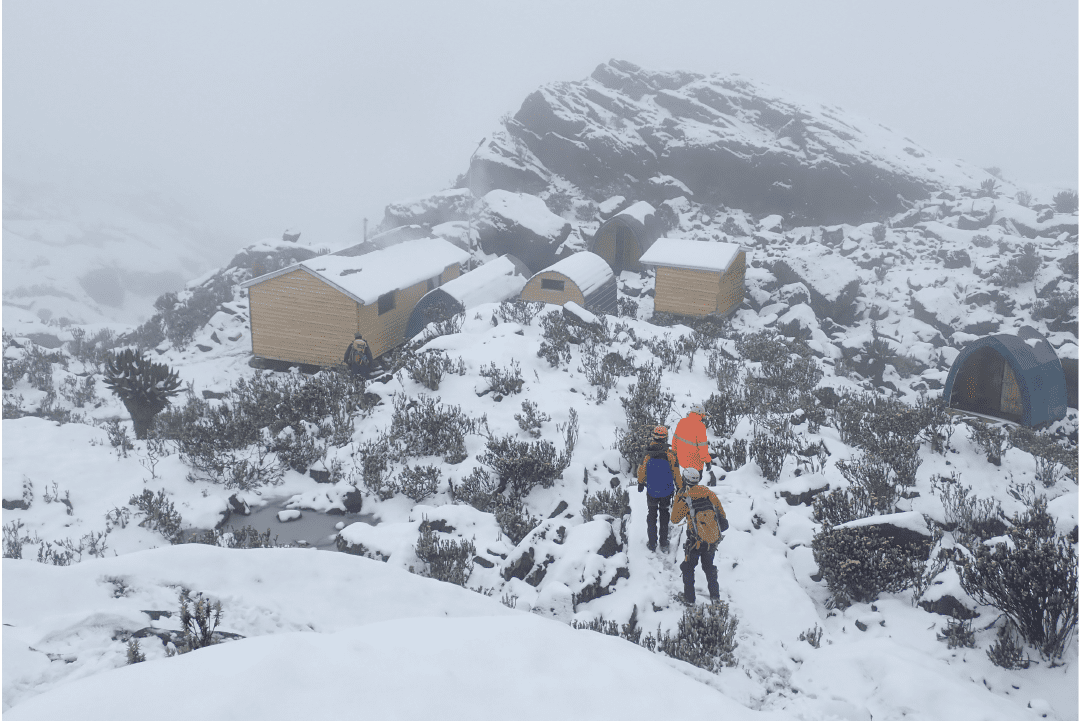 Mount Baker – The Glacier-Crowned Giant
In Discover the Six Mountains of the Rwenzori and Their Spectacular Peaks, Mount Baker is one of the most dramatic and rugged massifs in the Rwenzori range. It rises to about 4,844 metres and forms part of the central cluster of peaks alongside Mount Stanley and Mount Speke. Its steep ridges, rocky walls, and glacier remnants make it both visually striking and technically demanding for climbers.
The highest point of the massif is Edward Peak (4,844 m), which stands as the main summit of Mount Baker. From this central peak, a series of sharp ridges extend outward, forming several important subsidiary summits. One of the most prominent is Semper Peak (4,795 m), a high ridge point that offers sweeping views across the icy valleys of the Rwenzori.
Another key summit is Wollaston Peak (4,627 m), known for its rugged rock formations and steep approaches. Nearby, Moore Peak (4,624 m) adds to the complex ridge system with its jagged terrain and challenging ascent routes. Lower along the ridge line is Grauer Rock (4,484 m), a distinctive rocky point that marks part of the massif’s extended summit structure.
What makes Mount Baker especially important in Discover the Six Mountains of the Rwenzori and Their Spectacular Peaks is its combination of beauty and difficulty. Climbers must navigate mixed conditions of rock, ice, and rapidly changing mountain weather. Although its glaciers have reduced over time, the mountain still retains a powerful alpine character.
Mount Baker remains a key highlight for anyone exploring Discover the Six Mountains of the Rwenzori and Their Spectacular Peaks, offering both technical challenge and breathtaking scenery within the heart of the Rwenzori Mountains.
4. Mount Emin – The Remote Congolese Massif
In Discover the Six Mountains of the Rwenzori and Their Spectacular Peaks, Mount Emin is one of the most remote and least visited massifs in the entire Rwenzori range. It is primarily located within the Democratic Republic of the Congo (DRC), although it forms part of the wider transboundary Rwenzori ecosystem shared between Uganda and the DRC.
The massif rises to about 4,798 metres, with its highest and most recognized summit being Umberto Peak (4,798 m). This peak forms the main high point of Mount Emin and defines its rugged and isolated skyline. The surrounding landscape is made up of steep ridges, deep valleys, and rocky slopes, creating a raw alpine environment with very limited glacier coverage.
In Discover the Six Mountains of the Rwenzori and Their Spectacular Peaks, Mount Emin is best known for its isolation rather than a large number of well-defined subsidiary peaks. Many of its high points remain unnamed or are locally referenced, adding to its wild and untouched character.
Although the massif lies mainly on the Congolese side, it can still be accessed through trekking routes that begin in Uganda’s Rwenzori Mountains National Park. Some expedition routes allow climbers to traverse from Uganda into the DRC section of the range, making Mount Emin part of longer cross-border trekking experiences.
This makes it unique among the six massifs in Discover the Six Mountains of the Rwenzori and Their Spectacular Peaks, offering both remote wilderness and rare international trekking transitions.
For adventurers seeking solitude, Mount Emin represents one of the most untouched and dramatic landscapes in the entire Rwenzori system.
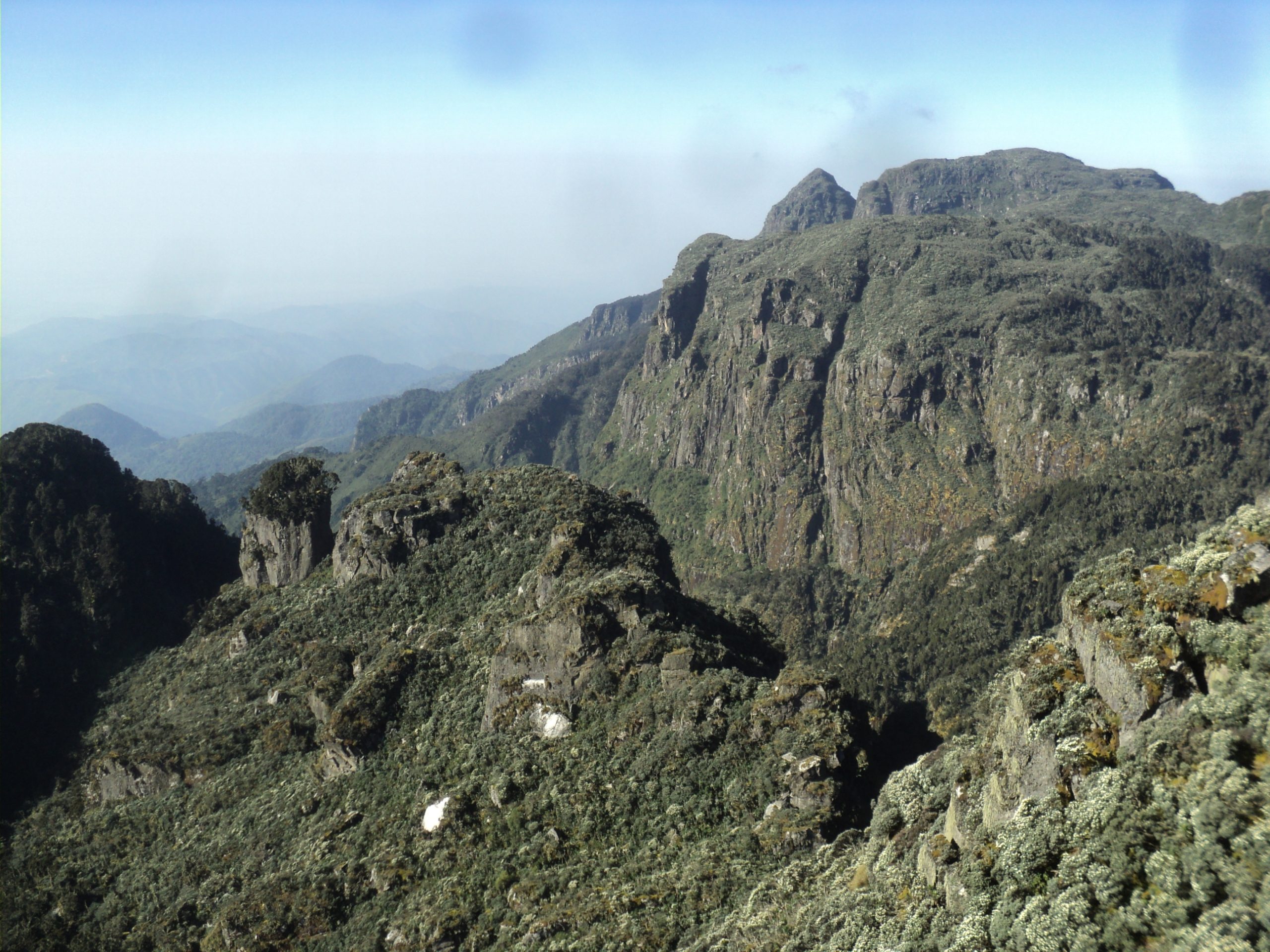 5. Mount Gessi – The Isolated Twin-Summit Massif
In Discover the Six Mountains of the Rwenzori and Their Spectacular Peaks, Mount Gessi is one of the most remote and least visited massifs in the Rwenzori range. It lies in the northern section of the mountains and is known for its isolation, steep terrain, and untouched wilderness.
Mount Gessi is unique because it features twin summits. The highest officially recognized main summit is Lolanda Peak (4,715 m / 15,470 ft). The second summit is Bottego Peak (4,718 m / 15,418 ft), which is slightly higher in elevation but is traditionally treated as the secondary peak due to historical naming and mapping conventions. Together, these two peaks form the core ridge line of the massif.
In Discover the Six Mountains of the Rwenzori and Their Spectacular Peaks, Mount Gessi stands out for its raw and wild landscape. Its slopes are not dominated by lowland vegetation at the base of the peaks but are instead part of the classic Rwenzori altitude system. Climbers approaching the massif typically pass through distinct ecological zones, including the bamboo zone (about 2,500 m to 3,000 m) before reaching higher moorland and alpine conditions.
Higher up, Mount Gessi is characterized by wet alpine terrain, thick moss, boggy ground, and unique vegetation such as giant groundsels (Senecio) and carpets of Sphagnum moss. This creates a soft, surreal landscape that is very typical of the Rwenzori high mountains.
Because of its remoteness, Mount Gessi has very few trekking routes and remains largely untouched. In Discover the Six Mountains of the Rwenzori and Their Spectacular Peaks, it represents one of the purest examples of wilderness in the entire mountain range.
6. Mount Luigi di Savoia – The Scenic Southern Massif
In Discover the Six Mountains of the Rwenzori and Their Spectacular Peaks, Mount Luigi di Savoia is the southernmost and one of the most scenic massifs in the entire Rwenzori range. It is part of the six major massifs that form the Rwenzori Mountains (also known as the Mountains of the Moon) along the Uganda–Democratic Republic of Congo border. It rises to about 4,627 metres, making it the shortest of the six central Rwenzori massifs, yet it offers some of the most beautiful ridges, valleys, and alpine landscapes.
Mount Luigi di Savoia consists of three prominent summits. The highest is Sella Peak (4,627 m / 15,180 ft), which forms the main summit of the massif. The second is Weismann Peak (4,620 m / 15,157 ft), a well-known non-technical trekking peak that provides wide views of glaciers and surrounding valleys. The third is Stairs Peak (4,545 m / 14,911 ft), completing the main ridge system of the massif.
In Discover the Six Mountains of the Rwenzori and Their Spectacular Peaks, this mountain is known for being less technical and more accessible compared to peaks like Mount Stanley or Mount Baker. Although it has limited glaciation, it still features rocky cliffs, misty valleys, and distinct alpine vegetation zones that change with altitude, creating a rich and varied mountain experience.
The massif is often explored during longer trekking routes in the southern section of the Rwenzori Mountains National Park. Its quiet trails and open ridgelines make it ideal for hikers seeking solitude, scenic beauty, and a less crowded mountain experience.
For many travelers, Discover the Six Mountains of the Rwenzori and Their Spectacular Peaks would not be complete without the peaceful charm and panoramic views of Mount Luigi di Savoia.
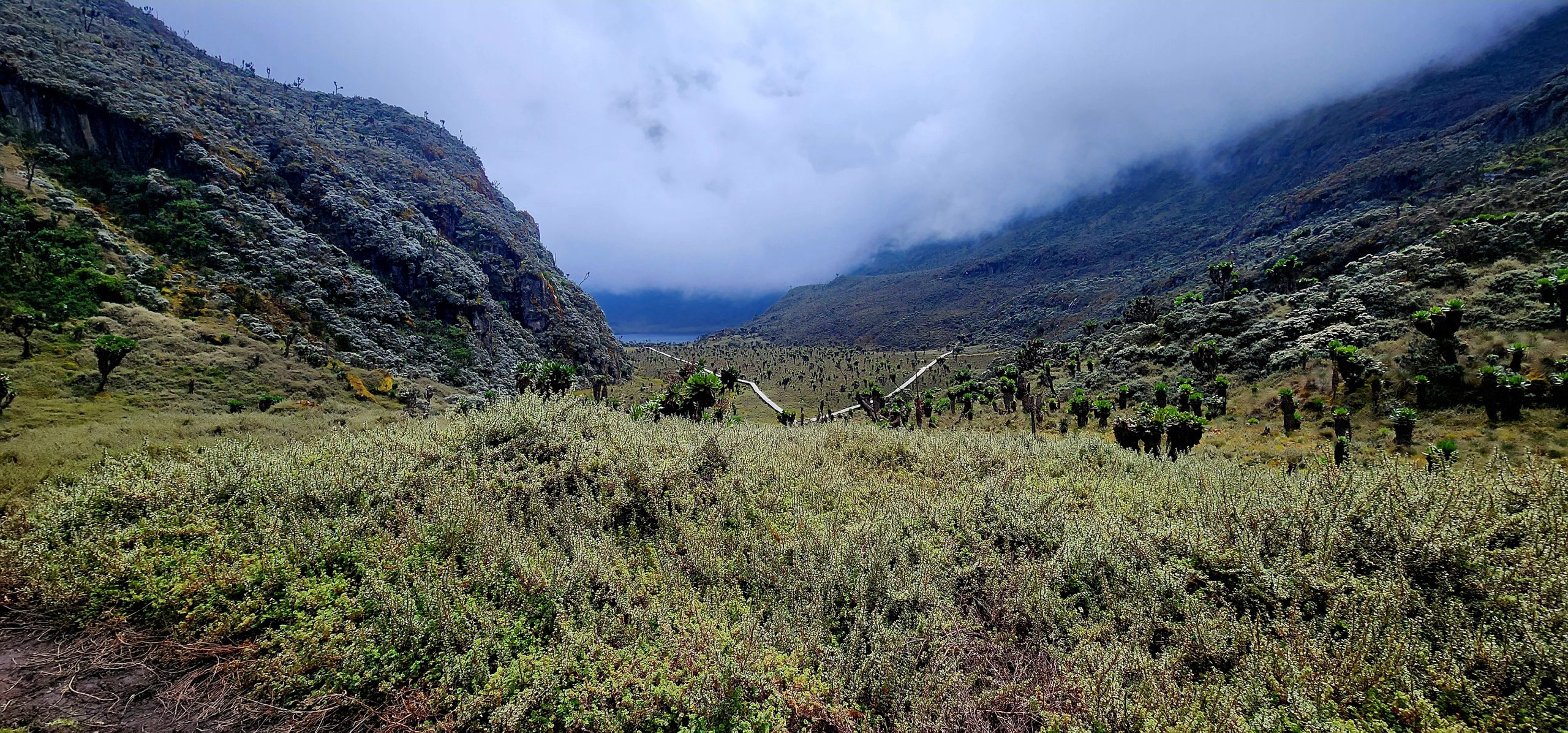 The Full Beauty of the Six Rwenzori Mountains
When we look at Discover the Six Mountains of the Rwenzori and Their Spectacular Peaks, the full picture becomes clear. The Rwenzori Mountains are not just about one summit but a chain of six powerful massifs that rise dramatically from the African landscape.
These six mountains—Mount Stanley, Mount Speke, Mount Baker, Mount Emin, Mount Gessi, and Mount Luigi di Savoia—each contribute something unique. Some are covered in glaciers, while others are shaped by deep valleys and dense vegetation. Together, they form one of the most complex alpine systems in the world.
The range is also home to rare ecosystems. From giant lobelias to moss-covered forests, the biodiversity here is exceptional. Animals such as colobus monkeys, Rwenzori turacos, and various antelope species also live within these mountains.
Why the Rwenzori Mountains Are Special
One key reason these mountains stand out is their location near the equator. Despite this, the highest peaks are permanently covered in snow and glaciers. This rare combination makes the Rwenzori Mountains one of the few tropical mountain ranges with ice.
The region also plays an important role in water supply. Many rivers that feed Lake Albert and other water systems in East Africa originate here. The mountains act as a natural water tower for the surrounding region.
Climbers are drawn not only by the challenge but also by the beauty. The changing landscapes—from rainforest to bamboo zones, to alpine meadows, and finally icy peaks—make every step unforgettable.
Conclusion
In conclusion, Discover the Six Mountains of the Rwenzori and Their Spectacular Peaks reveals one of the most unique and breathtaking mountain systems in the world. The Rwenzori Mountains are not defined by a single summit but by six powerful massifs that rise dramatically across western Uganda. Each mountain—Mount Stanley, Mount Speke, Mount Baker, Mount Emin, Mount Gessi, and Mount Luigi di Savoia—offers its own character, landscape, and climbing experience.
What makes Discover the Six Mountains of the Rwenzori and Their Spectacular Peaks so special is the combination of snow, glaciers, tropical vegetation, and alpine scenery found in one continuous range. Few places in the world offer such diversity within a single mountain system. From the towering Margherita Peak on Mount Stanley to the remote ridges of Mount Gessi, every section of the Rwenzori tells a story of geological power and natural beauty.
For travelers, hikers, and nature lovers, the Rwenzori Mountains are more than just a destination. They are a living world of adventure, culture, and biodiversity. Anyone exploring Discover the Six Mountains of the Rwenzori and Their Spectacular Peaks will leave with a deep appreciation of Africa’s most magical mountain range and its timeless beauty.