

8-Day Hike To Margherita Peak Via Kilembe Trail.
This extraordinary 8-Day Hike To Margherita Peak Via Kilembe Trail through Rwenzori Mountains National Park follows the iconic Kilembe route to Margherita Peak, Africa’s third-highest summit at 5,109 meters. The adventure is as much about the journey as the destination, taking you through dense rainforest, bamboo groves, heather zones, alpine valleys, and glacial landscapes. Hikers encounter diverse flora and fauna, including towering trees, giant lobelias, primates, and exotic birds. The ascent involves technical climbing sections, particularly near the summit, but with skilled guides, proper preparation, and acclimatization, it is achievable even for first-time mountaineers. Optional side climbs to Mount Baker or Weismann’s Peak make the trek customizable, while each day offers scenic viewpoints, waterfalls, and unforgettable natural spectacles.
 Day 1 – Trek from the Trekker’s hostel (1450m) to Sine Hut (2,596m)
Starting at the Kilembe trailhead at 1,450 meters at the trekkers’ hostel with an early morning briefing and also you meet your guides and porters before starting the trek where you hike and pass via farmland to the park gate at 1,727m here you register then step into the Afromontane forest where you enter in the dense forest with towering trees, moss-draped vines, and vibrant birdlife. Early on, you may hear distant chimpanzees calls or spot blue monkeys and black-and-white colobus swinging through the canopy, three horned chameleon.
The climb gradually becomes steeper, with small streams to cross and narrow ridges to navigate. After several hours, you arrive at Sine Hut, perched on a ridge at 2,596 meters, a perfect base to enjoy the forest and nearby Enock’s Falls, just 200 meters away. Sine camp provide rustic wooden huts, communal dining areas, and the serene sounds of the forest.
Overnight: Sine Camp
Meal Plan: lunch, dinner
Distance: 9.5 km
Walking hours 5-6 hours
Height gain: 1,450 meters to 2,596meters
Below is the Sine Camp
Day 2 – Sine camp (2, 596m) Trek to Mutinda Camp (3,588m)
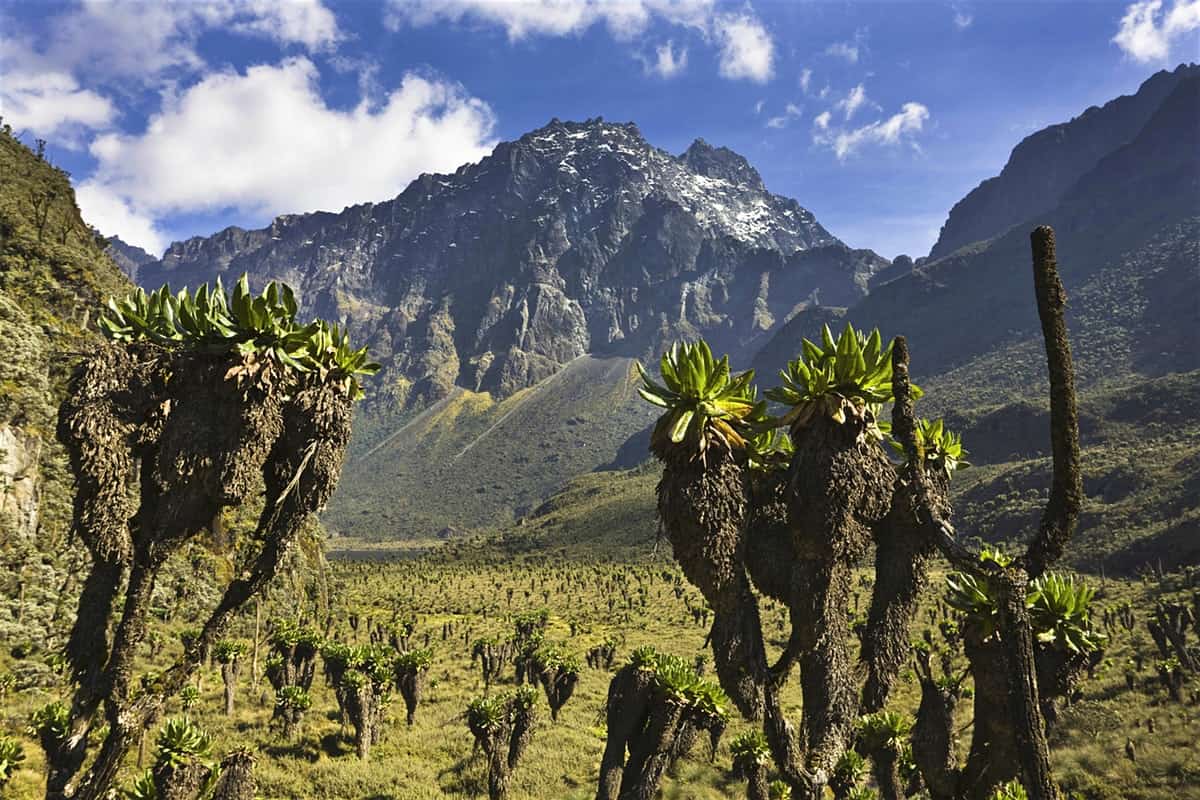
After breakfast continue to Kalalama Camp at 3,134 meters and gives more time to climb Mutinda Lookout, the trail climbs steadily into the bamboo-mimulopsis zone. The terrain becomes steeper, with high steps and muddy patches during the wet season, but the towering bamboo and hanging moss create a magical atmosphere. As you ascend, the forest gradually transitions into the heather-rapanea zone, with giant moss-covered heather trees, colorful lichens, and streams cascading over rocks.
The path weaves over small ridges, drops into valleys, and crosses streams, giving glimpses of waterfalls and alpine meadows. Mutinda Camp sits at 3,582 meters, surrounded by towering heather and giant lobelias. In the afternoon, adventurous hikers can climb to Mutinda Lookout at 3,975 meters, offering panoramic views across the Rwenzori peaks, Kasese town, and Lake George. This acclimatization hike is ideal for preparing your body for higher altitudes while observing the diverse flora and bird species. Overnight: Mutinda Camp
Meal Plan: Breakfast, lunch and dinner
Height gain: 2,596 meters to 3,588meters
Walking hours: 5 to 6 hours
Below is the Mutinda Camp
 Day 3 – Mutinda camp (3,588m) Trek to Bugata Camp (4,100m)
This day brings you into alpine terrain with wet, boggy sections interspersed with tussock grass and everlasting flowers. Footing requires care, particularly during the rainy season, but the dramatic scenery makes every step worthwhile. The trail crosses the Mutinda and Namusangi valleys, where steep waterfalls and open vistas showcase the vast Rwenzori range.
Bugata Camp, at 4,100 meters, is perched amid high peaks, providing excellent views and exposure to thinner air, making this a critical acclimatization stop. Along the way, hikers encounter giant lobelias, mossy cliffs, and rare alpine plants. The cooler temperatures at this altitude are noticeable, and wildlife sightings may include birds and forest mammals adapted to high elevations. Evening discussions with guides provide insight into local ecosystems, climbing safety, and preparation for summit attempts.
Overnight: Bugata Camp
Meal Plan: Breakfast, lunch and dinner
Height gain: 3,588meters to 4,100m
Walking hours: 5-6 hours
Below is the Bugata Camp
Day 4 – Trek from Bugata camp (4,100m) to Hunwick’s Camp (3,874m) via Bamwanjarra Pass (4,450m)
You begin with a climb to Bamwanjarra Pass at 4,450 meters, one of the trek’s highest points.
The ascent is gradual yet challenging, rewarding hikers with panoramic views of Mount Stanley, Mount Baker, and Mount Speke. From the pass, the trail descends into a valley adorned with moss, giant groundsels, and lobelias, also providing excellent bird watching, including the colorful Malachite Sunbird.
The final stretch to Hunwick’s Camp involves climbing a ridge above a deep valley, with spectacular views of glaciers and peaks. The camp is strategically located for rest and preparation for the next day’s climb to Margherita Peak. Guides provide safety instructions for technical sections ahead, including glacier navigation and ice climbing basics.
Overnight: Hunwick’s Camp
Meal Plan: Breakfast, lunch and dinner
Height gain: 4,100m to 4,450mto 3,874m
Walking hours: 5-7 hours
Below is the Hunwick’s Camp
Day 5 – Trek from Hunwick’s camp (3,874m) to Margherita Camp (4,495m)
The trek passes through scenic alpine valleys, reaching Lake Kitendara, a pristine high-altitude lake surrounded by vegetation. After this, you climb to Scott Elliott Pass and continue along a ridge to Margherita Camp at 4,495 meters. The camp sits amid massive rocks, offering shelter from winds, and marks the historical campsite of the Duke of Abruzzi’s 1906 expedition.
Today, hikers may optionally climb Mount Baker, a tough but short scramble that rewards climbers with exceptional views of Margherita Peak, Mount Stanley, and surrounding glaciers. This is also a key acclimatization day, giving the body a chance to adjust before the summit attempt.
Overnight: Margherita Camp
Meal Plan: Breakfast, lunch and dinner
Walking hours: 4 to 6 hours
Height gain: 3,874m to 4,495m
Below is the Margherita Camp during April, May, October and November.
 Day 6 – Summit Margherita Peak (5,109m) and Descend to Hunwick’s Camp
Wake up at 3:00 AM for an early breakfast and depart for the summit. The climb is technical, involving glacier sections of up to 60° steepness, requiring crampons, ropes, ice axes, and basic knot skills. Weather can change rapidly, and guides enforce a 10:00 am /11:00am turnaround for safety.
Reaching the summit at 5,109 meters, you are rewarded with breathtaking views across the Rwenzori range and the Congo Basin.
The descent leads back to Margherita Camp and continues down to Hunwick’s Camp at 3,874 meters. The day is long and demanding but provides the ultimate sense of achievement.
Overnight: Hunwick’s Camp
Meal Plan: Breakfast, lunch and dinner
Height gain: 4,495m to 5107m to 3,874m
Below is the Hunwick’s camp
Day 7 – Trek from Hunwick’s camp (3,874m to Kiharo Camp(3,430m) (4,505m via Oliver’s Pass)
From Hunwick’s, you ascend toward McConnell’s Prong and Oliver’s Pass at 4,505 meters, with stunning views of Rwenzori peaks and Scott Elliott Pass. The trail then traverses below Weismann’s Peak, offering an optional climb for those who want additional challenge and panoramic vistas. Descending into the Nyamwamba Valley, you encounter glacial debris, mossy ridges, and cascading streams, eventually reaching Kiharo Camp 3,430m nestled in a deep valley among cliffs and dense forest. Wildlife sightings may include duikers and numerous bird species.
Overnight: Kiharo Camp
Meal Plan: Breakfast, lunch and dinner
Height gain: 3,874m to 4,505m to 3,430m
Walking hours 5 to 9 hours
Below is the Kiharo camp
Day 8 – Descent from Kiharo camp (3,430m) to Kilembe Base Camp (Trekker’s hostel) (1450m)
The final day follows the Nyamwamba Valley, mostly downhill, with moss-covered rocks, waterfalls, and lush forest. Along the trail, hikers may spot Rwenzori red duikers and enjoy the serene soundscape of cascading streams. The route passes Forest View Camp for lunch before reaching the base camp at Kilembe, completing the trek. This final descent is visually stunning, offering reflection time on the journey through one of Africa’s most unique mountain ecosystems.
Walking time: 6-8 hours
End of Trek
Price includes:
Hiking fees
Park entrance
Trained guides,
Porters,
Meals,
Mountain accommodation,
Technical hiking gears like crampons, ropes, harness, ice axe, helmet plus also rubber boots
Exclusion
Medivac and evacuation insurance
Accommodation before/after the trek
Tips
Visas.
Air ticket
Warm and rain gear
Personal trekking gears
Tips
Other items of personal nature
Other personal expenses not included in the package.
VISA: You all need a visa to enter Uganda application is done online https://visas.immigration.go.ug
Vaccine: Yellow fever is still required. Make sure you are up to date needed at Entebbe International Airport.
Rwenzori Mountains packing list.
Trekking the Rwenzori Mountains involves passing through tropical rainforest/ montane forest, bamboo zones, giant heather forests, afro-alpine zones, rocky ridges, and glaciers. Because of this dramatic change in terrain and climate, every item on the packing list has a very specific purpose. Below is a detailed explanation of each item in relation to the actual conditions on Rwenzori.
 Technical Equipment (Equipments needed to hike the Margherita peak these are provided by us) Rope
In the Rwenzori, especially when climbing toward Margherita Peak on Mount Stanley, sections of the trail involve steep rock slabs and glacier crossings. The rocks are often wet and slippery due to constant rainfall and mist. A rope is used to secure climbers together in exposed areas and while crossing ice. It reduces the risk of serious falls and gives climbers confidence when navigating technical terrain at high altitude.
Crampons
The upper slopes of the Rwenzori contain permanent ice and glaciers. Early in the morning, snow and ice become extremely hard and slippery. Crampons are metal spikes fixed onto climbing boots to provide traction on frozen ground. Without crampons, walking on glaciers would be unsafe and nearly impossible. They allow climbers to move steadily uphill and downhill without sliding on the icecovered surfaces.
Ice Axe
An ice axe is an essential safety tool on the glacier sections of the Rwenzori. It provides balance while ascending steep snow slopes and stability when descending icy terrain. If a climber slips, the ice axe can be used to stop the fall through a self-arrest technique. Given the steep and icy conditions near the summit, this tool is crucial for safety and controlled movement.
Harness
A harness is worn around the waist and thighs to attach a climber securely to the rope. On the Rwenzori’s technical sections, particularly near glaciers and exposed rock faces, guides use rope systems to protect climbers. The harness ensures that if someone loses footing, they remain safely connected. It distributes weight evenly and prevents injury during rope-supported climbing.
Helmet
Rock fall is possible in steep and narrow sections of the Rwenzori, especially where loose stones are present. Ice chunks can also fall from glacier edges. A helmet protects the head from unexpected impact. In slippery conditions where falls are more likely, wearing a helmet significantly reduces the risk of serious head injury, particularly in high-altitude climbing areas.
Personal Items
Climbing Boots
The Rwenzori is one of the wettest mountain ranges in Africa that received frequent rain. Trails are muddy and often flooded in lower zones, while upper elevations are icy and cold. Proper waterproof climbing boots provide strong ankle support on uneven ground and insulation against cold temperatures. They are also designed to hold crampons securely. Ordinary hiking shoes are not suitable for glacier travel or deep mud.
Waterproof Trekking Trousers
Rwenzori trails pass through thick vegetation and muddy bogs. Trekking trousers made from quickdrying/waterproof material protect your legs from scratches, insect bites, and wet conditions. Because rain is frequent, trousers that dry quickly prevent discomfort and skin irritation. They also provide warmth at higher altitudes where temperatures drop significantly.
Cotton Shirts
At lower elevations, the rainforest zone is warm and humid. Light shirts help regulate body temperature and allow airflow during long hiking hours. However, since the environment is damp, breathable materials are important to prevent excessive sweating. Proper shirts help maintain comfort before reaching colder alpine zones.
Warm Woolen Jacket or Sweater/ Pocho.
As you ascend above 3,500 meters, temperatures drop sharply, especially in the evenings and early mornings. Cold winds and mist are common. A warm woolen jacket or sweater provides insulation and prevents hypothermia. This layer is especially important during summit attempts, where freezing temperatures are normal.
Waterproof Gloves
Hands are constantly exposed to cold rain, wind, and snow in higher elevations. Waterproof gloves keep hands dry and warm, especially when handling ropes, rocks, or ice axes. Cold, wet hands lose strength and coordination quickly, so gloves are important for maintaining grip and safety during technical climbing sections.
Headlamp with Extra Batteries
Summit attempts on the Rwenzori usually begin before sunrise to take advantage of stable ice conditions. A headlamp provides visibility in darkness along rocky and icy paths. Cold temperatures drain batteries faster than usual, so carrying extra batteries ensures reliable light throughout early morning climbs and nighttime camp movement.
Trekking Bag (Backpack)
Even though porters carry most heavy equipment, each climber needs a daypack for personal essentials such as water, snacks, rain gear, gloves, and a camera. The Rwenzori weather changes quickly, so having immediate access to protective clothing is important. A comfortable, waterproof backpack helps manage weight efficiently during long hiking days.
Sun Hat
Despite frequent rainfall, the equatorial sun can be intense when skies clear. At higher altitudes, ultraviolet radiation is stronger. A sun hat protects your face and head from sunburn and reduces the risk of heat exhaustion during long exposed walks in the afro-alpine zone.
Handkerchiefs
Due to humidity, sweat, and muddy conditions, handkerchiefs are useful for personal hygiene. They help wipe sweat, clean hands before meals, or dry small amounts of rainwater. Maintaining cleanliness during multi-day trekking improves comfort and prevents minor skin problems.
 Snow Glasses (Sunglasses)
At high elevations, sunlight reflects strongly off snow and ice. This reflection can cause eye strain or snow blindness. Quality sunglasses with UV protection shield your eyes from glare and harmful radiation, making glacier travel safer and more comfortable.
Gaiters
The Rwenzori is famous for deep mud and swampy sections, especially in the bamboo and bog zones. Gaiters are worn over boots and lower trousers to prevent water, mud, and debris from entering footwear. They keep feet drier and cleaner, reducing the risk of blisters and discomfort during long trekking days.
Hiking/trekking pole
A hiking pole is very helpful when trekking the Rwenzori Mountains because the trails are steep, muddy, and often slippery. It improves balance while crossing bogs, wet rocks, and uneven ground. The pole also reduces pressure on knees during long descents and helps conserve energy on steep climbs. In swampy sections, it can test mud depth before stepping, increasing safety and confidence throughout the trek.
Rainproof and Warm Gear
Rainfall can occur at any time on the Rwenzori. A waterproof jacket and trousers are essential to prevent soaking, which can quickly lead to cold stress. Combined with warm layers underneath, rain gear protects against both moisture and wind, ensuring body temperature remains stable.
Woolen Socks
Cold and wet conditions are common, especially at higher elevations. Woolen socks provide insulation even when slightly damp and help prevent blisters. Keeping feet warm is crucial for comfort and maintaining energy throughout the trek.
Jogging Suit / Sports Shoes
After a full day of hiking in heavy boots, lightweight clothing and shoes allow your body to relax at camp. Changing into dry, comfortable wear helps improve circulation and reduces fatigue before the next day’s climb.
Sleeping Bag
Nights in the Rwenzori can drop below freezing, particularly in high camps. A highquality sleeping bag designed for cold temperatures ensures warmth and proper rest. Adequate sleep is essential for altitude adaptation and maintaining strength for summit attempts.
Rubber Boots (Provided free of charge)
In the lower rainforest and bog zones, trails are often flooded or extremely muddy. Rubber boots are highly practical in these sections because they are waterproof and easier to clean. They protect your feet from prolonged exposure to water before transitioning to climbing boots at higher altitudes.
Proper preparation for the Rwenzori Mountains is critical because the mountain combines rainforest trekking, swamp crossing, alpine hiking, and glacier climbing in one expedition. Each item on this list directly responds to the unique weather, terrain, and altitude conditions found on this remarkable mountain range.
Charge your phones, cameras, power banks and all your gadgets.
This is because there is no electricity on the mountain so you will need to charge these gadgets before you start the trek.
Size of luggage to carry.
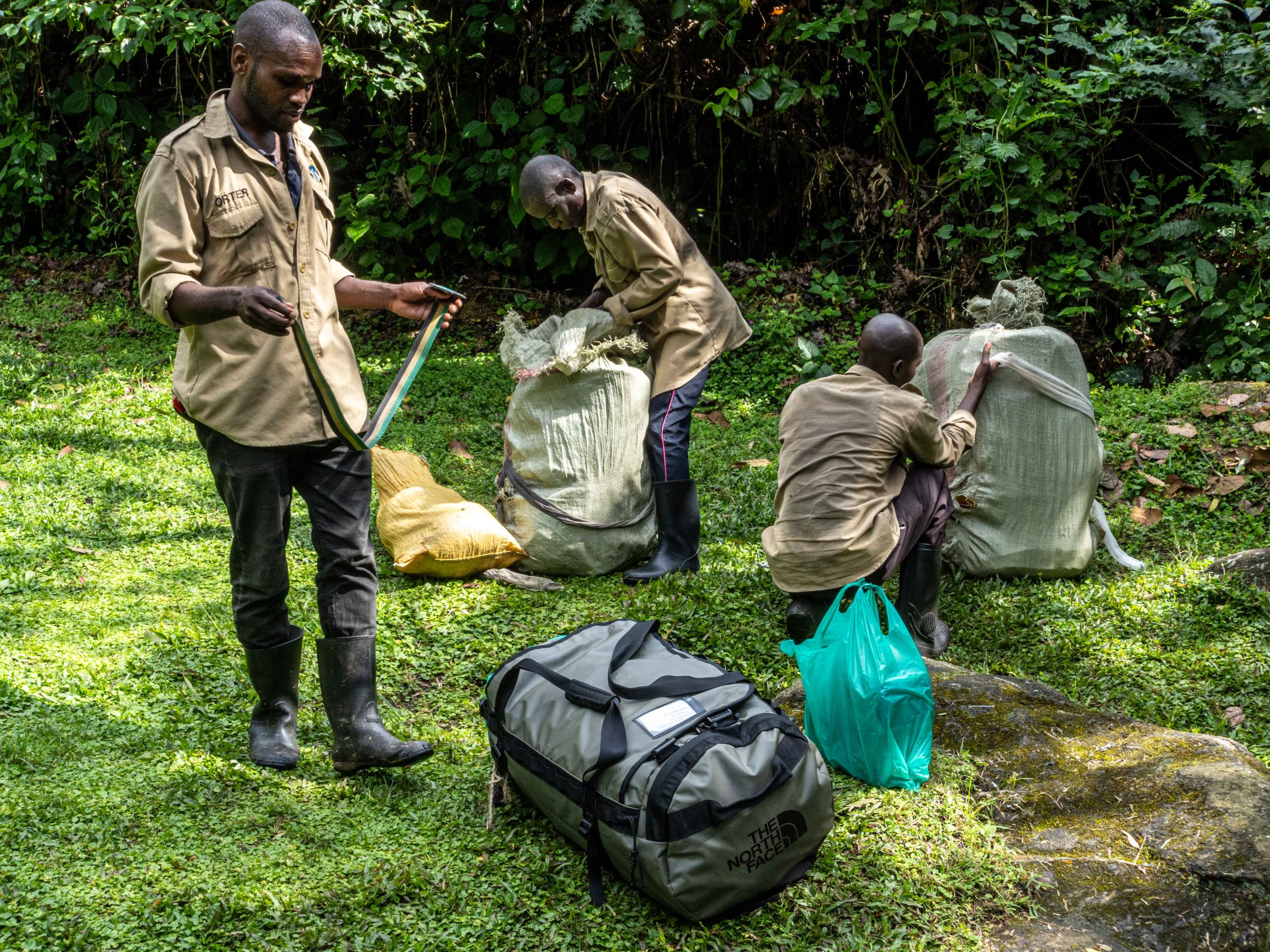
It is essential to pack your trekking luggage carefully, as this is what you will carry throughout the trek. You may choose to leave any non-essential items with us or securely at your hotel. As part of the trekking service, porters are provided to help carry luggage. Each trekker is allowed a maximum of 23kgs, which includes your food. Any weight exceeding this allowance will be treated as extra luggage and will incur an additional fee.