

The Incredible Journey along the Kilembe Trail: From Rainforest to Snow.
The Kilembe Trail, located in the western ranges of the Rwenzori Mountains in Uganda, is one of the most incredible trekking experiences in Africa. What makes this trail exceptional is its dramatic transition through multiple vegetation zones within a relatively short distance. Hikers climb from dense tropical rainforest at the base to alpine moorlands and snow-covered peaks at the summit, experiencing a remarkable diversity of landscapes, climates, and plant life.
The trail is carefully organized around a series of camps that provide rest, guidance, and a safe route through the mountain. These include Sine Camp, Kalalama Camp, Mutinda Camp, Bugata Camp, Hunwick’s Camp, and Margherita Camp along the ascent. On the descent, trekkers pass through Kiharo Camp and Nyamwamba Camp, eventually returning to the trekkers’ hostel.
As hikers progress, they encounter distinct ecological zones: the tropical montane rainforest, the bamboo zone, the giant heather zone, the alpine moorland, and finally the glacial and rocky zone. Each zone features unique plant species adapted to temperature, moisture, and altitude. For example, the rainforest hosts towering trees and ferns, the bamboo zone features tall African mountain bamboo, the heather zone is dominated by giant Erica shrubs, and the alpine moorland supports giant lobelias and groundsels. Near Margherita Peak, only lichens, mosses, and hardy alpine plants survive the glacial conditions.
This trek is more than a climb; it is an ecological journey through multiple layers of life. Moving from lush rainforest to snowy peaks and back, the Kilembe Trail offers an unforgettable adventure that combines physical challenge with the beauty of nature’s diversity.
 Sine Camp: The Gateway to the Tropical Montane Rainforest
The journey along the Kilembe Trail begins at Sine Camp, nestled within the tropical montane rainforest zone. This zone occupies the lower slopes of the Rwenzori Mountains and is characterized by high rainfall, humid air, and dense, layered vegetation. The tall forest canopy, formed by trees such as Podocarpus, Prunus africana, and Albizia, blocks most sunlight from reaching the forest floor, creating a dim, cool environment rich with mosses, ferns, and climbing vines.
Trekkers approaching Sine Camp often encounter small streams, wooden bridges, and soft muddy trails. The area is alive with wildlife. Birds, monkeys, and insects are abundant, producing a symphony of natural sounds that accompanies every step. Beneath the canopy, smaller plants like ferns, wild ginger, and ground ferns thrive, adding layers of greenery along the trail.
Sine Camp is also at the beginning of the gradual transition toward the bamboo zone. Some patches of tall African mountain bamboo (Yushania alpina) start appearing, marking the end of the dense rainforest. The camp provides an essential rest point for trekkers to acclimatize and enjoy the beauty of the lush, vibrant forest before ascending higher into cooler, less dense zones.
Evenings at Sine Camp are peaceful, with mist rolling over the forest slopes and creating an ethereal atmosphere. Many hikers spend time observing the interplay of light and shadow on moss-covered trunks and listening to the gentle rustle of leaves. This first camp introduces trekkers to the rich biodiversity of the Rwenzori Mountains and sets the tone for the ecological journey ahead.
Kalalama Camp: Transition to the Bamboo and Heather Zones
After Sine Camp, hikers continue climbing toward Kalalama Camp, which lies at the upper edge of the tropical montane rainforest and beginning of the bamboo zone. This transitional zone is cooler than the rainforest below, and the vegetation begins to change noticeably. Large bamboo plants grow in thick clusters, forming natural green tunnels along the trail. African mountain bamboo dominates the slopes, accompanied by shrubs, mosses, and occasional wildflowers.
Kalalama Camp is surrounded by a mix of bamboo and emerging heather shrubs, signaling the approach of the giant heather zone found at higher altitudes. The air is fresh, often cool and misty, and clouds frequently drift across the mountains, adding a mystical quality to the landscape. Hikers enjoy wider views of valleys and forested slopes as the tree canopy thins.
The camp is strategically placed to help trekkers adjust to increasing altitude while acclimatizing to the cooler climate. Moss-covered branches and lichen growing on rocks become more noticeable, marking the transition from lowland rainforest species to high-altitude plants. Ferns and shrubs are still present but gradually make way for heather species as hikers ascend.
Kalalama Camp provides a serene environment for resting and observing the surrounding ecosystem. Small streams and gentle waterfalls contribute to the calm atmosphere, while the misty bamboo and emerging heather create a sense of moving into a magical world. This stage prepares trekkers physically and mentally for the more challenging ascent into the giant heather and alpine zones.
 Mutinda Camp: Entering the Giant Heather Zone
Continuing upward along the trail, hikers reach Mutinda Camp, located firmly within the giant heather zone. The landscape here is dramatically different from the rainforest and bamboo zones below. Giant heather (Erica arborea) dominates the slopes, growing as twisted, moss-covered shrubs often reaching several meters in height. The thick mosses and lichens that coat these shrubs add an almost otherworldly character to the terrain.
The surrounding area includes smaller alpine shrubs, everlasting flowers, and hardy mosses, all adapted to cool, misty conditions. Mutinda Camp is also known for the Mutinda ridges, small ridges that hikers climb before reaching the camp. These ridges provide panoramic views of valleys, distant peaks, and the dramatic slopes of the Rwenzori Mountains.
The weather at Mutinda Camp is cooler and often wet, with frequent cloud cover that creates mystical mountain landscapes. This zone challenges trekkers as the terrain becomes rougher and the altitude continues to rise. Hiking through the heather, trekkers notice how the vegetation has adapted to resist cold temperatures, retain moisture, and survive high winds.
Mutinda Camp serves as a critical rest point, giving hikers the opportunity to acclimatize and prepare for the final stages of the climb through alpine moorland toward the glacial zone near Margherita Peak. Many consider this section the most visually stunning part of the Kilembe Trail due to the dramatic shapes and textures of the giant heather plants.
 Bugata Camp: The Alpine Moorland Begins
Above Mutinda Camp, the Kilembe Trail enters the alpine moorland zone, where vegetation becomes sparser and more specialized for cold, wet conditions. Bugata Camp sits in a high valley surrounded by dramatic ridges and is close to Bugata Lake, a serene alpine lake reflecting the surrounding mountains.
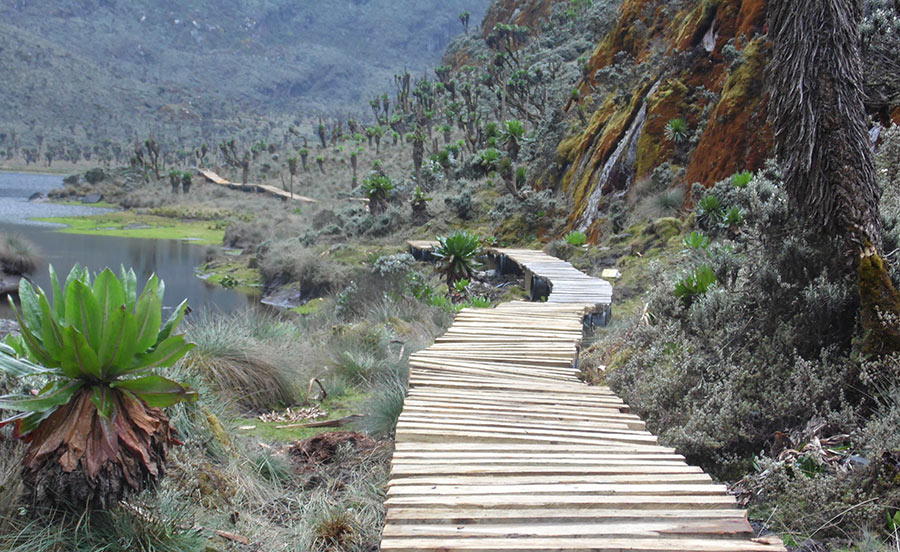
The vegetation here includes iconic high-altitude species such as giant lobelias (Lobelia wollastonii) and giant groundsels (Dendrosenecio adnivalis). These plants grow tall with thick, protective stems that help them survive freezing nights and strong winds. Other vegetation includes tussock grasses, mosses, and small hardy flowers scattered among rocky soil.
Bugata Camp is known for its wide-open scenery and the quiet, almost untouched beauty of high-mountain valleys. The air is noticeably colder, and the terrain is rockier, requiring trekkers to navigate carefully. The open landscape allows for spectacular panoramic views of the surrounding peaks and valleys, which hikers often photograph during their rest breaks.
The camp is an essential stopping point before the ascent toward Hunwick’s Camp and ultimately Margherita Camp. The alpine moorland zone marks a dramatic shift from dense vegetation to a more extreme environment where plants survive by growing slowly and storing energy for cold nights. Spending time at Bugata Camp helps trekkers acclimatize while enjoying the unique flora and scenery of the high Rwenzori Mountains.
Hunwick’s Camp: High Alpine Moorland and Rugged Valleys
After leaving Bugata Camp, hikers reach Hunwick’s Camp, located deeper within the alpine moorland zone. The environment here becomes colder and more exposed, with fewer trees and shrubs than in the lower zones. The open landscape allows hikers to see wide valleys, steep ridges, and towering peaks. The air is crisp and often carries a damp chill, signaling the approach to the highest elevations of the Kilembe Trail.
The dominant vegetation includes giant lobelias and giant groundsels, which rise like natural towers from the rocky soil. Their thick stems store water and energy to survive freezing nights, while tussock grasses and small mosses grow in sheltered areas. The rugged terrain makes trekking more physically demanding, but the scenery is breathtaking, with panoramic views stretching across the Rwenzori range.
Hunwick’s Camp is positioned in a valley that serves as a natural acclimatization point. Trekkers often spend extra time here resting and preparing for the final climb toward Margherita Camp and the glacial zone. Clouds frequently drift through the valley, creating dramatic light and shadow effects across the mountains and alpine vegetation.
Despite the sparse vegetation, this zone has its own unique beauty. The giant lobelias and groundsels, some of which resemble small trees, dominate the landscape and give the area an almost prehistoric appearance. Nights at Hunwick’s Camp are cold, and trekkers must layer up while listening to the wind sweeping across the open slopes. The camp offers both a challenging and unforgettable experience, bridging the journey from lush heather zones to the icy peaks above.
 Margherita Camp: From Afro-Alpine Vegetation to Snow and Ice
At about 4,485 meters on Mount Stanley within Rwenzori Mountains National Park, Margherita Camp sits in the Afro-Alpine Zone (4,000–4,500m). This camp marks the final stage of the Kilembe Trail ascent and presents one of the harshest environments along the mountain. Cold temperatures, strong winds, and rocky terrain dominate the area, while the lush forests, bamboo, and giant heather zones from lower elevations give way to a sparse, rugged landscape shaped by extreme high-altitude conditions.
The plant life here is highly specialized. The slopes are dominated by giant lobelias (Lobelia wollastonii) and giant groundsels (Senecio adnivalis), which survive the cold by storing water and energy in their thick stems. The ground is covered with patches of everlasting flowers (Helichrysum), tussock grasses (Carex runssoroensis), and mats of mosses and lichens that cling to rocky surfaces. These hardy species thrive where most plants cannot, showing remarkable adaptation to frost, altitude, and high winds.
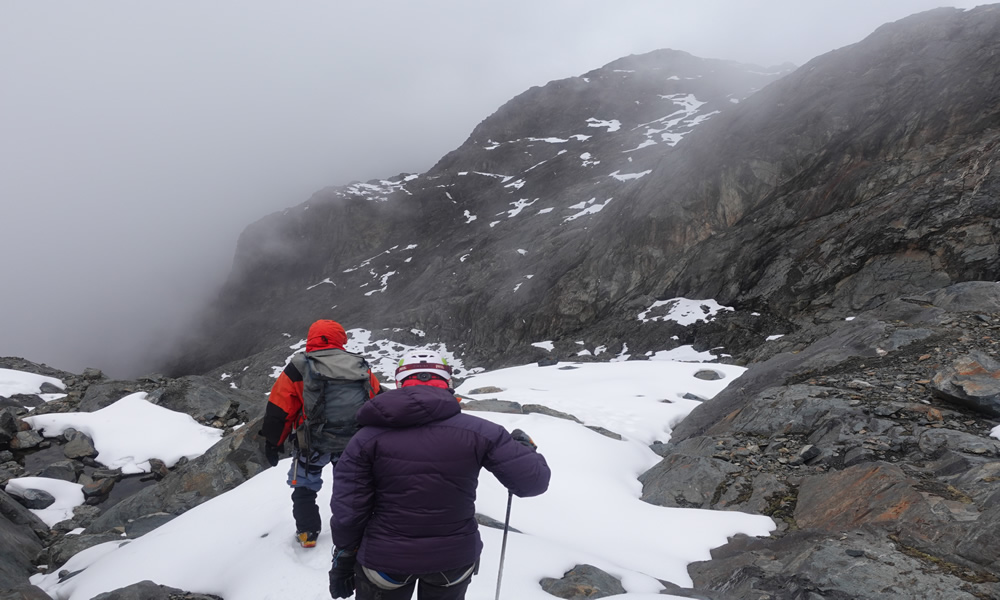
From Margherita Camp, trekkers can attempt the final ascent to Margherita Peak, the highest point of the Rwenzori Mountains. Just above the camp, vegetation quickly disappears, transitioning into the nival zone, dominated by bare rocks, glaciers, and permanent ice. Only the hardiest alpine organisms survive here, and the terrain is stark, icy, and dramatic.
Spending time at Margherita Camp is an unforgettable experience. Hikers witness the contrast between the icy summit and the verdant forests and heather slopes below. Panoramic mountain views, sweeping glacier fields, and striking ice formations create a surreal high-altitude environment. This zone challenges both physical endurance and mental resilience, making the achievement of reaching Margherita Camp a highlight of the Kilembe Trail and a rare encounter with Africa’s high-mountain wilderness.
 Hike to the Margherita peak.
From Margherita Camp, hikers begin the steep and challenging ascent toward the peak. The landscape here is harsh and dramatic: bare rocks, glaciers, snowfields, and icy ridges dominate the environment. Very few plants survive these conditions, aside from hardy lichens and small alpine mosses tucked into sheltered crevices.
The climb to the summit is physically demanding and requires careful navigation, but the reward is spectacular. From the top, trekkers can see the contrast between the icy, rocky peaks above and the lush green forests far below. Glaciers and permanent snowfields near the equator make this a unique experience unmatched in most parts of Africa.
After spending time on the summit and enjoying the breathtaking views, hikers return to Margherita Camp to rest before beginning the descent. This side ascent to the peak adds a memorable highlight to the trek, making Margherita Camp not just a stopping point but the gateway to the mountain’s ultimate high point.
Kiharo Camp: Descending Through the Giant Heather Zone
After completing the ascent to Margherita Peak and returning to Margherita Camp, trekkers begin the descent along the Kilembe Trail. The significant stop on the way down is Kiharo Camp, situated within the giant heather zone. This zone marks the transition from the cold, sparse alpine and glacial areas toward more vegetated mountain slopes. The environment here is cooler than the bamboo or rainforest zones but warmer and more sheltered than the high alpine moorlands near the summit.
The landscape around Kiharo Camp is dominated by giant heather shrubs (Erica arborea), which grow twisted and moss-covered, giving the slopes a dramatic and mystical appearance. Interspersed among the heather are smaller alpine shrubs, moss carpets, and occasional everlasting flowers (Helichrysum), all adapted to the cooler, misty climate. The trail winds gently through these dense heather patches, offering trekkers wide views of the mountainsides and valleys below.
Kiharo Camp provides an excellent rest point for hikers to recover after the physically demanding summit climb. The cooler temperatures, soft ground, and open surroundings make it ideal for reflection and acclimatization. Birds and small insects reappear in this zone, signaling the return of more diverse life compared to the barren glacial slopes above.
Descending through Kiharo Camp also allows trekkers to appreciate the dramatic shift in vegetation. The giant heather zone serves as a bridge between the icy summit and the warmer, bamboo forests below. Hikers can enjoy the contrast of twisted shrubs, moss-covered ground, and scattered alpine flowers while observing how plant communities gradually regain density as they move down the mountain. This section of the trail highlights the Rwenzori Mountains’ unique ecological diversity and prepares trekkers for the next stage: the lush bamboo and rainforest zones at lower altitudes.
Nyamwamba Camp: Returning to the Tropical Montane Rainforest
The final stage of the descent takes hikers to Nyamwamba Camp, located once again in the tropical montane rainforest zone. This zone, which hikers encountered at the start of their journey, is characterized by tall, dense trees, abundant ferns, mosses, and vines, as well as humid, warm air.
The rainforest here feels vibrant after experiencing the sparse vegetation and cold temperatures of the upper zones. Podocarpus, Prunus africana, and Albizia dominate the canopy, while ferns, groundcover plants, and climbing vines thrive below. Small streams and waterfalls dot the landscape, filling the air with the sounds of flowing water.
Nyamwamba Camp offers a final resting point before hikers return to the trekkers’ hostel at the base of the trail. The familiar sights and sounds of the rainforest provide a comforting sense of closure after the long and challenging trek through multiple mountain zones.
Descending through the rainforest also allows trekkers to reflect on the ecological diversity they have witnessed: tropical forests, bamboo stands, giant heather, alpine moorlands, and glacial peaks—all within a few days’ trek. Nyamwamba Camp marks the end of this extraordinary journey from rainforest to snow and back, leaving hikers with memories of an unparalleled adventure through the Rwenzori Mountains.
 Conclusion: The Kilembe Trail – From Rainforest to Snow and Back
The Kilembe Trail is more than just a trek; it is a journey through nature’s incredible diversity. From the lush, humid tropical montane rainforest near Nyamwamba and Sine Camps, through the towering bamboo corridors of Kiharo and Sine, into the twisted giant heather of Mutinda and Kalalama, and finally to the rugged alpine moorlands at Bugata, Hunwick’s and Margherita camp, every stage offers unique landscapes and ecosystems. The trek culminates in the icy, dramatic glaciers in Margherita peak, where only the hardiest mosses, lichens, and tiny alpine plants survive.
Descending back through the camps gives trekkers the rare experience of retracing these ecological zones in reverse. The warm bamboo forests, misty heather slopes, and finally the vibrant rainforest remind hikers of the stark contrasts between the mountain’s heights and its base. Each camp along the trail Sine, Kalalama, Mutinda, Bugata, Hunwick’s, Margherita, Kiharo, and Nyamwamba serves as a waypoint not only for rest but also for observing the changes in climate, vegetation, and wildlife.
The trail demonstrates the beauty of adaptation in nature, showing how plants and ecosystems adjust to altitude, temperature, and rainfall. For trekkers, it is a journey of both physical challenge and profound connection with nature. Experiencing the Rwenzori Mountains from rainforest to snow and back leaves an unforgettable impression, showcasing one of the most spectacular mountain environments in Africa. The Kilembe Trail is a true testament to the continent’s ecological richness and a must-experience adventure for nature lovers, photographers, and mountain explorers alike.