

8-Day Hike to Mutinda Lookout and gorilla trekking safari
8 Day Hike to Mutinda Lookout and gorilla trekking safari, Embark on an unforgettable 8-day adventure that perfectly blends high-altitude hiking with one of Africa’s most iconic wildlife encounters. This carefully crafted journey takes you deep into the mystical Rwenzori Mountains, often referred to as the “Mountains of the Moon,” where dramatic landscapes, lush forests, and breathtaking viewpoints await at every turn.
Your hike leads you through diverse ecosystems—from dense Afro-montane forests alive with primates and birdlife, to bamboo zones and surreal alpine vegetation—culminating in the stunning Mutinda Lookout, where sweeping panoramic views reward your efforts. Along the way, you’ll experience the raw beauty and serenity of one of East Africa’s most untouched mountain ranges.
The adventure continues with a transition to the legendary Bwindi Impenetrable National Park, home to the endangered mountain gorillas. Here, you’ll take part in a once-in-a-lifetime gorilla trekking experience, coming face-to-face with these gentle giants in their natural habitat—an encounter that is both humbling and profoundly moving.
Blending adventure, nature, and cultural richness, this itinerary offers an immersive Ugandan experience designed for travelers seeking both challenge and deep connection with the wild.
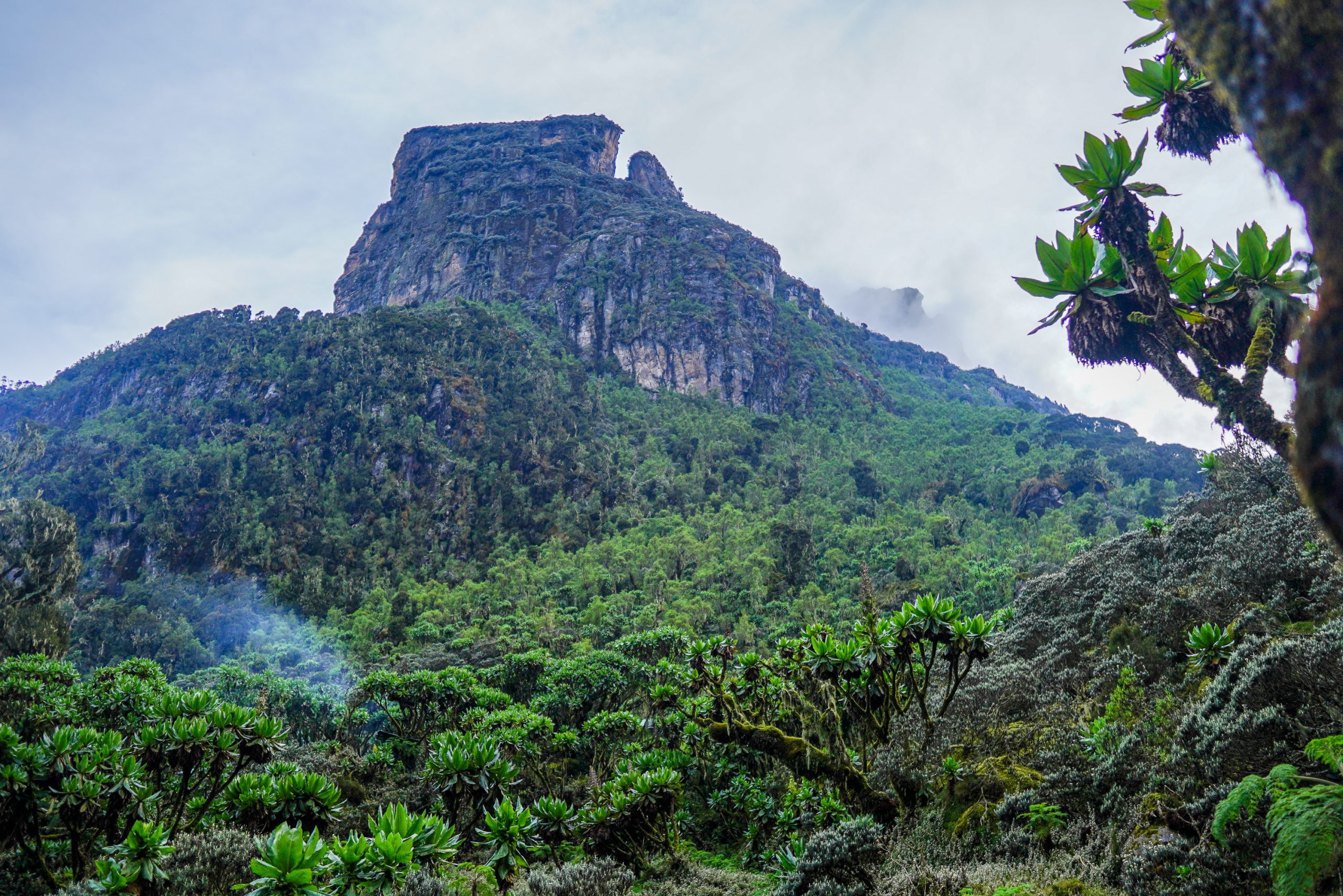 Trip overview of 8-Day Hike to Mutinda Lookout and gorilla trekking safari
- Day 1: Transfer from Entebbe International Airport to Kasese
- Day 2: Trekkers Hostel (1,450m) to Sine Camp (2,596m)
- Day 3: Sine to Mutinda Camp (3,688m) and hike to the Mutinda lookout.
- Day 4: Mutinda Camp to Kiharo Camp
- Day 5: Kiharo Camp to Forest View / Nyamwamba Valley Exit and transfer to Kasese.
- Day 6: Transfer to Bwindi Impenetrable National Park from Kasese
- Day 7: Gorilla trekking and relaxation at the lodge.
- Day 8: Transfer back to Kampala/Entebbe airport
Detailed itinerary of 8-Day Hike to Mutinda Lookout and gorilla trekking safari
Day 1: Transfer from Entebbe International Airport to Kasese
Our experienced driver guide shall pickup from in Entebbe International Airport and transfer you to Rwenzori mountains National park (Kasese), the drive is more scenic as it takes you through tea plantations and more landscape with some eye catching things of local road side markets and farm lands side by side. You shall have a lunch stopover in Fort Portal then drive to your respective hotel/ lodge in Kasese, you shall have lunch en-route at Fort Portal. Transfer/transport time: approx. 6-7 h
Accommodation: Hotel Margherita Kasese or similar
Sandton hotel Kasese or similar
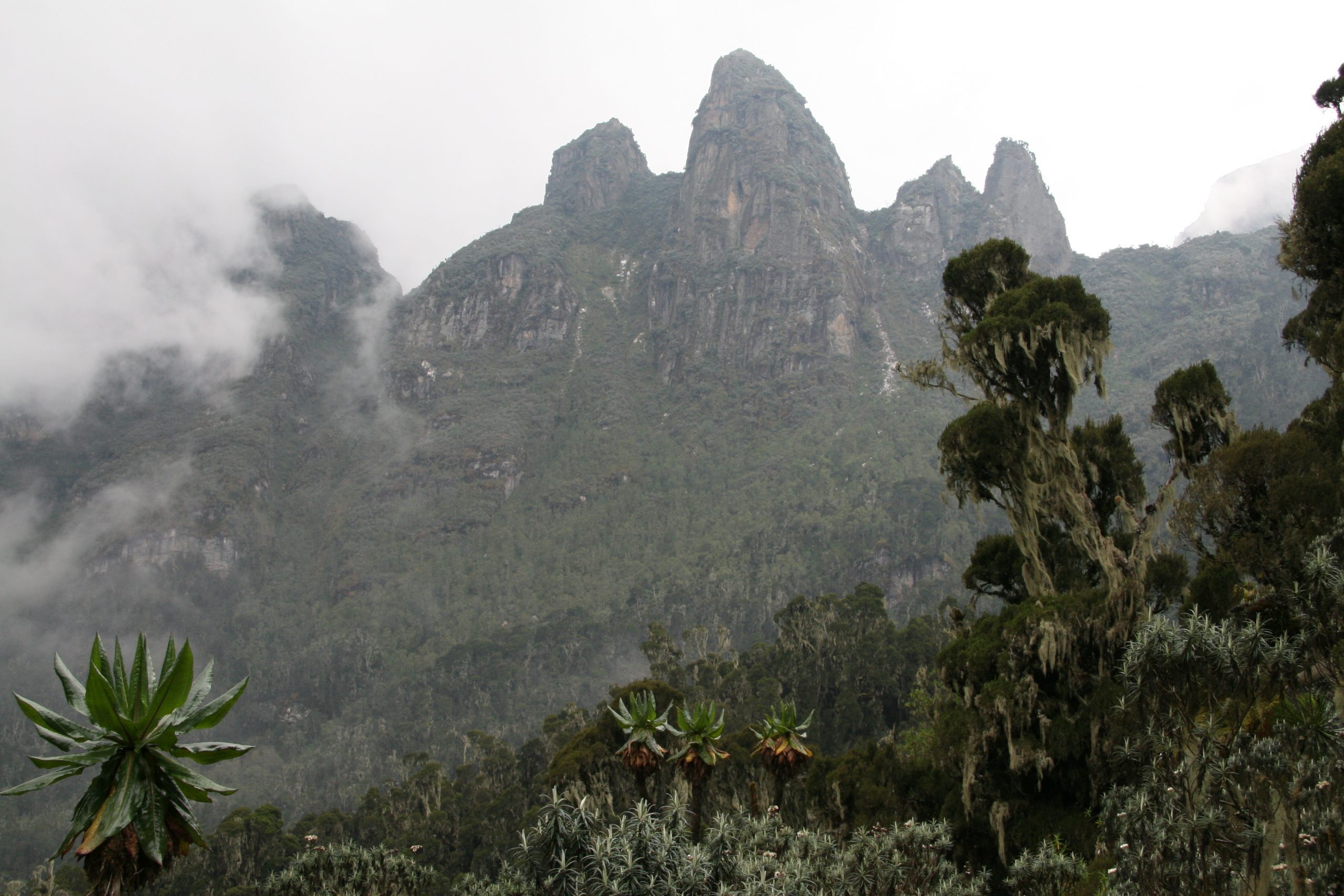 Day 2: Trekkers Hostel (1,450m) to Sine Camp (2,596m)
Wake up for an early morning breakfast and your hiking journey begins at Trekkers Hostel, located at 1,450 meters above sea level. The trail gradually ascends for roughly 1,146 meters as you make your way to Sine Camp.
The path follows a lush valley carved through dense Afro-montane forest. The climb is steady but rewarding, surrounded by towering trees, thick undergrowth, and a rich variety of plant life including moss-covered branches, hanging lichens, ferns, and wildflowers
Wildlife is often encountered along this stretch. You may spot blue monkeys moving quickly through the canopy, while troops of black-and-white colobus monkeys occasionally leap gracefully between trees. With luck, you might also see the elusive L’Hoest’s monkey, a species deeply respected in local culture. The distant calls of chimpanzees sometimes echo through the forest.
Birdlife is abundant, making this section especially appealing for nature lovers. As you approach Sine Camp, the forest begins to transition toward bamboo vegetation.
Sine Camp is positioned along a narrow ridge within the forest and offers simple wooden accommodation surrounded by tall trees. From camp, you can enjoy views down into a deep valley where a waterfall crashes onto rocks far below. Just a short walk away lies Enock’s Falls, a striking cascade framed by thick green vegetation and hanging vines.
In the evening, many trekkers relax around the campfire, sharing stories with guides while enjoying the peaceful mountain atmosphere. You may either overnight here.
Overnight: Sine camp
Meal Plan: Lunch and Dinner.
Day 3: Sine (2,596m) to Mutinda Camp (3,588m) and hike to the Mutinda lookout (3973).
After breakfast, the hike resumes at around 8:30am. After reaching kalalama camp, the trail immediately enters a dense bamboo zone where steep switchbacks help ease the climb through the hillside.
As you gain elevation, the vegetation changes into a mix of bamboo and giant heather forest. The route is scenic, with occasional clearings revealing misty valleys, streams, and mosscovered slopes. You will cross small waterways and pass near hidden waterfalls tucked into the vegetation.
The landscape becomes increasingly dramatic as you enter the giant heather zone. Thick vegetation, twisted tree trunks, and hanging moss give the forest an almost magical appearance. Giant lobelias and other alpine plants begin to appear as you climb higher.
The trail follows ridges and valleys, sometimes dipping before rising again, offering constant variation in terrain. Eventually, you reach Mutinda Camp, situated beside a river and small waterfall. This is a perfect place to rest, wash off the day’s hike, and relax in the alpine environment.
In the afternoon, hike to Mutinda Lookout (3,975m), a steep 1–2 hour ascent over rocky terrain and open alpine slopes. The viewpoint offers wide panoramic views across the Rwenzori ranges, deep valleys, and distant lowlands including Kasese and Lake George on clear days. Standing at the summit gives a powerful sense of scale, with cloud layers often drifting below and mountain ridges stretching endlessly into the distance. The hike also serves as excellent acclimatization before higher altitude hiking.
After the descent, return to Mutinda Camp for overnight stay.
Overnight: Mutinda camp
Meal Plan: Breakfast, lunch and dinner
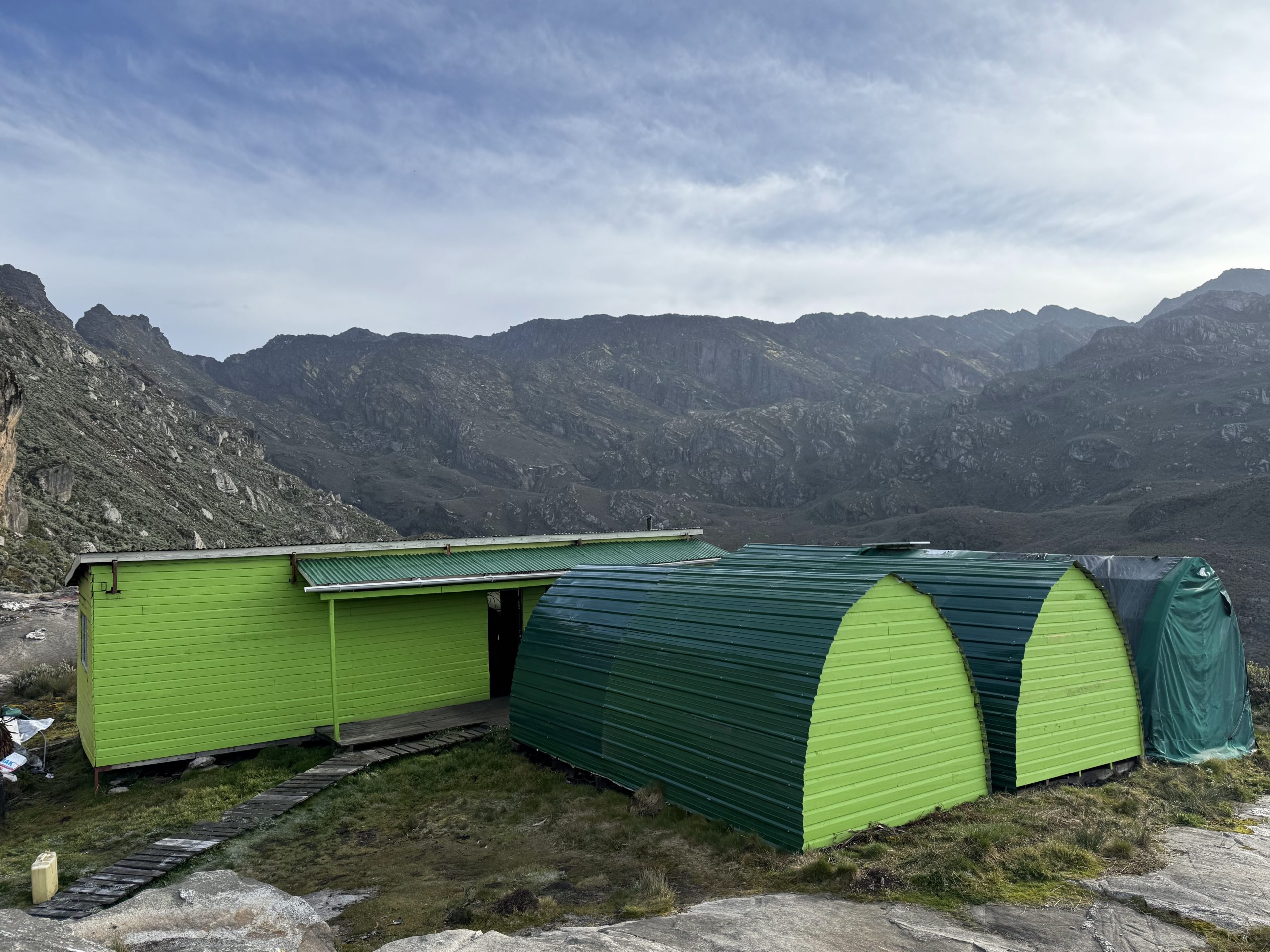 Day 4: Mutinda Camp (3,588m) to Kiharo Camp (3430m)
The day begins with a gradual ascent along a rocky streambed, followed by a transition into boggy terrain fitted with wooden boardwalks in some sections.
After crossing the upper reaches of a waterfall, the trail veers through a rugged pass that winds between high peaks known as the Twin Peaks area. This remote section offers a true wilderness feel, with dramatic cliffs and open views of surrounding ridges.
Wildlife sightings are possible here, including hyrax and the occasional duiker. Birds of prey such as hawks and eagles can often be seen circling above the cliffs or nesting along rocky outcrops.
Descending from the pass, the trail enters a broad wetland filled with giant lobelias before continuing through thick heather forest and over large moss-covered boulders.
Eventually, you arrive at Kiharo Camp, a quiet resting point in the valley. A short walk from the camp leads to Kiharo Falls, a powerful waterfall dropping over green, mossy rock faces—an ideal place to explore before evening.
Overnight: Kiharo camp
Meal Plan: Breakfast, lunch and dinner
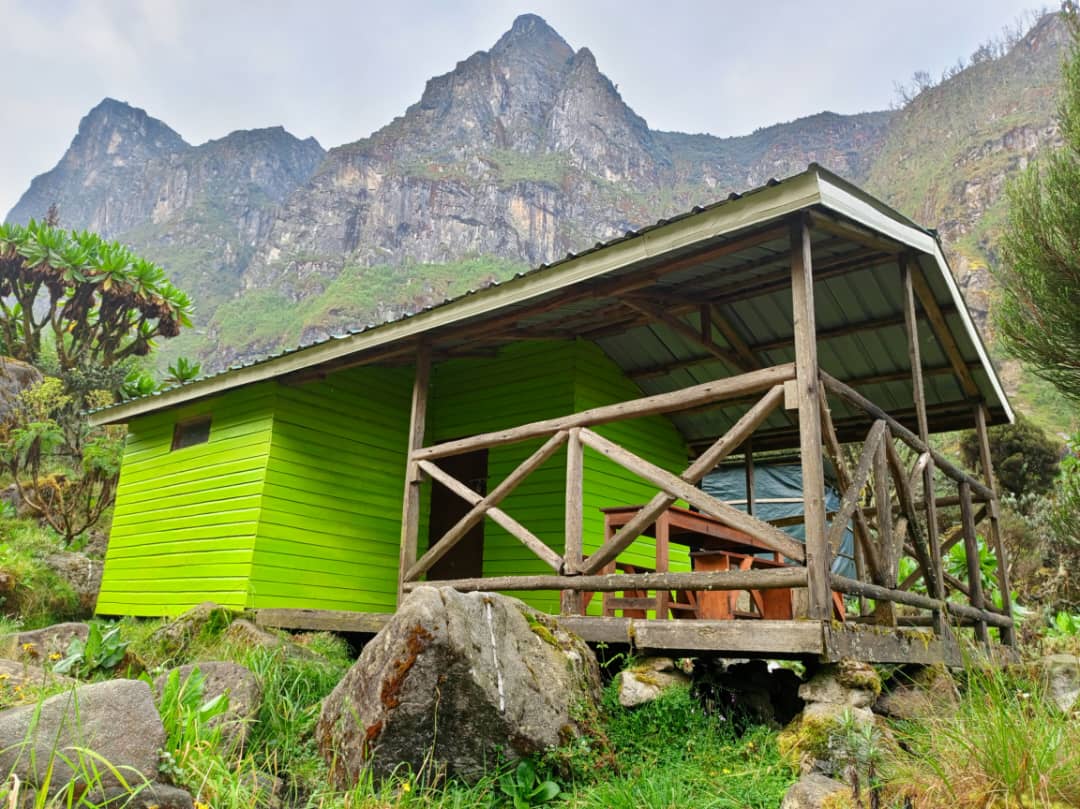 Day 5: Kiharo Camp (3430m) to Forest View (2580m)/ Nyamwamba Valley Exit and transfer to Kasese.
The final day follows the spectacular Nyamwamba Valley, a long descent filled with some of the most beautiful scenery in the Rwenzori region.
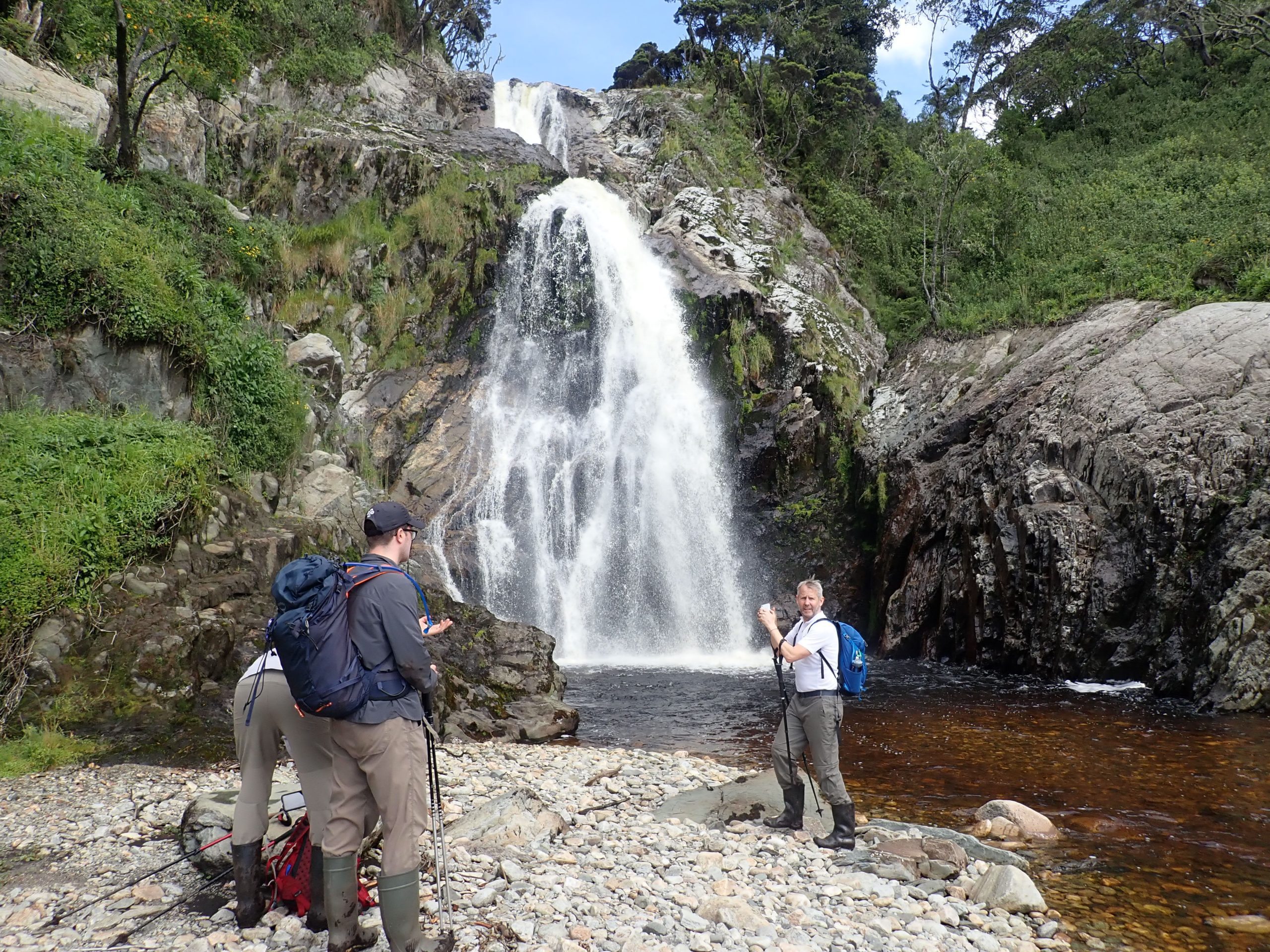
The trail winds alongside a fast-flowing river, passing through dense forest, steep valleys, and countless waterfalls. Smooth rocks covered in bright green moss line the riverbanks, creating a constantly changing landscape.
This route was carefully developed to allow safe passage through terrain that was previously inaccessible to most travelers. As you descend, the forest becomes more tropical, with bamboo groves and thick vegetation appearing along the river.
Along the way, you pass a series of impressive waterfalls, each with its own character—ranging from wide cascades to narrow plunges into deep pools. Some sections offer opportunities to get close to the water or simply enjoy the sound and spray of the falls.
Wildlife is often present in this lower section of the valley. Duikers may be seen feeding in clearings, while primates and various bird species move through the trees above.
The hike concludes at Forest View Camp (around 2,580m), where you can rest and enjoy your final views over the forested valleys below. From here, the journey ends with a rewarding sense of accomplishment after exploring one of the most scenic mountain routes in East Africa.
Transfer to a lodge in Kasese for dinner and overnight stay.
Accommodation: Hotel Margherita Kasese
Sandton hotel Kasese
Meal plan: Half board
 Day 6: Transfer to Bwindi Impenetrable National Park from Kasese
After breakfast in Kasese, begin a scenic drive southwest toward Bwindi Impenetrable National Park, a journey. The route passes through rolling hills, rural villages, and plantations, offering beautiful views of Uganda’s countryside. You may stop briefly for refreshments or photos along the way. Arrive at your lodge at Bwindi Impenetrable National Park in the afternoon, where you can have lunch, relax and enjoy the forest surroundings. Spend the evening preparing for the next day’s gorilla trekking experience, with dinner and overnight stay at your accommodation.
Accommodation: Ichumbi gorilla lodge or similar
Rushaga gorilla haven or similar
Meal Plan: Full board
Day 7: Gorilla trekking and relaxation at the lodge.
Rise early for breakfast before preparing for one of the most extraordinary wildlife experiences in the world, trekking mountain gorillas in Bwindi Impenetrable National Park with your packed lunch. You shall transfer to the park headquarters by 7:30am for briefing by 8:00 am where your expert driver guide will meet you at the park headquarters to provide a briefing on gorilla behavior, trekking rules, and safety protocols, ensuring a respectful and unforgettable encounter. The trek takes you through dense rainforest, and along narrow. As you navigate the forest, the anticipation builds with every sound of rustling leaves or distant calls. Finally, you will encounter a gorilla family in their natural habitat, observing adults, playful infants, and silverbacks up close. This intimate experience, usually lasting about one hour, provides a profound understanding of their social dynamics and intelligence. After the encounter, return to the lodge to rest, reflect, and share stories of this once-in-a-lifetime adventure, followed by dinner and overnight stay.
Accommodation: Ichumbi gorilla lodge
Rushaga gorilla haven or similar
Meal Plan: Full board
 Day 8: Transfer to Entebbe International Airport.
Wake up for an early morning breakfast check out of the lodge and then transfer to Entebbe International Airport, along the way you shall have lunch at Igongo cultural center in Mbarara, after proceed and have a stop at around the equator for photos and also buying souvenirs. Continue with the journey to Entebbe International Airport. Safari highlight: End of safari.
End of 8 days Mutinda lookout hike via Kilembe trail and gorilla trekking safari
Price includes:
- Hiking fees in the Kilembe trail
- Park entrance
- Trained guides
- Porters in Rwenzori mountains
- Meals
- Accommodation on the mountain, Kasese and Bwindi Impenetrable National park
- Rubber boots
- Gorilla permits
- Airport and ground transfers
- 4×4 safari vehicle
- English speaking driver guide
Price Excludes
- Medivac and evacuation insurance
- Tips
- Porters during gorilla trekking
- Air ticket
- Personal hiking gears
- Other items of personal nature
- Other personal expenses not included in the package.
- VISA: You all need a visa to enter Uganda application is done online https://visas.immigration.go.ug
- Vaccine: Yellow fever is still required. Make sure you are up to date needed at Entebbe International Airport.
Rwenzori Mountains Hiking Packing Guide
Climbing the Rwenzori Mountains is a unique adventure that takes you through several ecological zones—from dense tropical rainforest to alpine and glacial environments. Because conditions change rapidly with altitude, every item you carry serves a specific purpose tied to the terrain, weather, and physical demands of the Hike.
Essential Personal Gear
Hiking or Climbing Boots.
The Rwenzori range is extremely wet, with muddy, slippery trails in the lower sections and icy conditions higher up. Strong, waterproof boots with good ankle support are essential. They also need to be compatible with crampons for glacier sections. Regular sneakers or light hiking shoes are not suitable for this environment.
Water-Resistant Hiking Trousers.
Expect mud, thick vegetation, and constant moisture. Durable, quick-drying trousers protect against scratches, insect bites, and wet conditions. They also help retain warmth as temperatures drop with altitude.
Lightweight Shirts.
In the lower rainforest zone, temperatures are warm and humid. Breathable shirts help regulate body temperature and reduce discomfort caused by sweating. Choose fabrics that dry quickly in damp conditions.
Warm Jacket or Sweater.
Above 3,500 meters, the temperature drops significantly. Cold winds and mist are common, especially in the mornings and evenings. A warm insulating layer is necessary to prevent cold-related issues during higher altitude hiking and summit attempts.
Waterproof Gloves.
Your hands will be exposed to rain, cold, and sometimes snow. Gloves help maintain warmth and grip, especially when handling equipment or navigating difficult sections.
Headlamp with Spare Batteries.
Early morning summit hikes often begin before sunrise. A reliable headlamp is essential for visibility. Cold weather drains batteries faster, so carrying extras is important.
Daypack (Backpack).
Even though porters carry most equipment, you will need a small backpack for personal items such as water, snacks, rain gear, and valuables. Choose one that is comfortable and water-resistant.
Sun Hat.
At higher elevations, the sun can be intense despite cool temperatures. A hat helps protect against sunburn and heat exposure.
Handkerchiefs or Small Towels.
Useful for maintaining hygiene—wiping sweat, drying hands, or cleaning up during the hike.
Sunglasses.
Snow and ice reflect strong sunlight, which can strain your eyes. Sunglasses with UV protection are essential for eye safety.
Gaiters.
The Rwenzori is known for deep mud and swampy trails. Gaiters prevent water and debris from entering your boots, keeping your feet drier and more comfortable.
Trekking Poles.
These provide stability on steep, slippery, or uneven terrain. They also reduce strain on your knees during descents and help test the depth of muddy sections.
Clothing for Rain and Cold.
Rain is frequent throughout the mountain. A waterproof jacket and trousers are critical to staying dry. Combined with warm layers, they help maintain body temperature and prevent cold stress.
Wool Socks.
Wool retains warmth even when damp and helps prevent blisters. Keeping your feet warm is key to overall comfort.
Camp Comfort Items.
Lightweight Clothing and Shoes.
After a long day in heavy boots, changing into lighter clothing and shoes helps your body relax and recover.
Sleeping Bag.
Temperatures at higher camps can fall below freezing. A good-quality sleeping bag designed for cold conditions is necessary for proper rest and recovery.
Rubber Boots (Usually Provided).
In the lower zones, trails can be flooded or extremely muddy. Rubber boots are practical for these sections and help keep your feet dry before switching to climbing boots higher up.
Important Preparation Tips.
- Charge all electronic devices (phones, cameras, power banks) before the hike, as there is no electricity on the mountain.
- Pack efficiently—each hiker is typically allowed up to 23 kg, including food. Extra weight may incur additional charges.
- Non-essential items can be left behind at your hotel or with your tour operator.
Gorilla Trekking Packing Guide in Bwindi Impenetrable National Park.
Gorilla trekking takes place in dense rainforest environments where weather conditions can change quickly. Expect mud, humidity, and occasional rain.
Recommended Gears.
Waterproof Hiking Boots.
Trails are often slippery and may involve crossing streams. Good boots provide grip, support, and protection from water and insects.
Long Trousers.
These protect your legs from thorns, insects, and stinging plants. Neutral colors like khaki or green are best.
Long-Sleeved Shirts.
Help protect against scratches, insect bites, and cold. Choose lightweight, breathable materials in neutral tones.
Rain Jacket.
Rain can start unexpectedly. A light waterproof jacket will keep you dry and comfortable.
Gaiters.
Useful for keeping mud, insects, and debris out of your boots in dense forest conditions.
Gloves.
Gardening-style gloves are ideal for protecting your hands when grabbing branches or navigating rough terrain.
Insect Repellent, Sunscreen, and Hat.
Insects are common, and some parts of the trek are exposed to the sun. Protection is essential.
Water and Snacks.
Trekking duration can vary, so staying hydrated and energized is important.
Wide-Brimmed Hat.
Provides better protection from both sun and rain compared to a standard cap.
Socks (Cotton or Wool).
Help prevent friction and protect your feet during long walks.
Face Masks.
Required when near gorillas to reduce the risk of disease transmission.
Warm Layer.
Early mornings and evenings can be cold, so bring a sweater or jacket.
Camera and Binoculars.
Great for capturing memories and observing wildlife. Avoid using flash photography around gorillas.
Clothing Tips for Safari Activities.
- Stick to neutral colors like green, brown, and khaki—they blend well with nature.
- Avoid bright colors, which can attract insects or disturb wildlife.
- Black and blue clothing should also be avoided, as they tend to attract tsetse flies.
What to Avoid.
- Shorts, which expose your skin to insects and plants
- Lightweight sneakers that lack grip
- Tight clothing that restricts movement
- Non-breathable fabrics like heavy denim
- New, untested boots that may cause blisters