

10 Days Rwenzori Hike with 3 Peaks via Kilembe Trail
10 Days Rwenzori Hike with 3 Peaks via Kilembe Trail is one of Africa’s most rewarding mountain adventures, taking hikers through ancient rainforests, giant bamboo, alpine meadows, glacial valleys, and three of the highest peaks in the legendary Mountains of the Moon. This unforgettable expedition combines breathtaking scenery, diverse wildlife, challenging mountain trails, and technical glacier climbing into one remarkable journey. Every day reveals a completely different landscape, making the Rwenzori Mountains one of the most diverse hiking destinations on the continent.
Unlike many mountain climbs that focus only on reaching the summit, this hike offers an experience that changes from one altitude to another. You begin among towering tropical trees alive with birds and monkeys before gradually entering bamboo forests, giant heather, colorful alpine vegetation, rocky ridges, crystal-clear lakes, and permanent glaciers. Each section introduces a new environment, making the journey as exciting as the destination itself.
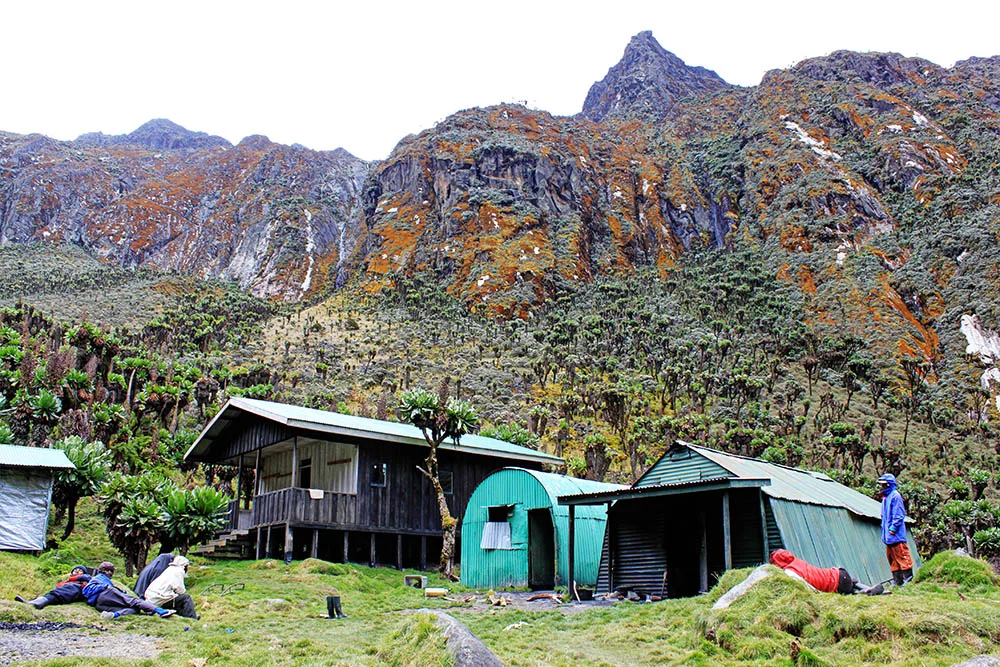 One of the greatest highlights is summiting three magnificent mountains. Hikers stand on Edward peak of Mount Baker, conquer the famous Margherita Peak on Mount Stanley, and climb Vittorio Emanuele Peak on Mount Speke. Few mountain adventures in Africa provide the opportunity to summit three iconic peaks during one expedition while exploring such an extraordinary ecosystem.
The Kilembe Trail is also well known for its quieter routes, beautiful camps, and excellent acclimatization schedule. With experienced mountain guides leading every step, hikers enjoy a safe adventure while learning about the unique plants, wildlife, and history of the Rwenzori Mountains. Whether you are an experienced climber or looking for your first technical mountain expedition, this journey offers memories that will last a lifetime.
Trip overview of 10 Days Rwenzori Hike with 3 Peaks via Kilembe Trail
- Day 1: Hike from Trekkers Hostel (1,450 m) to Sine Camp (2,596 m)
- Day 2: Hike from Sine Camp (2,596 m) to Mutinda Camp (3,588 m)
- Day 3: Hike from Mutinda Camp (3,588 m) to Bugata Camp (4,100 m)
- Day 4: Hike from Bugata Camp (4,100 m) to Hunwick’s Camp (3,874 m) via Bamwanjarra Pass (4,450 m)
- Day 5: Summit Mount Baker (4,842 m) and Return to Hunwick’s Camp (3,874 m)
- Day 6: Hike from Hunwick’s Camp (3,874 m) to Margherita Camp (4,495 m)
- Day 7: Summit Margherita Peak (5,109 m) on Mount Stanley and Descend to Bujuku Valley
- Day 8: Summit Vittorio Emanuele Peak (4,890 m) on Mount Speke and Descend to Hunwick’s Camp
- Day 9: Hikefrom Hunwick’s Camp (3,874 m) to Kiharo Camp (3,430 m) via Oliver’s Pass (4,505 m)
- Day 10: Descend from Kiharo Camp (3,430 m) to Kilembe Base Camp (1,450 m)
Detailed Itinerary of 10 Days Rwenzori Hike with 3 Peaks via Kilembe Trail
Day 1: Hike from Trekkers Hostel (1,450 m) to Sine Camp (2,596 m)
Your adventure begins early in the morning at Trekkers Hostel in Kilembe, situated at 1,450 meters above sea level. After meeting your experienced mountain guides and porters, you receive a comprehensive safety briefing before starting the trek. This is the ideal time to organize your hiking equipment, check your supplies, and ask any final questions before entering the spectacular Rwenzori Mountains National Park.
The trail first passes through peaceful farmland and small villages where local families cultivate bananas, coffee, cassava, and beans, offering a glimpse into daily life in western Uganda. Soon afterwards, you reach the Uganda Wildlife Authority registration point, where all trekkers officially enter the national park.
Beyond the gate, the scenery transforms into a lush Afro-montane rainforest filled with towering trees draped in moss, hanging vines, and colorful lichens. The fresh mountain air carries the sounds of birds, flowing streams, and rustling leaves. Wildlife is often encountered along the trail, including blue monkeys, black-and-white colobus monkeys, and the colorful three-horned chameleon.
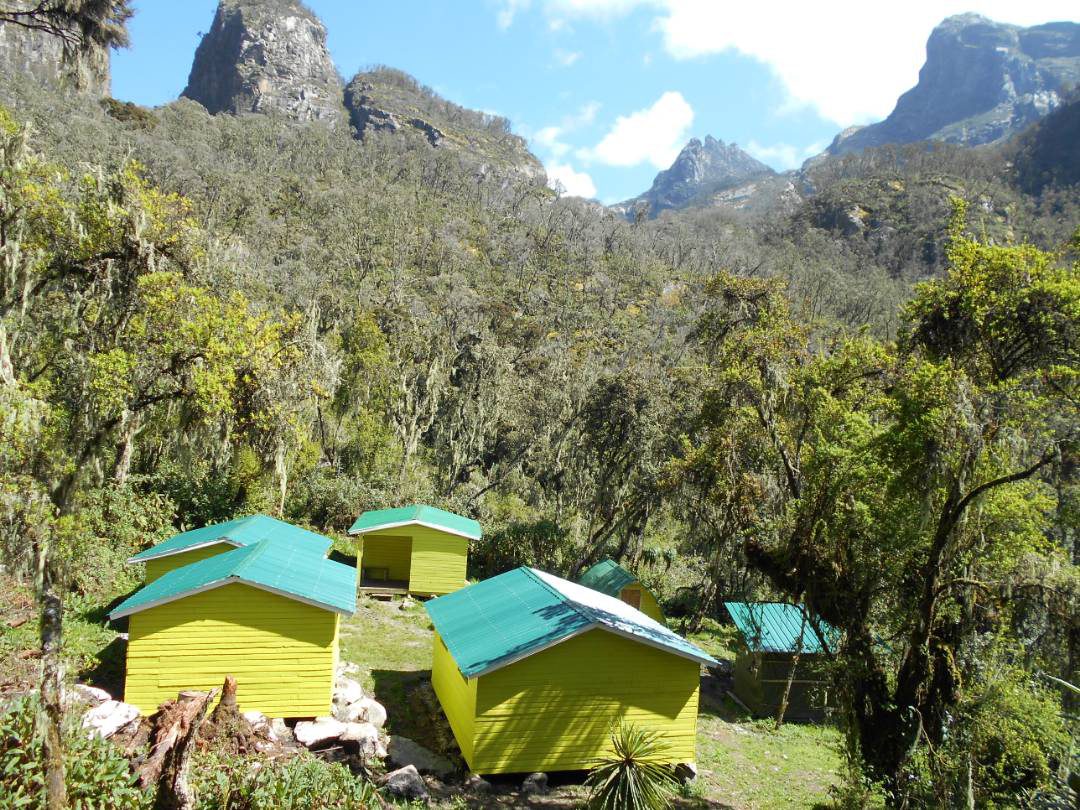
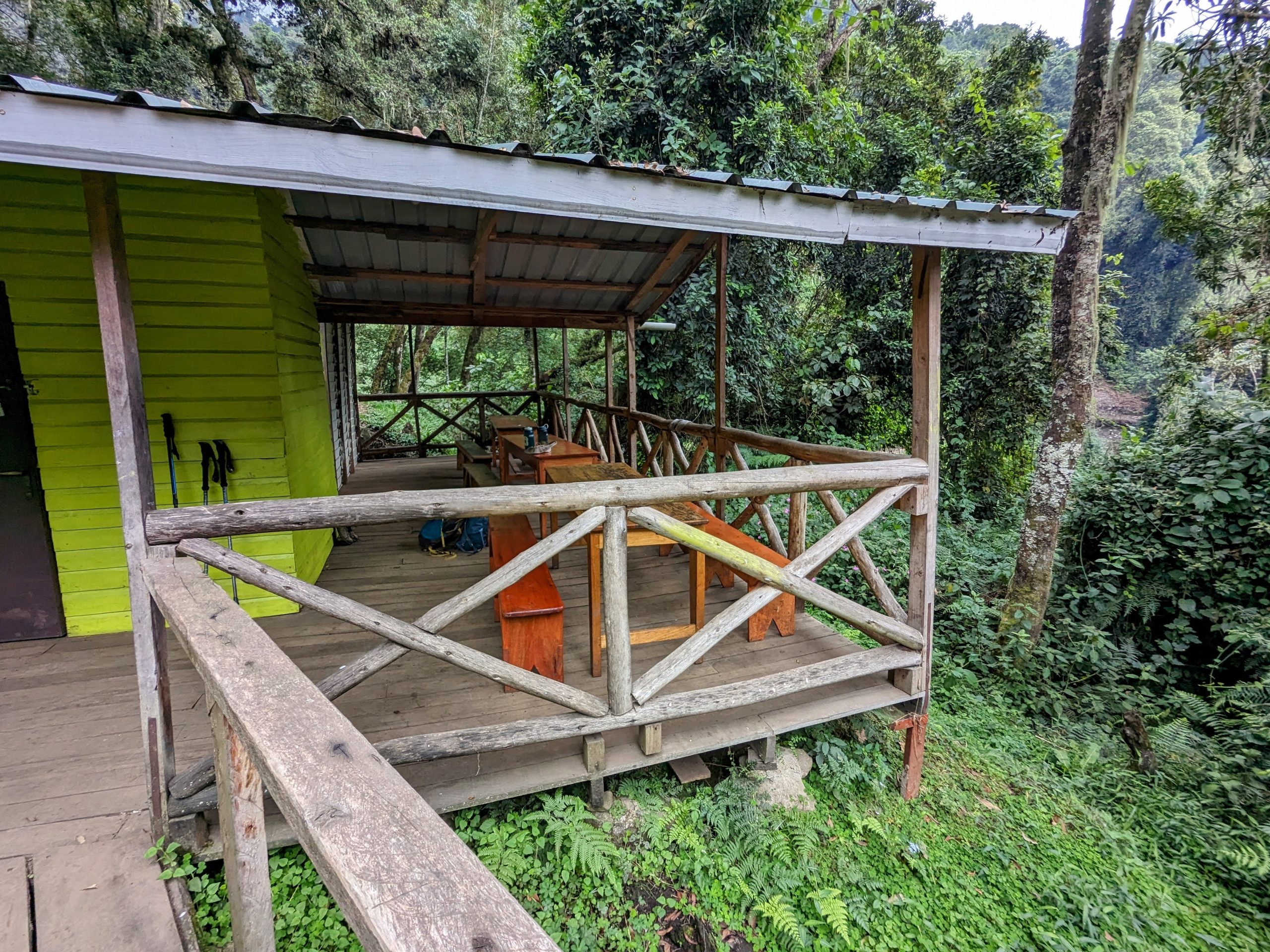 As you continue climbing, the path becomes steeper with several stream crossings and wooden bridges, while ferns, orchids, and other forest plants line the route. After approximately five to six hours of hiking, you reach Sine Camp at an elevation of 2,596 meters. The wooden huts provide a comfortable place to rest within the tranquil rainforest. Before dinner, you can enjoy a short walk to Enock’s Falls, where the beautiful cascade offers wonderful photography opportunities and a refreshing conclusion to your first day. Evening sounds create a peaceful mountain atmosphere before tomorrow’s higher climb.
- Overnight: Sine Camp
- Meals: Lunch and Dinner
- Distance: 9.5 km
- Walking Time: 6–7 hours
- Elevation Gain: 1,450 m to 2,596 m
Day 2: Hike from Sine Camp (2,596 m) to Mutinda Camp (3,588 m)
The second day introduces one of the most fascinating transitions in the entire expedition as you leave the rainforest behind and enter the mountain’s higher vegetation zones. After breakfast, the trail climbs steadily toward Kalalama Camp before continuing into landscapes that feel completely different from those explored on the previous day.
The dense tropical forest gradually gives way to towering bamboo stands that sway gently with the mountain breeze. These forests create cool, shaded corridors where birds, small mammals, and colorful butterflies are commonly seen. During the rainy months, the trail can become muddy, adding excitement to the climb while reminding hikers why the Rwenzori Mountains are among Africa’s wettest mountain ranges.
Higher up, the bamboo slowly disappears and giant heather trees begin to dominate the landscape. Thick blankets of moss hang from every branch, creating an almost magical environment. Bright green lichens decorate the trunks while clear mountain streams flow across rocky sections of the trail. Giant lobelias and everlasting flowers begin appearing as you approach the alpine zone, introducing some of the remarkable plant species found only at high elevations in East Africa.
The route passes through several small valleys before climbing gently toward Mutinda Camp. Along the way, hikers enjoy increasingly spectacular views of surrounding ridges, waterfalls, and distant mountain peaks. Every increase in altitude reveals another layer of the Rwenzori’s incredible biodiversity.
After arriving at Mutinda Camp, many hikers choose to continue to Mutinda Lookout at approximately 3,975 meters. This short acclimatization hike is highly recommended because it allows your body to adjust naturally to the altitude while rewarding you with panoramic views across Kasese, Lake George, and the surrounding mountain ranges. On clear days, the scenery stretches for many kilometers in every direction.
Returning to camp in the afternoon allows plenty of time to relax, enjoy a hot meal, and prepare for the alpine landscapes that await on the following day.
Overnight: Mutinda Camp
Meals: Breakfast, Lunch and Dinner
Walking Time: 6–7 hours
Elevation Gain: 2,596 m to 3,588 m
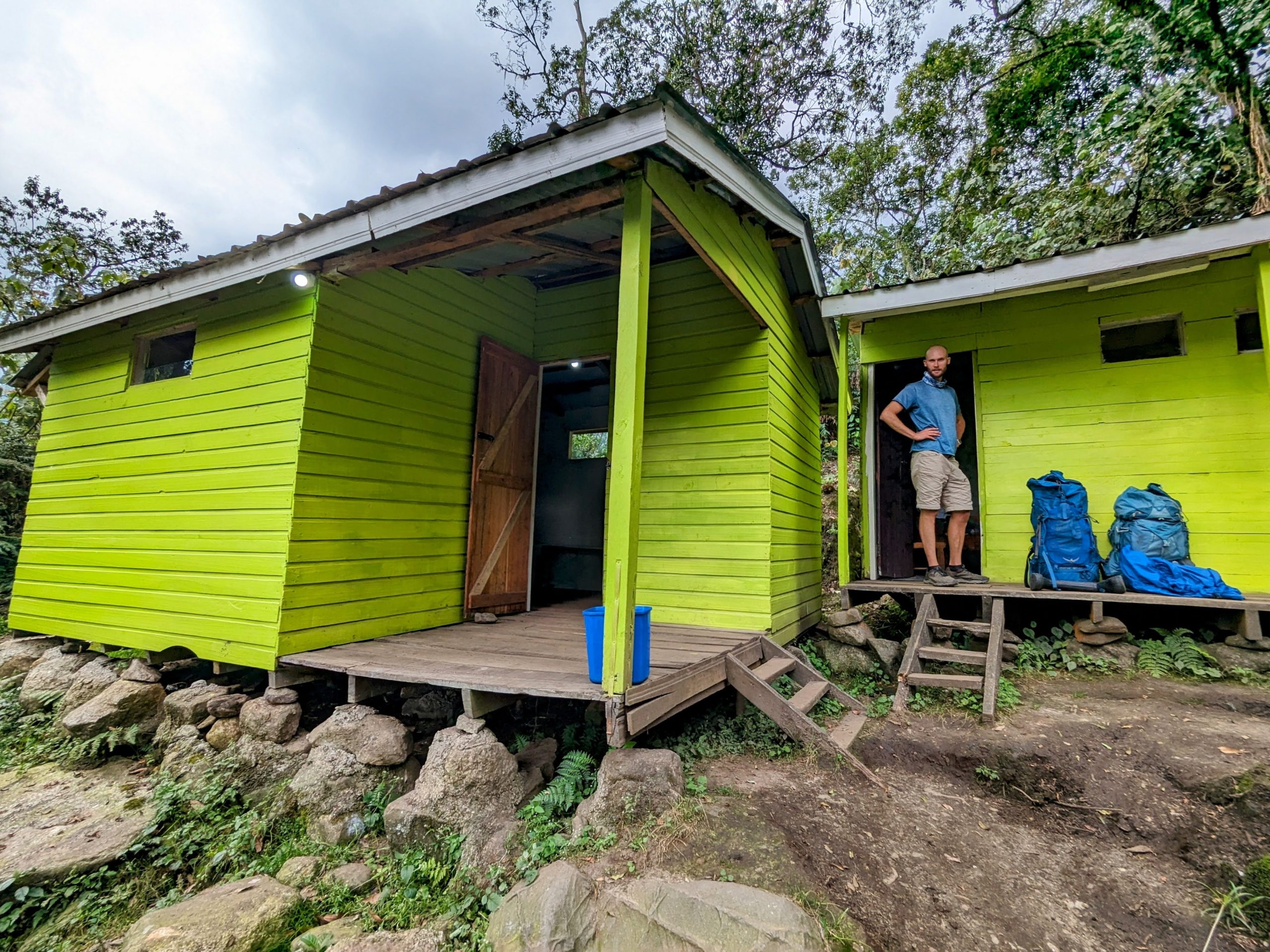
Day 3: Hike from Mutinda Camp (3,588 m) to Bugata Camp (4,100 m)
The third day of your expedition marks the beginning of true alpine hiking as you climb above the giant heather zone into the spectacular Afro-alpine landscape of the Rwenzori Mountains. After an early breakfast at Mutinda Camp, you begin a steady ascent toward Bugata Camp through one of the mountain’s most scenic environments. The trail passes across broad valleys filled with tussock grass, giant lobelias, everlasting flowers, and moss-covered rocks. These remarkable plants have adapted to freezing nights and intense sunshine, creating a landscape found on only a few East African mountains.
As you descend into Mutinda Valley and later climb toward Namusangi Valley, you cross several streams fed by the upper mountain. Wooden boardwalks and stepping stones help hikers navigate wetter sections, although some areas remain boggy throughout the year, especially during the rainy season. Careful footing is essential while crossing these alpine wetlands.
One of today’s highlights is the magnificent view across the central Rwenzori massif. Waterfalls cascade down rocky cliffs while distant peaks dominate the skyline, making frequent stops worthwhile for photography and appreciating the dramatic scenery. Bird enthusiasts may also spot several high-altitude species among the flowering plants, while small mountain rodents and occasional duikers sometimes appear near sheltered valleys.
By early afternoon, you arrive at Bugata Camp, situated at approximately 4,100 meters above sea level. Perched on a scenic ridge, the camp offers breathtaking mountain views and noticeably cooler temperatures as you approach the glacier zone. The afternoon is reserved for rest, hydration, and acclimatization while your guides explain the upcoming route toward Bamwanjarra Pass, Mount Baker, and eventually Margherita Peak. As night falls, clear skies often reveal countless brilliant stars, creating an unforgettable alpine wilderness experience beneath the African night sky above.
Overnight: Bugata Camp
Meals: Breakfast, Lunch and Dinner
Walking Time: 6–7 hours
Elevation Gain: 3,588 m to 4,100 m
Day 4: Hike from Bugata Camp (4,100 m) to Hunwick’s Camp (3,874 m) via Bamwanjarra Pass (4,450 m)
Today’s hike is one of the most rewarding stages of the expedition, combining a challenging mountain pass with some of the finest panoramic views in the Rwenzori Mountains. After breakfast at Bugata Camp, you begin a steady ascent toward Bamwanjarra Pass, one of the highest points along the Kilembe Trail before reaching the glacier region. The trail climbs across rocky alpine slopes where vegetation becomes shorter and more scattered. Large boulders, glacial streams, and hardy mountain plants dominate the landscape, while every step reveals wider views across the surrounding peaks.
At approximately 4,450 meters, Bamwanjarra Pass rewards hikers with breathtaking scenery in every direction. On clear days, Mount Stanley, Mount Baker, and Mount Speke rise above the valleys, while distant glaciers glisten beneath the equatorial sun. This viewpoint is among the most photographed locations on the entire trail and offers an excellent opportunity to admire the impressive mountain range.
After enjoying the pass, the trail descends into a beautiful alpine valley filled with giant lobelias, towering groundsels, moss-covered rocks, and clear mountain streams. These unique habitats support colorful sunbirds, ravens, and other high-altitude bird species, making this section especially enjoyable for nature enthusiasts. As the descent continues, magnificent glacier views become increasingly visible, providing a striking contrast against the dark mountain rock.
The final section involves climbing a gentle ridge before reaching Hunwick’s Camp at approximately 3,874 meters above sea level. Beautifully positioned on a hillside overlooking deep valleys and towering peaks, the camp serves as an ideal base for the upcoming ascent of Mount Baker and later Margherita Peak. The afternoon is reserved for equipment checks, acclimatization, rest, hydration, and preparing for the technical climbing ahead tomorrow.
- Overnight: Hunwick’s Camp
- Meals: Breakfast, Lunch and Dinner
- Walking Time: 5–7 hours
- Elevation: 4,100 m → 4,450 m → 3,874 m
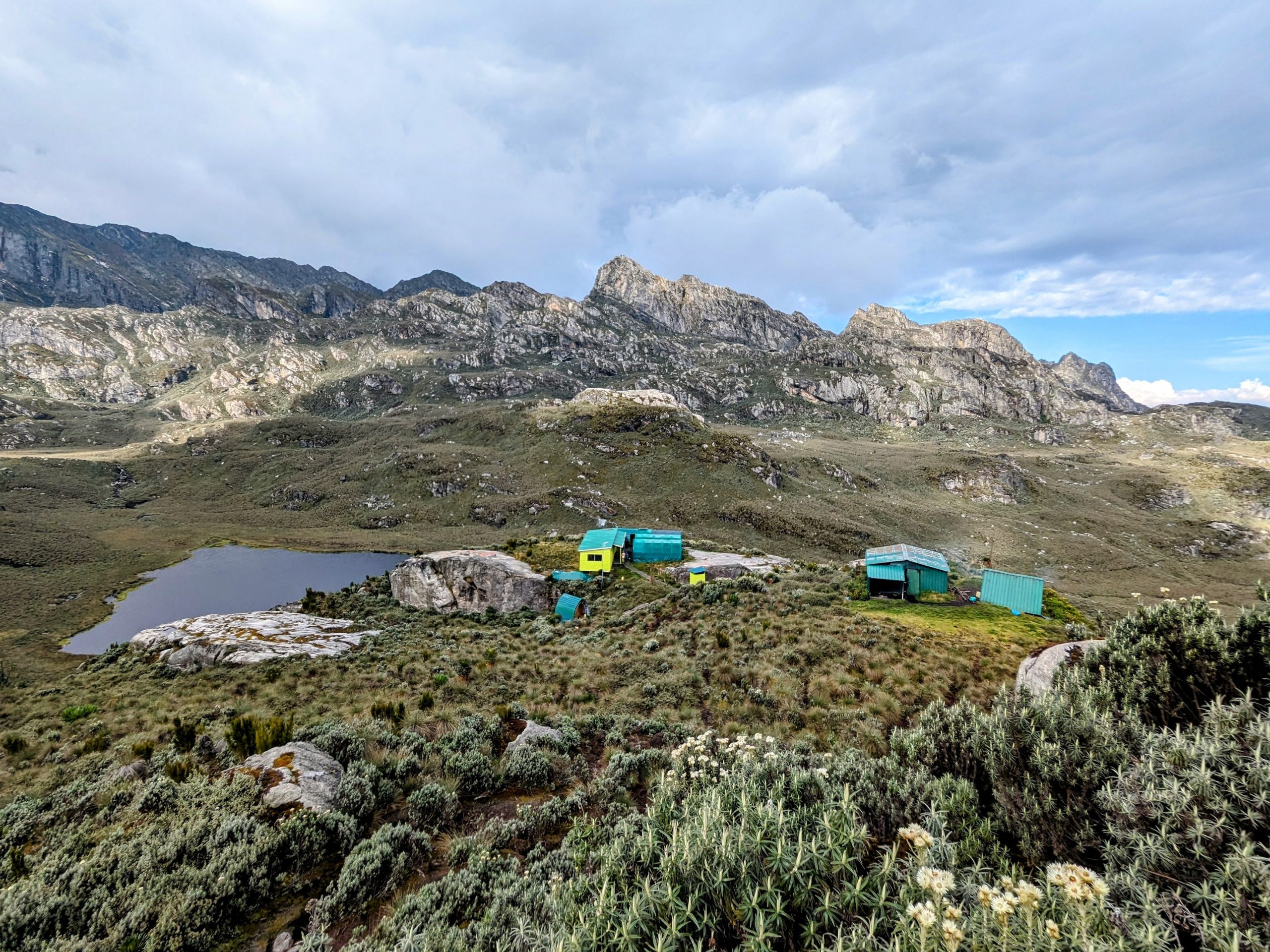 Day 5: Summit Mount Baker (4,842 m) and Return to Hunwick’s Camp (3,874 m)
Today’s hike is one of the most rewarding stages of the expedition, combining a challenging mountain pass with spectacular panoramic views across the Rwenzori Mountains. After breakfast at Bugata Camp, you begin a steady ascent toward Bamwanjarra Pass, one of the highest points along the Kilembe Trail before reaching the glacier region. The trail crosses rocky alpine slopes where vegetation becomes shorter and more scattered, with large boulders, glacial streams, and hardy mountain plants dominating the landscape.
At approximately 4,450 meters, Bamwanjarra Pass offers breathtaking views of Mount Stanley, Mount Baker, and Mount Speke rising above deep valleys, while distant glaciers shimmer beneath the equatorial sun. This scenic viewpoint is among the most photographed locations on the trail and provides excellent opportunities for photography.
After enjoying the pass, the route descends into a beautiful alpine valley filled with giant lobelias, towering groundsels, moss-covered rocks, and crystal-clear mountain streams. Colorful sunbirds, ravens, and other high-altitude birds are often seen among the flowering plants.
The final section climbs a gentle ridge to Hunwick’s Camp at 3,874 meters above sea level. Perched on a hillside overlooking dramatic valleys and towering peaks, the camp provides an ideal base for the upcoming ascent of Mount Baker and later Margherita Peak. The afternoon is reserved for rest, acclimatization, equipment checks, and preparing for tomorrow’s technical climb.
- Overnight: Hunwick’s Camp
- Meals: Breakfast, Lunch and Dinner
- Distance: Approximately 4.3 km (round trip)
- Walking Time: 6–9 hours
- Elevation: 3,874 m → 4,842 m → 3,874 m
Day 6: Hike from Hunwick’s Camp (3,874 m) to Margherita Camp (4,495 m)
After successfully summiting Mount Baker, the expedition continues deeper into the heart of the Rwenzori Mountains. Although today’s hike is shorter than previous stages, it is one of the most important for acclimatization as you gradually climb toward Margherita Camp, the final base before attempting Margherita Peak.
Leaving Hunwick’s Camp after breakfast, the trail descends into a beautiful alpine valley before climbing steadily toward Scott Elliot Pass. Along the way, you cross clear mountain streams fed by glaciers and enjoy spectacular views of the surrounding peaks. One of the day’s highlights is Lake Kitandara, a stunning high-altitude lake bordered by rocky slopes and giant lobelias. On clear mornings, its calm waters reflect the surrounding mountains, creating outstanding photography opportunities.
As the ascent continues, the landscape becomes increasingly rugged. Vegetation grows sparse, giving way to large boulders, rocky ridges, and the first close views of the Rwenzori glaciers. The trail climbs steadily to Scott Elliot Pass before following a rocky ridge toward Margherita Camp, revealing magnificent views of Mount Stanley, the Stanley Plateau, and neighboring glacier-covered slopes.
Arriving at Margherita Camp at approximately 4,495 meters, you immediately notice the colder temperatures and thinner air. Surrounded by towering rock formations, the camp offers shelter from strong mountain winds and serves as the final overnight stop before the summit attempt. The afternoon is dedicated to rest, hydration, acclimatization, and a thorough inspection of climbing equipment, including harnesses, crampons, helmets, ropes, and ice axes. After an early dinner, hikers retire for a few hours of rest before the midnight departure for the challenging ascent of Margherita Peak.
- Overnight: Margherita Camp
- Meals: Breakfast, Lunch and Dinner
- Walking Time: 4–6 hours
- Elevation Gain: 3,874 m to 4,495 m
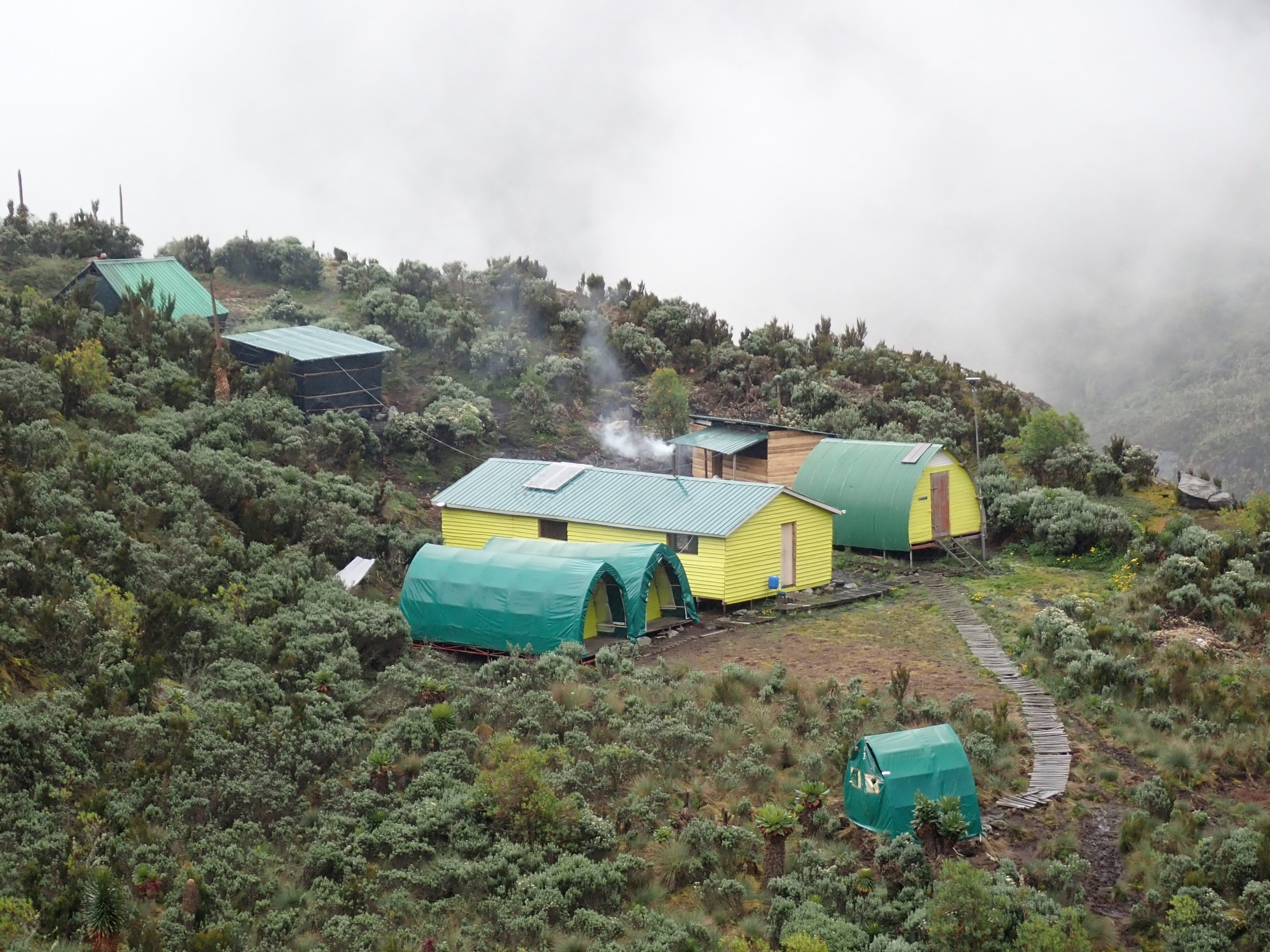 Day 7: Summit Margherita Peak (5,109 m) on Mount Stanley and Descend to Bujuku Valley
Today marks the highlight of your Rwenzori expedition as you attempt to summit Margherita Peak (5,109 m), the highest point in the Rwenzori Mountains and the third-highest mountain in Africa. The day begins around 1:30 a.m. with a light breakfast and final gear check before setting off at approximately 2:00 a.m. under the glow of headlamps.
The route climbs across rocky terrain toward the Stanley Plateau, where freezing temperatures signal the start of the glacier. Here, climbers put on crampons and harnesses before crossing the ice under the guidance of experienced mountain guides. Safety ropes, fixed lines, and careful footing help everyone navigate snowfields, crevasses, and steep icy slopes leading toward the summit ridge.
As dawn breaks, the surrounding peaks, glaciers, and alpine valleys are bathed in golden light, creating one of the most spectacular mountain landscapes in Africa. Reaching Margherita Peak is a memorable achievement, rewarding hikers with breathtaking views across Uganda and the Democratic Republic of the Congo, where rugged ridges, alpine lakes, and distant mountains stretch to the horizon.
After celebrating at the summit and capturing photographs, the descent retraces the glacier route before continuing past the scenic Lake Irene and into the beautiful Bujuku Valley. Surrounded by towering peaks and unique alpine vegetation, the valley provides a striking contrast to the icy terrain above.
The final trek crosses sections of boggy ground before reaching camp near the base of Mount Speke. Although this is the longest and most demanding day of the expedition, the sense of accomplishment after standing on one of Africa’s greatest summits makes every step worthwhile. The evening is spent resting and reflecting on an unforgettable achievement.
Overnight: Rock Shelter near Bujuku Valley
Meals: Breakfast, Lunch and Dinner
Walking Time: 10–12 hours
Elevation: 4,495 m → 5,109 m → Bujuku Valley
Day 8: Summit Vittorio Emanuele Peak (4,890 m) on Mount Speke and Descend to Hunwick’s Camp
Following the demanding ascent of Margherita Peak, today’s adventure continues with a climb to Vittorio Emanuele Peak (4,890 m), the highest summit of Mount Speke. Reaching this peak completes the trio of iconic summits included in this expedition, making it a truly rewarding achievement.
After breakfast, the trail rises steadily from the Bujuku Valley across rocky alpine terrain. Unlike the previous day’s glacier climb, today’s route follows steep ridges and boulder fields that require careful footing while offering spectacular mountain scenery at every stage.
As you gain elevation, sweeping views open across the central Rwenzori Mountains. Margherita Peak stands proudly above its glaciers, while Mount Baker, Scott Elliot Pass, Lake Bujuku, and surrounding valleys create an impressive alpine panorama. Massive rock formations, carved by ancient glaciers, dominate the landscape, with hardy alpine plants growing between the stones despite the harsh environment.
Reaching Vittorio Emanuele Peak rewards hikers with exceptional views of the Rwenzori range. On a clear day, all three major peaks climbed during the expedition can be seen, together with the glaciers of Mount Stanley and the vast mountain wilderness stretching into the distance. Standing on the summit is a fitting conclusion to an unforgettable mountaineering experience.
After enjoying the summit, the descent returns through the Bujuku Valley before crossing Scott Elliot Pass on the way to Hunwick’s Camp. The route passes giant groundsels, lobelias, rocky valleys, and crystal-clear streams, showcasing the unique beauty of the Rwenzori ecosystem.
Arriving at camp marks the successful completion of all three summit climbs. The evening is spent relaxing, sharing stories, and celebrating an extraordinary achievement in Africa’s legendary Mountains of the Moon.
- Overnight: Hunwick’s Camp
- Meals: Breakfast, Lunch and Dinner
- Walking Time: 8–10 hours
- Elevation: Bujuku Valley → 4,890 m → 3,874 m
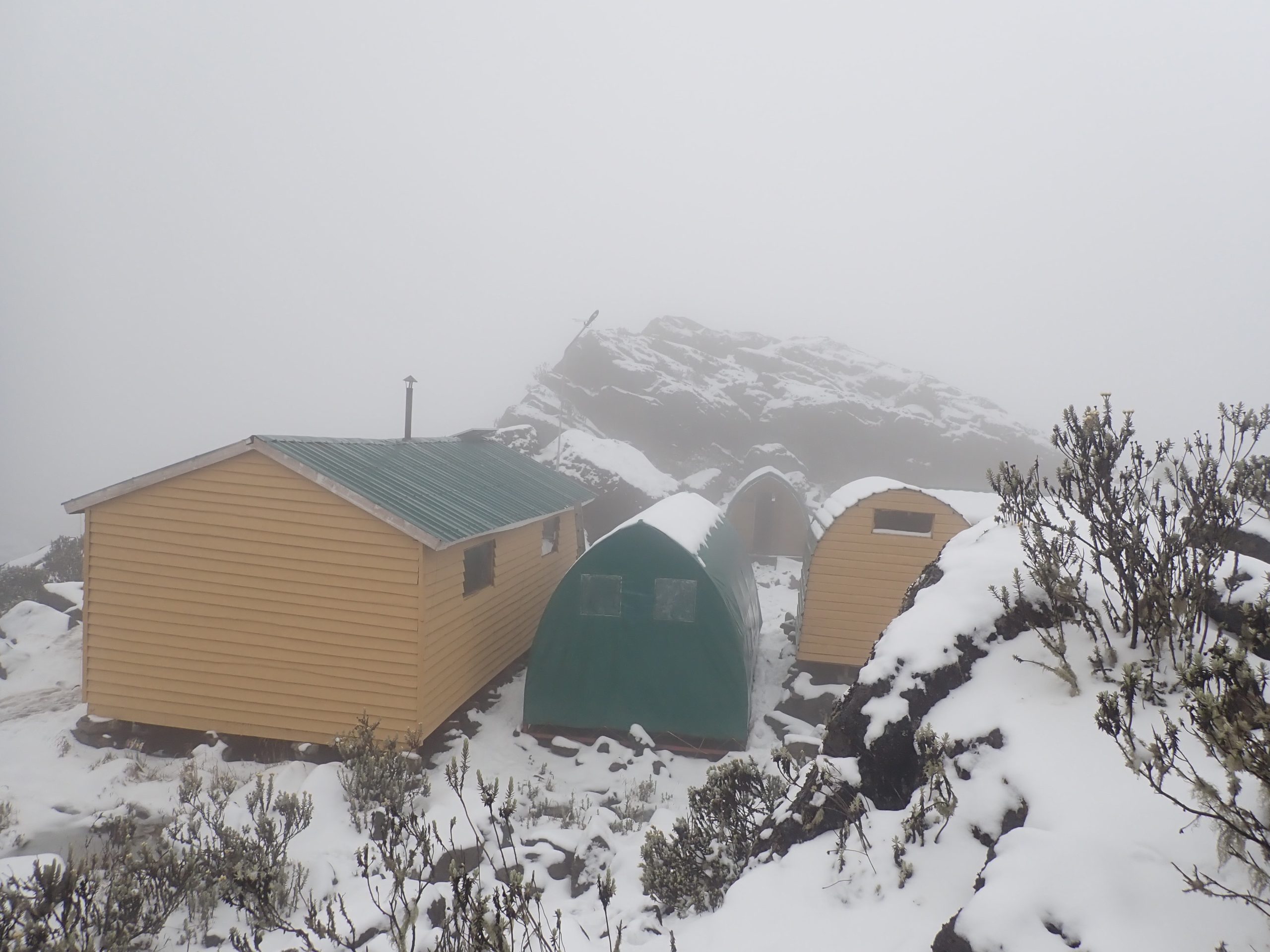
OLYMPUS DIGITAL CAMERA
Day 9: Hike from Hunwick’s Camp (3,874 m) to Kiharo Camp (3,430 m) via Oliver’s Pass (4,505 m)
After completing the three major summits of the Rwenzori Mountains, the expedition begins its descent toward the lower elevations. Although the route is mostly downhill, it includes one final high mountain crossing with outstanding views of the surrounding peaks.
Following breakfast at Hunwick’s Camp, the trail climbs gradually to Oliver’s Pass (4,505 m) via McConnell’s Prong. The steady ascent provides one last opportunity to enjoy the alpine landscape, where giant groundsels, everlasting flowers, moss-covered rocks, and distant glaciers create a memorable setting.
From Oliver’s Pass, hikers are rewarded with sweeping views of Mount Stanley, Mount Speke, Mount Baker, Scott Elliot Pass, and the glacial valleys that define the Rwenzori range. On clear days, this viewpoint offers one of the finest panoramas of the entire expedition.
The trail then passes below Weismann’s Peak, where experienced hikers may choose an optional side climb if weather and timing are favorable. The route continues into the scenic Nyamwamba Valley, where the landscape gradually changes from alpine terrain to giant heather, mossy ridges, and crystal-clear streams flowing through valleys shaped by ancient glaciers.
Several waterfalls cascade down the surrounding cliffs, while the lower elevations support increasing birdlife, including colorful sunbirds and alpine chats. With a bit of luck, hikers may also spot the elusive Rwenzori red duiker among the vegetation.
The final descent reaches Kiharo Camp (3,430 m), surrounded by steep cliffs and lush mountain scenery. This peaceful campsite provides the perfect place to relax after another rewarding day on the trail. During the evening, hikers and guides reflect on the expedition’s unforgettable highlights while celebrating the successful ascent of three of Africa’s most iconic mountain summits.
- Overnight: Kiharo Camp
- Meals: Breakfast, Lunch and Dinner
- Walking Time: 5–9 hours
- Elevation: 3,874 m → 4,505 m → 3,430 m
Day 10: Descend from Kiharo Camp (3,430 m) to Kilembe Base Camp (1,450 m)
The final day of your Rwenzori expedition begins with a relaxed breakfast before setting out on the last descent through the scenic Nyamwamba Valley. Although the route is mostly downhill, the changing landscapes provide a memorable conclusion to this extraordinary mountain adventure.
The trail follows the Nyamwamba River through lush montane forest, where cascading waterfalls, clear streams, and moss-covered rocks create a peaceful atmosphere. The fresh mountain air and gentle sounds of flowing water offer the perfect opportunity to reflect on the achievements of the past several days.
As you descend, the vegetation becomes denser, with giant tree ferns, towering hardwood trees, colorful wildflowers, and thick rainforest replacing the alpine landscapes left behind. This return to the forest completes the remarkable transition through the Rwenzori’s diverse ecological zones.
Wildlife sightings are common at lower elevations. Blue monkeys, black-and-white colobus monkeys, colorful butterflies, and a variety of bird species are frequently seen along the trail. With a bit of luck, hikers may also spot the shy Rwenzori red duiker hidden among the undergrowth.
The route passes Forest View Camp, where a lunch break provides one final chance to enjoy the mountain scenery before continuing downhill. The trail eventually leads through farmland and nearby communities before reaching Trekkers Hostel in Kilembe, marking the successful completion of the expedition.
Returning to the trailhead is a rewarding moment, highlighting the incredible diversity experienced throughout the journey—from tropical rainforest and bamboo forests to alpine valleys, glaciers, and three iconic summits. As the adventure comes to an end, guides and porters congratulate the group, leaving every hiker with lasting memories, new friendships, and the satisfaction of completing one of Africa’s most remarkable mountaineering expeditions.
- Walking Time: 6–8 hours
- Elevation: 3,430 m → 1,450 m
- Safari Highlight
- End of your unforgettable Rwenzori Mountains expedition.
Price,
USD2005 per person
Price Includes
The package includes:
- All Rwenzori Mountains National Park entrance fees.
- Accommodation in mountain huts throughout the hike.
- All meals while on the mountain
- Professional English-speaking mountain guides.
- Uganda Wildlife Authority rangers.
- Experienced porters to carry hiking equipment.
- Mountain chefs who prepare fresh meals during the expedition.
- Technical climbing equipment, including crampons, helmets, harnesses, ropes, ice axes, and rubber boots.
- Safety briefings and mountain rescue support where required.
Price Excludes
The package does not include:
- International and domestic flights.
- Uganda visa fees.
- Accommodation before or after the mountain hike.
- Transportation between Entebbe International Airport and the Rwenzori Mountains that we can provide at USD300 each way making it USD600 for both ways per vehicle.
- Personal hiking equipment and clothing.
- Travel insurance.
- Tips for guides, porters, and cooks.
- Personal expenses such as drinks, laundry, and souvenirs.
- Any services not specifically listed under the inclusions.
 Uganda Visa Information
All international visitors requiring a visa must apply online before travelling to Uganda. Travelers are advised to complete the application well in advance to allow enough processing time before departure. You the link provided to apply for the visa https://visas.immigration.go.ug/
Yellow Fever Requirement
A valid Yellow Fever Vaccination Certificate is required for entry into Uganda. Immigration authorities will request to see the certificate upon arrival at Entebbe International Airport. Travelers should ensure they receive the vaccination from an authorized medical center before their journey.
Why Proper Packing Is Important for the Rwenzori Mountains
Preparing well is one of the most important parts of a successful Rwenzori expedition. During this adventure, you will hike through tropical rainforest, bamboo forests, giant heather, alpine meadows, rocky mountain passes, glaciers, and snow-covered slopes. Each environment presents different weather conditions, making the right equipment essential for both comfort and safety.
Rain can fall at any time of the year, while temperatures near the summits often drop below freezing. Some sections are muddy and slippery, while others require glacier travel using technical climbing equipment. Carrying the correct clothing and personal gear allows you to stay warm, dry, and comfortable throughout the expedition while reducing fatigue and improving safety.
The following packing list explains why every item is recommended and how it contributes to a successful climb.
Technical Climbing Equipment (Provided)
Rope
Safety ropes are used on steep rock faces and glacier crossings near Margherita Peak. They help protect climbers while moving across exposed sections and provide additional security during technical climbs.
Crampons
These metal spikes are attached to climbing boots to improve grip on snow and ice. They are essential for safe movement across glaciers during the summit of Margherita Peak.
Ice Axe
An ice axe provides balance on steep snow slopes and can also be used to stop a fall if a climber slips on the glacier.
Climbing Harness
The harness connects each climber securely to the rope system used by the guides. It is an important piece of safety equipment during glacier crossings and exposed climbing sections.
Helmet
Helmets protect climbers from loose rocks, falling ice, and accidental impacts while climbing through rocky terrain.
Personal Hiking Equipment (Not Provided)
Although the technical climbing equipment is provided, every hiker must carry personal clothing and gear suitable for the changing mountain conditions. The Rwenzori Mountains are among the wettest mountain ranges in Africa, and the weather can change several times in a single day. Good preparation allows you to stay comfortable, warm, and safe throughout the expedition.
Waterproof Hiking Boots
A good pair of waterproof hiking boots is one of the most important items you will carry. The trail passes through muddy rainforest paths, swampy valleys, rocky slopes, and glacier sections. Strong boots provide excellent ankle support, improve stability on uneven terrain, and keep your feet dry during long days of hiking.
Choose boots that are already broken in before your trip to avoid blisters. They should have deep treads for better grip on wet rocks and muddy trails. Since crampons are used during the summit of Margherita Peak, your boots should also be compatible with glacier equipment.
Waterproof Hiking Trousers
The lower sections of the Rwenzori receive frequent rainfall throughout the year. Waterproof trekking trousers help protect your legs from mud, wet vegetation, and cold mountain winds. They also dry much faster than ordinary trousers, allowing you to remain comfortable throughout the day.
Trekking trousers should be lightweight enough for climbing but warm enough to provide protection at higher elevations where temperatures become much colder.
Moisture-Wicking Hiking Shirts
Comfortable hiking shirts made from moisture-wicking materials help regulate body temperature throughout the expedition. They remove sweat from your skin quickly, reducing discomfort during long climbs.
Avoid heavy cotton clothing because it absorbs water and takes much longer to dry. Lightweight technical fabrics perform much better in the humid rainforest and cold alpine zones.
Warm Fleece Jacket
Temperatures begin dropping significantly above 3,500 meters. A warm fleece jacket provides an important insulating layer during early morning starts, evening rest periods, and summit attempts.
Even during the dry season, cold winds are common at higher elevations. Wearing several light layers is more effective than relying on one heavy jacket because you can easily adjust your clothing as temperatures change.
Waterproof Rain Jacket
Rain showers can occur without warning anywhere along the trail. A high-quality waterproof jacket protects you from becoming soaked while also blocking cold mountain winds.
A breathable rain jacket is recommended because it allows moisture from perspiration to escape while keeping rain outside. Staying dry is essential for preventing cold-related illnesses during multi-day hikes.
Waterproof Gloves
Cold hands quickly lose strength and flexibility, especially while using ropes or climbing across rocky terrain. Waterproof gloves keep your hands warm and dry throughout the expedition.
They become particularly important during glacier crossings where snow, ice, and freezing temperatures can make exposed hands uncomfortable within minutes.
Thermal Base Layers
Thermal clothing provides an additional layer of insulation during cold nights and summit days. Lightweight thermal tops and trousers help retain body heat without adding unnecessary weight to your backpack.
These layers are especially valuable above 4,000 meters where temperatures often fall below freezing before sunrise.
Wool Hiking Socks
Your feet remain under constant pressure throughout the expedition, making quality socks extremely important. Wool hiking socks provide warmth, reduce friction, and continue insulating even when slightly damp.
Carrying several pairs allows you to change into dry socks each evening, helping prevent blisters and improving comfort throughout the hike.
Gaiters
The Rwenzori Mountains are famous for deep mud, swamp crossings, and wet vegetation. Gaiters fit over your boots and lower trousers, preventing mud, water, and small stones from entering your footwear.
They are especially useful during the bamboo and bog zones where the trail often becomes flooded after rainfall.
Headlamp with Spare Batteries
Several hiking days begin before sunrise, especially the summit attempt on Margherita Peak. A reliable headlamp allows you to walk safely through darkness while keeping both hands free for climbing.
Cold temperatures reduce battery life much faster than normal, making spare batteries an essential part of your equipment.
Sunglasses
Snow, glaciers, and bright mountain sunlight create strong reflections that can strain your eyes. Sunglasses with UV protection help prevent discomfort while improving visibility on glacier sections.
Wraparound sunglasses offer the best protection against both sunlight and cold mountain winds.
Sun Hat
Although the Rwenzori Mountains receive regular rainfall, the equatorial sun becomes surprisingly intense whenever the skies clear. A lightweight sun hat protects your face, ears, and neck from direct sunlight while helping regulate body temperature during exposed sections of the trail.
Hiking Pole
A trekking pole greatly improves balance on steep climbs, slippery rocks, muddy valleys, and glacier approaches. It also reduces pressure on your knees during long descents, helping conserve energy throughout the expedition.
Many experienced hikers consider trekking poles one of the most valuable pieces of personal equipment for the Rwenzori Mountains.
Backpack (Daypack)
While porters carry your larger duffel bag, every hiker should carry a comfortable daypack for personal items needed during the day’s hike.
A daypack should comfortably hold:
- Water bottles
- Snacks
- Camera
- Rain jacket
- Gloves
- Hat
- Sunglasses
- Personal medication
- Extra clothing layers
Choose a waterproof backpack or use a rain cover to keep everything dry.
Water Bottles or Hydration System
Proper hydration is essential at high altitude. Climbers should carry at least two litres of drinking water every day.
Many hikers prefer hydration systems because they allow regular drinking without removing the backpack. Others choose reusable water bottles, which are equally suitable.
Sleeping Bag
Although accommodation is provided in mountain huts, every hiker should bring a warm sleeping bag suitable for temperatures below freezing.
A quality sleeping bag allows your body to recover properly after each day’s hike and greatly improves comfort during cold mountain nights.
Camp Shoes
After spending many hours wearing heavy hiking boots, lightweight sandals or sports shoes provide welcome relief around camp.
Changing into dry footwear also helps prevent blisters while allowing your boots to dry overnight.
Personal Toiletries
Carry only essential toiletries to reduce backpack weight. Recommended items include:
- Toothbrush and toothpaste
- Small towel
- Soap
- Wet wipes
- Hand sanitizer
- Toilet paper
- Lip balm
- Sunscreen (SPF 35 or higher)
Maintaining personal hygiene during the hike helps improve comfort and reduces the risk of skin irritation.
Personal Medication
If you take prescription medication, carry enough for the entire expedition and keep it easily accessible inside your daypack.
Many hikers also consult their doctor before travelling about carrying medication for altitude sickness, mild stomach infections, or minor pain relief.
Camera and Spare Batteries
The Rwenzori Mountains offer countless photography opportunities, from tropical rainforests and waterfalls to glaciers and snow-covered peaks.
There is no electricity on the mountain, so fully charge all electronic devices before beginning the hike. Carry spare camera batteries and power banks if you plan to take many photographs.
Energy Snacks
Although all meals are provided, many hikers enjoy carrying personal snacks for extra energy during long hiking days.
Suitable options include:
- Mixed nuts
- Energy bars
- Dried fruit
- Chocolate
- Biscuits
These snacks provide quick energy during breaks between meals.