

11 Days Hike to Margherita Peak via Kilembe Trail and Gorilla Trekking Safari
Discover two of Uganda’s greatest adventures in one unforgettable journey. This 11-day expedition combines the challenging ascent to Margherita Peak (5,109m), the highest point of the Rwenzori Mountains, with an incredible mountain gorilla trekking experience in Bwindi Impenetrable National Park. The itinerary follows the scenic Kilembe Trail, a route celebrated for its dramatic valleys, giant lobelias, glacier landscapes, crystal-clear lakes, and panoramic mountain views.
From the lush tropical rainforest at the foot of the Rwenzori Mountains to permanent glaciers near the summit, every day introduces a completely different landscape. Along the trail, hikers pass through bamboo forests, giant heather zones, alpine meadows, rocky ridges, and snow-covered terrain before reaching the “Roof of the Rwenzori.”
The adventure continues in Bwindi, home to nearly half of the world’s remaining mountain gorillas. Spending one magical hour with a habituated gorilla family creates memories that last a lifetime.
Whether you are an experienced mountaineer or an adventurous traveler seeking Africa’s most rewarding hiking expedition, this itinerary offers breathtaking scenery, rich biodiversity, welcoming local communities, and two UNESCO World Heritage Sites in one remarkable holiday.
 Trip overview of 11 Days Hike to Margherita Peak via Kilembe Trail and Gorilla Trekking Safari
- Day 1: Transfer to Kasese from Entebbe International Airport
- Day 2: Trek from the Trekker’s Hostel (1,450m) to Sine Hut (2,596m)
- Day 3: Trek from Sine Camp (2,596m) to Mutinda Camp (3,588m)
- Day 4: Trek from Mutinda Camp (3,588m) to Bugata Camp (4,100m)
- Day 5: Trek from Bugata Camp (4,100m) to Hunwick’s Camp (3,874m) via Bamwanjarra Pass (4,450m)
- Day 6: Trek from Hunwick’s Camp (3,874m) to Margherita Camp (4,495m)
- Day 7: Summit Margherita Peak (5,109m) and Descend to Hunwick’s Camp
- Day 8: Trek from Hunwick’s Camp (3,874m) to Kiharo Camp (3,430m) via Oliver’s Pass (4,505m)
- Day 9: Descend from Kiharo Camp (3,430m) to Kilembe Base Camp (1,450m) and Transfer to Bwindi Impenetrable National Park
- Day 10: Gorilla Trekking in Bwindi Impenetrable National Park
- Day 11: Transfer to Entebbe International Airport
Detailed Itinerary of 11 Days Hike to Margherita Peak via Kilembe Trail and Gorilla Trekking Safari
Day 1: Transfer to Kasese from Entebbe International Airport
Upon arrival at Entebbe International Airport, you will be warmly welcomed by your professional driver-guide before beginning the scenic drive westwards to the foothills of the legendary Rwenzori Mountains National Park.
The journey is one of Uganda’s most rewarding road trips, taking you through vibrant trading centers, rolling tea plantations, fertile farmlands, and picturesque villages where daily life unfolds along the roadside. The changing landscapes provide a wonderful introduction to Uganda’s countryside and offer numerous opportunities for photography.
A relaxing lunch stop is planned in the beautiful Fort Portal town. After lunch, continue to Kasese District while enjoying spectacular views of the Rwenzori Mountain range, whose snow-capped peaks often appear above the clouds.
Upon arrival in Kasese, check in at your preferred lodge and spend the remainder of the evening relaxing while preparing for the mountain adventure beginning the following morning.
Accommodation Options
- Margherita Hotel or similar
- Sandton Hotel or similar
Meal Plan: Half Board
Driving Time: Approximately 6–7 hours
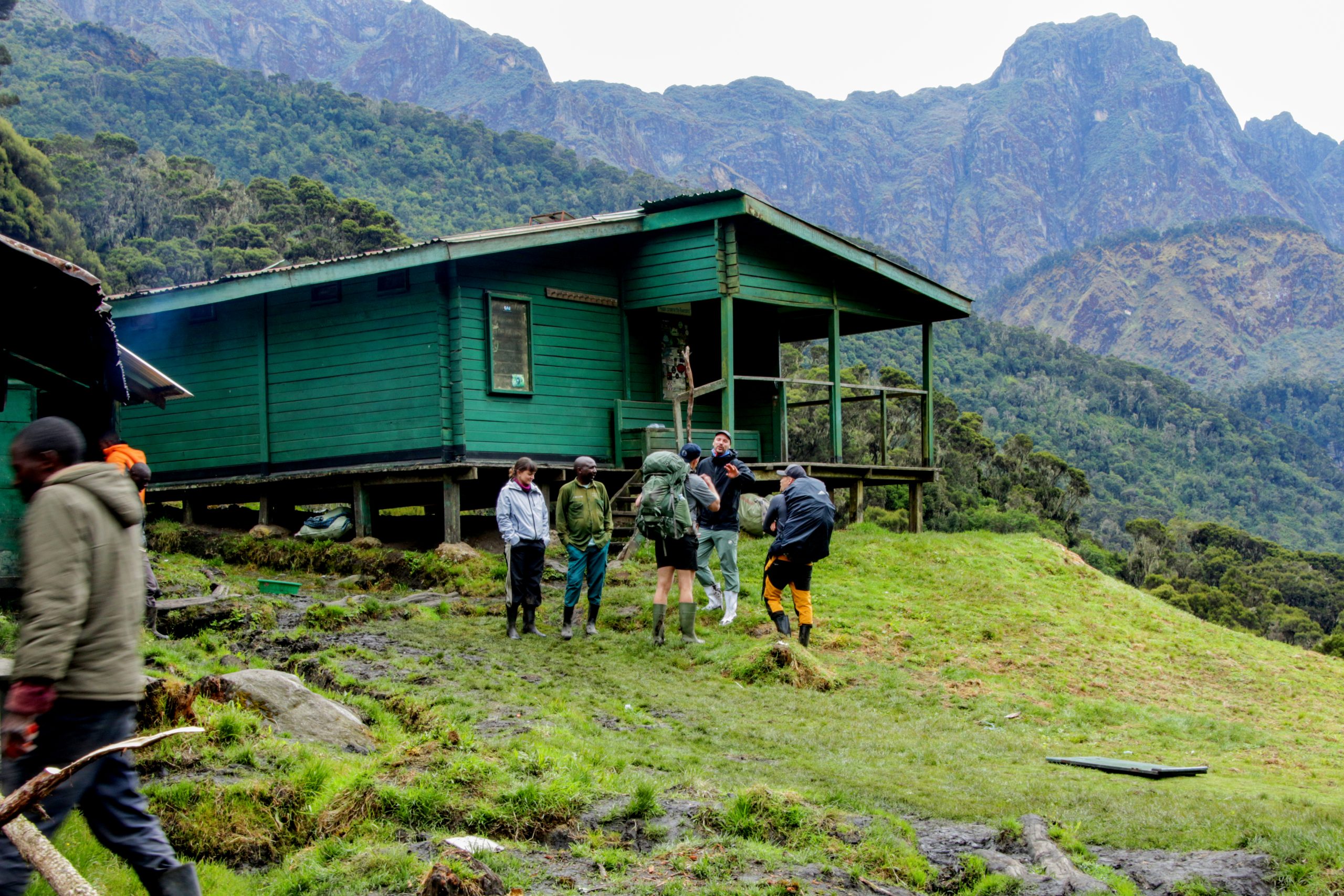
 Day 2: Trek from the Trekker’s Hostel (1,450m) to Sine Hut (2,596m)
After an early breakfast, transfer to the Kilembe Trailhead, where your mountain guides, cooks, and porters will welcome you for a comprehensive safety briefing. Your unforgettable Rwenzori trekking adventure officially begins.
The trail starts gently through cultivated farmland before reach the park gate for registration then you are joined by a ranger guide then later the trail continues while entering the dense Afromontane rainforest, one of the richest ecosystems in East Africa. Towering trees covered with moss, hanging vines, colorful fungi, and countless bird species create an enchanting atmosphere unlike any other mountain in Africa.
As you gain altitude, the trail becomes steeper, crossing several wooden bridges and clear mountain streams. Lucky hikers may encounter Blue Monkeys, Black-and-white Colobus Monkeys, or even hear distant chimpanzee calls echoing through the forest canopy. Small creatures such as the fascinating three-horned chameleon are also commonly spotted along the trail.
After several hours of steady climbing, you arrive at Sine Hut, beautifully positioned on a forested ridge overlooking the surrounding valleys. Before dinner, those with extra energy can take a short walk to the nearby Enock’s Falls, whose cool mist and peaceful surroundings provide the perfect reward after your first trekking day.
As darkness falls, the sounds of the rainforest create a peaceful atmosphere while your guides brief you on the following day’s hike.
- Overnight: Sine Camp
- Meal Plan: Lunch & Dinner
- Distance: 9.5 km
- Walking Time: 5–6 Hours
- Altitude: 1,450m – 2,596m
Day 3: Trek from Sine Camp (2,596m) to Mutinda Camp (3,588m)
Wake up to the fresh mountain air before enjoying a hearty breakfast overlooking the surrounding rainforest. Today’s trek introduces entirely different scenery as you gradually leave the dense forest behind and enter the remarkable bamboo and giant heather vegetation zones.
The trail climbs steadily toward Kalalama Camp, where beautiful viewpoints provide excellent opportunities to admire the valleys stretching far below. As the elevation increases, towering bamboo gives way to giant heather trees draped with thick green moss, creating one of the most photographed sections of the Kilembe Trail.
Numerous streams flow down the mountainside, forming picturesque waterfalls that cut across the hiking route. Wooden boardwalks and natural stepping stones help hikers navigate muddy sections while preserving the fragile alpine ecosystem.
After arriving at Mutinda Camp, hikers are encouraged to take an optional acclimatization walk to Mutinda Lookout (3,975m). This short climb rewards you with sweeping views across the Rwenzori ranges, Kasese town, Queen Elizabeth National Park, and Lake George on a clear day. Spending extra time at this altitude also allows your body to adjust naturally before climbing higher into the alpine zone.
The evening is spent enjoying a hot meal while watching the sunset paint the surrounding peaks with golden light.
- Overnight: Mutinda Camp
- Meal Plan: Breakfast, Lunch & Dinner
- Walking Time: 5–6 Hours
- Altitude: 2,596m – 3,588m
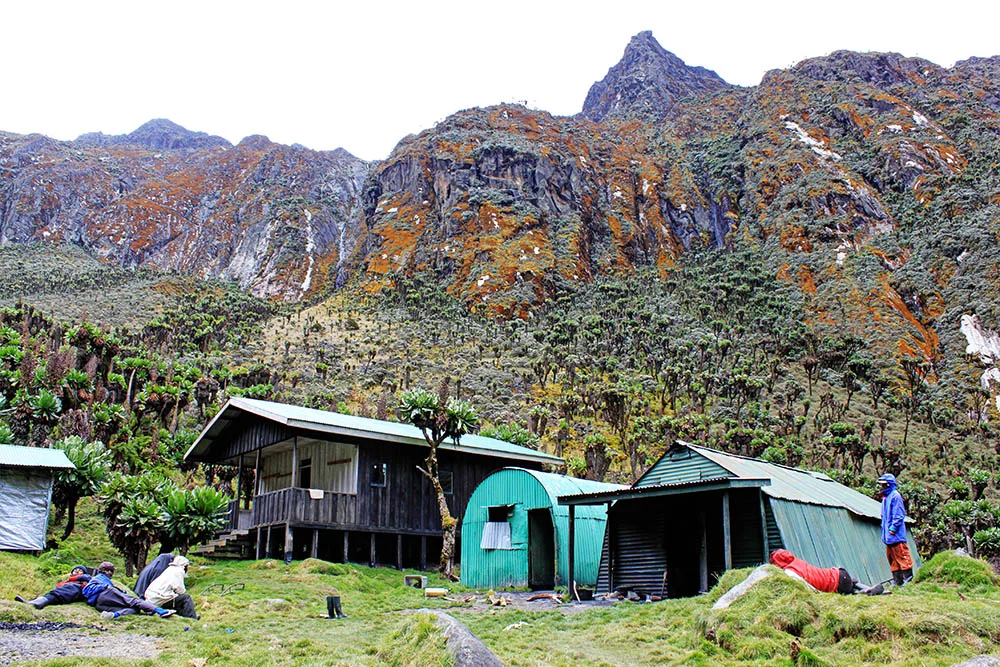
 Day 4: Trek from Mutinda Camp (3,588m) to Bugata Camp (4,100m)
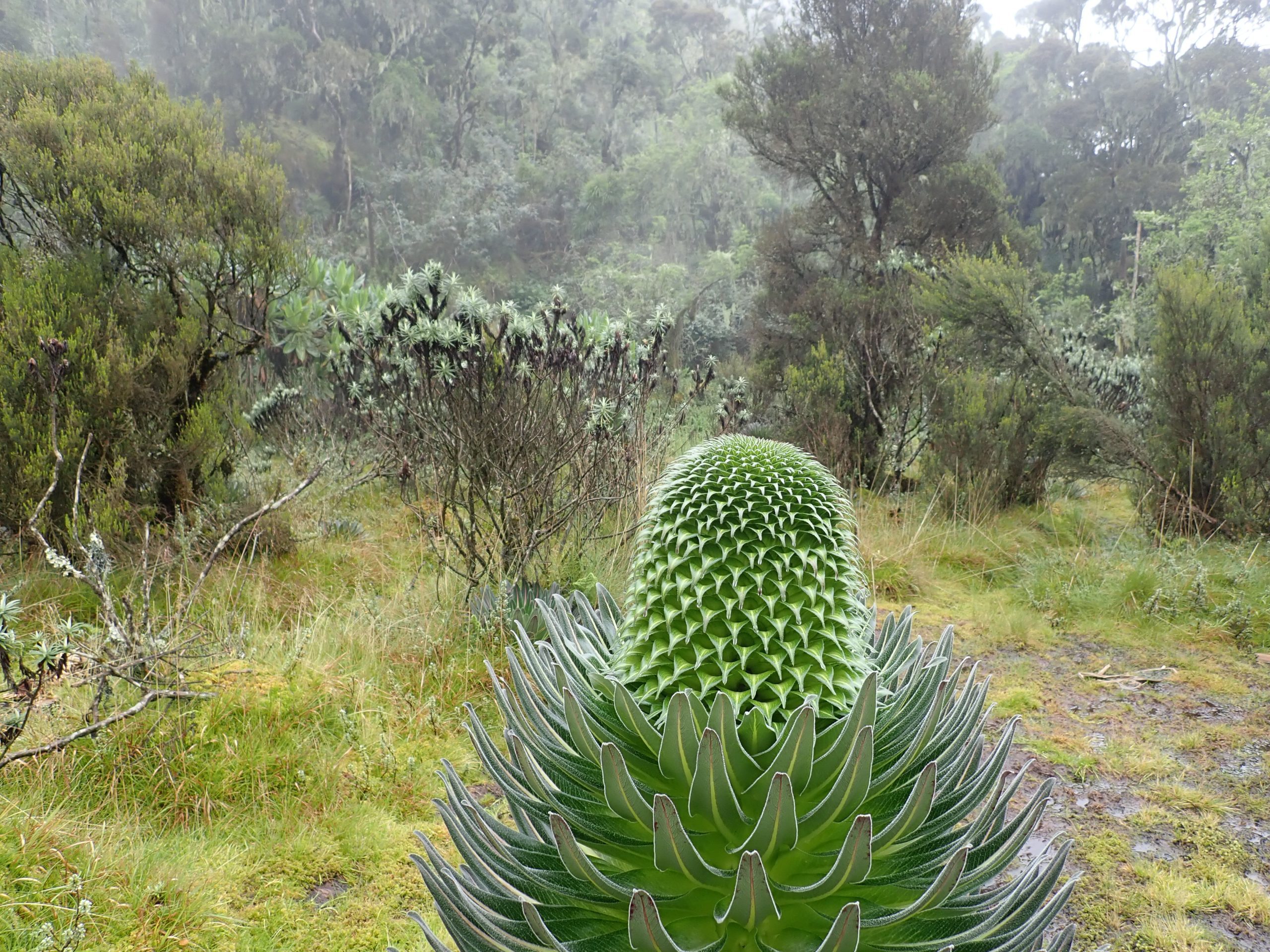
Today marks your entry into the spectacular afro-alpine zone, where the scenery changes dramatically once again. After breakfast, leave Mutinda Camp behind and continue across rolling ridges, open valleys, and high-altitude wetlands that make the Rwenzori Mountains unlike any other mountain range in Africa.
The trail leads through vast alpine bogs filled with giant lobelias, everlasting flowers, moss-covered rocks, and thick tussock grasses. Wooden boardwalks help hikers cross some of the wetter sections, while crystal-clear streams flow down from the surrounding peaks. Every turn reveals breathtaking views of rugged mountain ridges rising above the clouds.
As you cross the beautiful Mutinda Valley and continue towards the Namusangi Valley, you will notice how the vegetation becomes shorter and more adapted to the cooler temperatures. The fresh mountain air and peaceful surroundings create a perfect environment for photography and wildlife observation. Small alpine birds are frequently seen feeding among the giant lobelias, while colorful lichens cover many of the rocks.
Although today’s climb is not the longest, the increase in altitude becomes more noticeable. Walking slowly and drinking plenty of water will help your body continue adjusting to the thinner air.
By afternoon, you arrive at Bugata Camp, beautifully positioned at an elevation of 4,100 meters beneath towering mountain peaks. The camp offers magnificent panoramic views across the surrounding valleys and serves as another important acclimatization stop before the higher mountain sections. As evening approaches, enjoy a warm meal while watching clouds drift between the peaks, creating unforgettable mountain scenery.
- Overnight: Bugata Camp
- Meal Plan: Breakfast, Lunch & Dinner
- Walking Time: 5–6 Hours
- Altitude: 3,588m – 4,100m
Day 5: Trek from Bugata Camp (4,100m) to Hunwick’s Camp (3,874m) via Bamwanjarra Pass (4,450m)
Wake up surrounded by spectacular alpine landscapes before beginning one of the most rewarding hiking days on the Kilembe Trail. Shortly after leaving camp, the trail climbs steadily towards Bamwanjarra Pass (4,450m), one of the highest points reached before the final summit stages.
As you gain elevation, the views become increasingly dramatic. Massive peaks of Mount Stanley, Mount Baker, and Mount Speke dominate the skyline, while deep valleys disappear beneath layers of drifting clouds. The changing weather adds even more beauty to the landscape, with sunlight often breaking through to illuminate the surrounding glaciers and rocky cliffs.
Reaching Bamwanjarra Pass is a memorable achievement. The panoramic views stretch across the heart of the Rwenzori Mountains, allowing hikers to fully appreciate the scale and beauty of this UNESCO World Heritage Site.
From the pass, begin a gradual descent through a stunning valley covered with giant groundsels, giant lobelias, moss carpets, and flowering alpine vegetation. The area is also an excellent location for birdwatching, where lucky hikers may spot colorful mountain species such as the Malachite Sunbird feeding among the flowering plants.
The final section follows a scenic ridge leading towards Hunwick’s Camp, which sits above a deep valley surrounded by rugged mountain peaks. On clear days, distant glaciers sparkle against the dark volcanic rock, providing some of the finest mountain views of the entire expedition.
Upon arrival, your mountain guides conduct a detailed briefing about the coming days, including glacier safety, rope techniques, and summit preparations. This is also an ideal opportunity to rest, hydrate, and prepare both physically and mentally for the climb ahead.
- Overnight: Hunwick’s Camp
- Meal Plan: Breakfast, Lunch & Dinner
- Walking Time: 5–7 Hours
- Altitude: 4,100m – 4,450m – 3,874m
 Day 6: Trek from Hunwick’s Camp (3,874m) to Margherita Camp (4,495m)
After breakfast, continue deeper into the heart of the Rwenzori Mountains as the landscape becomes more rugged and spectacular. Today’s hike brings you closer to Uganda’s highest peak while passing through some of the most beautiful alpine scenery in Africa.
The trail winds across rocky valleys before reaching breathtaking Lake Kitandara, one of the most beautiful glacial lakes in the Rwenzori Mountains. Surrounded by towering cliffs and alpine vegetation, the lake reflects the surrounding peaks during calm weather, creating a perfect setting for photography and a short rest.
Leaving the lake behind, the trail climbs steadily towards Scott Elliott Pass, where magnificent views open across several mountain ranges. From this high vantage point, hikers can admire glaciers, rocky ridges, and distant snow-covered peaks that make the Rwenzori Mountains one of Africa’s most unique climbing destinations.
Continue along a narrow mountain ridge before reaching Margherita Camp, located at 4,495 meters beneath the impressive glaciers of Mount Stanley. This campsite is the final overnight stop before the summit attempt.
Those with enough energy may choose an optional climb towards Mount Baker, a challenging scramble offering outstanding views of Margherita Peak, Mount Stanley, Mount Speke, and surrounding glacier fields. The extra hike also provides useful acclimatization before the summit climb.
The remainder of the afternoon is reserved for resting, organizing climbing equipment, and receiving final instructions from your mountain guides. Since the summit ascent begins before sunrise, an early dinner and plenty of rest are essential. As darkness settles over the mountains, the silence of the alpine wilderness creates an unforgettable atmosphere, while excitement builds for the expedition’s most anticipated and challenging day.
- Overnight: Margherita Camp
- Meal Plan: Breakfast, Lunch & Dinner
- Walking Time: 4–6 Hours
- Altitude: 3,874m – 4,495m
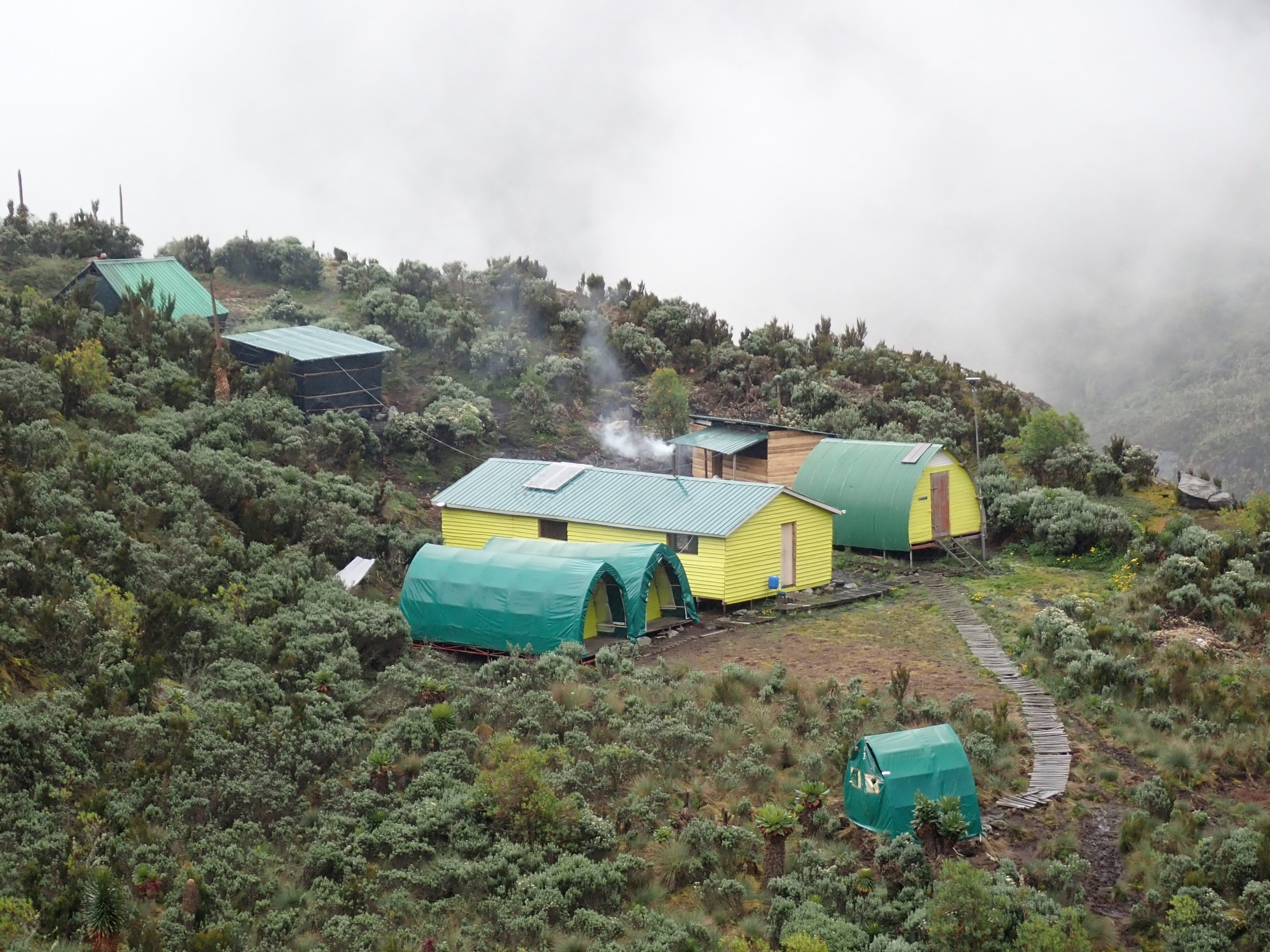 Day 7: Summit Margherita Peak (5,109m) and Descend to Hunwick’s Camp
Today is the highlight of your Rwenzori adventure and the moment you have been preparing for throughout the expedition. The day begins very early, with a wake-up call at around 3:00 a.m. After enjoying a light breakfast and dressing in your warm climbing gear, you leave camp under the stars and begin the final ascent towards Margherita Peak, the highest point in Uganda and the third-highest mountain in Africa.
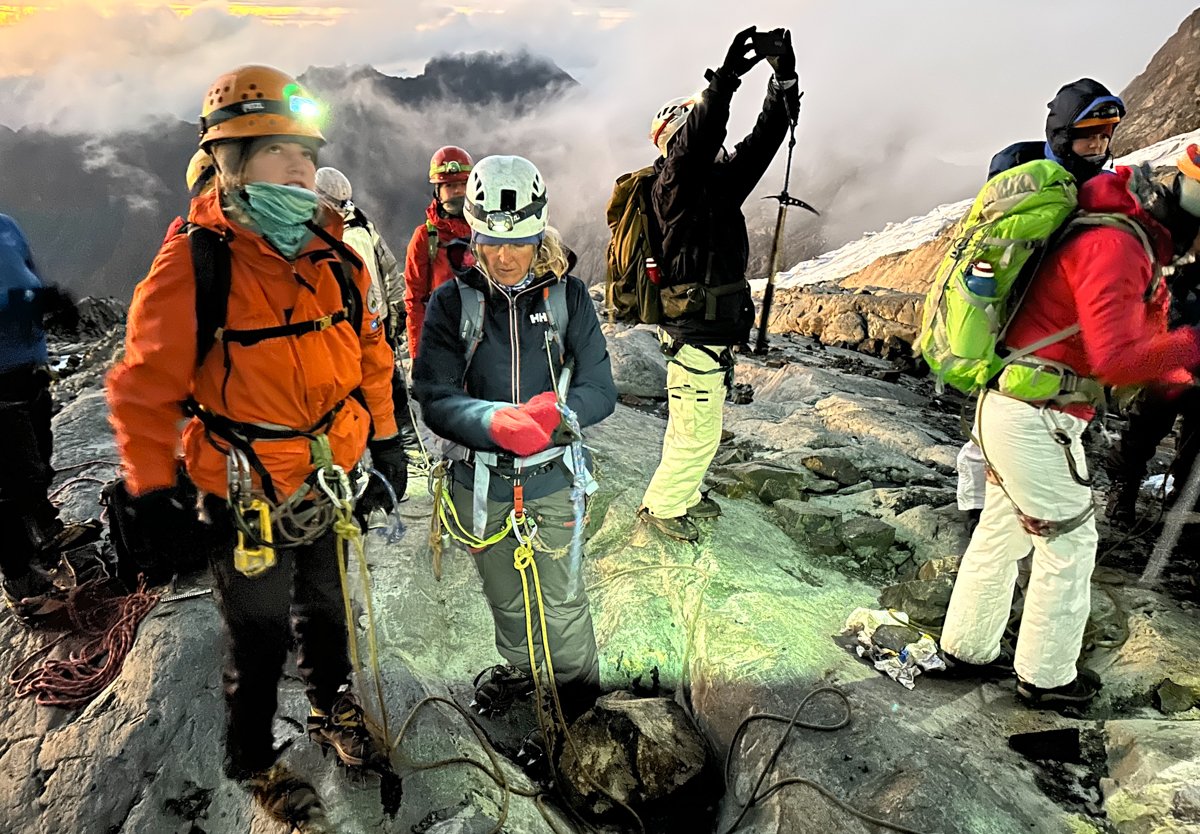
Guided by experienced mountain guides, you carefully make your way across rocky terrain before stepping onto the glaciers that crown Mount Stanley. Here, your climbing equipment, including crampons, ropes, helmets, harnesses, and ice axes, becomes essential. The glacier sections can be steep and icy, requiring concentration, teamwork, and steady progress. Every step brings you closer to one of Africa’s most rewarding mountain summits.
As dawn approaches, the first rays of sunlight illuminate the snow-covered peaks, creating unforgettable views across the Rwenzori Mountains. On clear mornings, you can admire the surrounding peaks of Mount Speke, Mount Baker, the vast valleys below, and even distant landscapes stretching towards the Democratic Republic of Congo.
After several hours of climbing, you finally reach Margherita Peak (5,109m). Standing on Uganda’s highest point is an extraordinary achievement and a reward for your determination throughout the trek. Take time to celebrate, capture memorable photographs, and enjoy the breathtaking scenery before beginning the descent.
The return journey follows the same route back to Margherita Camp, where you take a well-deserved break before continuing downhill to Hunwick’s Camp. Although the descent is physically demanding, losing altitude makes breathing easier, and many hikers feel more comfortable as they descend.
After arriving at camp, relax, enjoy a hot meal, and celebrate your successful summit with your guides and fellow trekkers. The sense of accomplishment after reaching Margherita Peak is one that few adventures can match.
Overnight: Hunwick’s Camp
Meal Plan: Breakfast, Lunch & Dinner
Altitude: 4,495m – 5,109m – 3,874m
Day 8: Trek from Hunwick’s Camp (3,874m) to Kiharo Camp (3,430m) via Oliver’s Pass (4,505m)
After breakfast, continue your mountain journey by exploring another spectacular section of the Kilembe Trail. Although the summit has already been conquered, today’s hike offers some of the finest panoramic views of the entire expedition.
The trail climbs steadily towards McConnell’s Prong before reaching Oliver’s Pass (4,505m), one of the highest mountain passes on the route. From here, hikers enjoy magnificent views of the surrounding peaks, deep glacial valleys, rugged cliffs, and the famous Scott Elliott Pass. The dramatic alpine scenery reminds visitors why the Rwenzori Mountains are often called the “Mountains of the Moon.”
For adventurous hikers with enough energy, an optional ascent to Weismann’s Peak provides an additional challenge and even wider views across the mountain range. From its summit, the glaciers of Mount Stanley, Mount Baker, and Mount Speke create an unforgettable alpine panorama.
After leaving the high pass, begin a gradual descent into the beautiful Nyamwamba Valley. The landscape changes once again as moss-covered rocks, crystal-clear streams, waterfalls, and giant heather forests replace the rocky alpine terrain. The descent also offers excellent opportunities to spot birds, small mammals, and unique mountain vegetation that thrive in this protected ecosystem.
By late afternoon, arrive at Kiharo Camp, peacefully located within a sheltered valley surrounded by cliffs and lush vegetation. The lower altitude provides welcome relief after several days spent high in the mountains, allowing your body to recover while you enjoy another evening in this remarkable wilderness.
- Overnight: Kiharo Camp
- Meal Plan: Breakfast, Lunch & Dinner
- Walking Time: 5–9 Hours
- Altitude: 3,874m – 4,505m – 3,430m
Day 9: Descend from Kiharo Camp (3,430m) to Kilembe Base Camp (1,450m) and Transfer to Bwindi Impenetrable National Park
Enjoy your final breakfast in the Rwenzori Mountains before beginning the last descent through one of Uganda’s most beautiful mountain forests. The trail follows the Nyamwamba Valley, where flowing rivers, dense vegetation, waterfalls, and towering trees create a peaceful ending to your mountain adventure.
As you descend, the warmer temperatures and increasing forest cover signal your return to the lower elevations. Along the way, keep an eye out for colorful birdlife, butterflies, and small forest mammals that inhabit the lower slopes of the Rwenzori Mountains. Every section of the trail offers a different perspective of the landscapes you have explored over the past several days.
The route passes Forest View Camp, an ideal location to enjoy lunch before completing the final section back to the Trekker’s Hostel. Reaching the trailhead marks the successful completion of your unforgettable expedition to Margherita Peak.
After meeting your driver-guide, begin the scenic drive to Bwindi Impenetrable National Park, another UNESCO World Heritage Site and home to nearly half of the world’s remaining mountain gorillas. The journey passes through beautiful countryside filled with rolling hills, tea plantations, banana gardens, and traditional villages, giving you another opportunity to appreciate Uganda’s diverse landscapes.
Arrive at your lodge in the evening, where you can relax, enjoy dinner, and prepare for the next day’s incredible gorilla trekking experience.
Accommodation Options
- Agandi Lodge or similar
- Gorilla mist camp or similar
Meal Plan: Full Board
Day 10: Gorilla Trekking in Bwindi Impenetrable National Park
Today offers one of Africa’s greatest wildlife experiences. After an early breakfast, transfer to the nearby park headquarters for registration and a detailed briefing by the Uganda Wildlife Authority rangers. During the briefing, you will learn about gorilla behavior, trekking guidelines, safety procedures, and conservation efforts that continue to protect these remarkable primates.
Following group allocation, your experienced ranger guide leads you into the dense rainforest in search of your assigned gorilla family. Every trek is different, making each experience unique. Depending on the gorillas’ location, the hike may last from a few hours to most of the morning as you navigate forest trails, cross small streams, and climb gentle hills beneath the thick jungle canopy.
Along the way, you may encounter colorful butterflies, rare birds, playful monkeys, and a variety of indigenous plant species that make Bwindi one of Africa’s richest forests.
The highlight of the day comes when you finally meet the mountain gorillas in their natural habitat. Watching a silverback carefully protect his family, mothers caring for their young, and playful juveniles interacting with one another is an unforgettable wildlife encounter. You will spend one magical hour observing these endangered primates while learning about their fascinating social behavior and close relationship with humans.
After the trek, return to the lodge for a well-deserved rest. Spend the evening reflecting on the incredible memories created during both the Rwenzori mountain expedition and your gorilla trekking adventure.
Accommodation Options
- Agandi Lodge or similar
- Gorilla mist camp or similar
Meal Plan: Full Board
Day 11: Transfer to Entebbe International Airport
Enjoy a relaxed breakfast before checking out of your lodge and beginning your return journey to Entebbe International Airport.
The drive takes you through western Uganda’s beautiful countryside, passing lush farmlands, rolling hills, and vibrant local communities. A lunch stop is planned at the renowned Igongo Cultural Centre near Mbarara, where you can enjoy delicious local and international cuisine while learning more about the culture and traditions of western Uganda.
The journey continues towards the Uganda Equator, one of the country’s most popular landmarks. Here, you will have time to take memorable photographs, shop for handcrafted souvenirs, and stretch your legs before continuing to Entebbe.
Arrive at Entebbe International Airport in time for your departure flight, bringing your remarkable Ugandan adventure to a close. From conquering Margherita Peak to standing face-to-face with endangered mountain gorillas, this journey combines two of East Africa’s most extraordinary experiences into one unforgettable expedition.
Safari Highlight: End of Safari
Price Includes
- Park entrance fees
- Margherita Peak climbing permit
- Gorilla trekking permit
- Ice climbing equipment like ice axe, harness, helmet, and crampons
- Rubber boots
- Airport transfers
- Transportation in a 4×4 safari vehicle
- English-speaking driver-guide
- Mountain and lodge accommodation
- All meals as per itinerary
- Professional mountain guides
- Rangers
- Porters on the mountain
- Chefs on the mountain
Price Excludes
- International flights
- Uganda visa
- Travel insurance
- Personal trekking gear
- Warm and waterproof clothing
- Tips and gratuities
- Drinks and laundry
- Personal expenses
Uganda Visa
All visitors require a valid Uganda Tourist Visa, which should be obtained online before travel through the official Uganda Immigration portal.
Yellow Fever Vaccination
A valid Yellow Fever Vaccination Certificate is mandatory for entry into Uganda. Travelers are advised to carry the original vaccination card, as it may be requested upon arrival at Entebbe International Airport.
Rwenzori Mountains Packing List
Technical Climbing Equipment (Provided)
The following technical climbing equipment is provided as part of the trekking package and will be issued before the Margherita Peak summit attempt. Clients do not need to purchase these items unless they prefer to bring their own certified equipment.
Climbing Rope
A climbing rope is an essential safety item used during the technical sections of the Margherita Peak climb. It provides security when crossing exposed areas, steep rock sections, and glacier terrain. Professional mountain guides use the rope to protect climbers, improve confidence, and reduce risks while navigating challenging sections of the summit route.
Crampons
Crampons are metal spikes attached to climbing boots to provide strong grip on ice and snow. They are especially important during the final ascent of Margherita Peak, where climbers cross glacier sections and frozen slopes. Crampons help prevent slipping, improve stability, and allow safe movement across icy terrain during the summit climb.
Ice Axe
An ice axe is used for balance, support, and safety when walking on glacier and snow-covered sections. It helps climbers maintain stability on steep slopes and can also be used as a safety tool in case of a slip. Guides provide instructions on how to properly use the ice axe before the summit attempt.
Climbing Harness
A climbing harness connects each climber securely to the safety rope during technical sections of the ascent. It helps distribute body weight evenly and provides protection when crossing glaciers, steep slopes, and exposed areas. A properly fitted harness is an important safety requirement for reaching Margherita Peak and is provided for every climber.
Climbing Helmet
A climbing helmet protects the head from possible impacts caused by falling rocks, ice, or accidental knocks during the climb. It is particularly important on rocky and glacier sections where extra protection is required. Each climber is provided with a certified helmet to improve safety during the technical summit ascent.
Rubber Boots
Rubber boots are provided for the lower sections of the Rwenzori trek, where trails can be extremely muddy, wet, and swampy. They are especially useful in rainforest and bog areas where waterproof footwear is needed. At higher elevations, where the terrain becomes rocky and technical, climbers normally change into their own sturdy hiking boots.
Personal Equipment (To Bring)
The following personal items are recommended for every trekker. These items ensure comfort, warmth, and safety throughout the multi-day Rwenzori expedition.
Waterproof Climbing Boots
A strong pair of waterproof climbing boots is one of the most important personal items for the Rwenzori trek. The trail includes muddy forests, slippery rocks, alpine landscapes, and rocky summit sections. Good boots provide ankle support, protect your feet from moisture, and offer reliable grip. They should also be suitable for attaching crampons during the Margherita Peak summit climb.
Waterproof Trekking Trousers
Waterproof trekking trousers are essential because the Rwenzori Mountains receive rainfall throughout the year. They protect your legs from rain, mud, cold winds, and vegetation while allowing comfortable movement during long hiking days. Quick-drying materials are recommended because they remain comfortable even after trekking through wet conditions.
Thermal Base Layers
Temperatures become much colder above 3,500 metres, especially during nights and the summit climb. Thermal base layers help retain body heat while allowing moisture to escape, keeping you warm without feeling uncomfortable. They are worn underneath hiking clothes and provide important insulation during cold conditions near Margherita Peak.
Fleece Jacket or Warm Sweater
A fleece jacket or warm sweater provides additional insulation during the trek. Mountain weather can change quickly, and temperatures may drop suddenly when clouds cover the peaks. This layer is useful when resting at camps, eating meals, or preparing for early morning summit departures.
Waterproof Jacket and Rain Trousers
Rain can occur at any time in the Rwenzori Mountains. A good waterproof jacket and rain trousers protect you from heavy showers, wind, and cold temperatures. Staying dry is important because wet clothing can quickly lead to discomfort and loss of body warmth during a long mountain expedition.
Warm Gloves
Warm waterproof gloves protect your hands from freezing temperatures, rain, and strong winds. They are especially useful during the summit climb when temperatures can fall below freezing. Gloves also improve grip when using trekking poles, climbing equipment, or handling the ice axe during glacier sections.
Warm Hat
A fleece or wool hat helps prevent heat loss from your head during cold nights and early morning summit climbs. Higher elevations around Margherita Peak can experience freezing temperatures, and a warm hat provides essential protection from cold winds and extreme mountain conditions.
Sun Hat
Although the Rwenzori Mountains are known for frequent rainfall, the equatorial sun can be very strong when the skies clear. A wide-brimmed sun hat protects your face, ears, and neck from direct sunlight, especially when hiking through exposed alpine areas with limited shade.
Headlamp with Extra Batteries
A reliable headlamp is essential because the Margherita Peak summit attempt usually begins before sunrise. It provides hands-free lighting while walking through dark trails, rocky sections, and glacier areas. Extra batteries are important because cold temperatures reduce battery performance much faster than normal conditions.
Backpack
A comfortable waterproof backpack is needed for carrying personal items during each day of trekking. Porters carry the main luggage, but your daypack should hold essentials such as water, snacks, rain gear, warm layers, sunscreen, gloves, and personal items. A backpack with comfortable straps makes long hiking days easier.
Sleeping Bag
A warm sleeping bag is necessary because mountain camps can become very cold, especially at higher elevations. A quality sleeping bag designed for cold temperatures helps your body recover after long trekking days and ensures better rest throughout the expedition.
Trekking Poles
Trekking poles provide extra balance on steep climbs, muddy trails, slippery rocks, and uneven terrain. They reduce pressure on your knees during descents and make walking through challenging sections more comfortable. They are especially helpful in the muddy and boggy areas that are common on the Rwenzori trails.
Wool Hiking Socks
Warm wool hiking socks provide insulation, cushioning, and comfort inside your boots. Unlike cotton socks, wool maintains warmth even when slightly wet. Carrying three to four pairs allows you to change into dry socks regularly and maintain foot comfort throughout the trek.
Camp Shoes or Sandals
After spending many hours wearing heavy trekking boots, lightweight camp shoes or sandals provide relief for your feet. They allow your feet to breathe, improve comfort at camps, and give your hiking boots time to dry before the next trekking day.
Sunglasses
High-altitude sunlight reflecting from snow and glaciers can be very bright. Sunglasses with UV protection protect your eyes from harmful rays and reduce glare during glacier crossings. They also help prevent discomfort caused by prolonged exposure to strong mountain sunlight.
Water Bottles or Hydration System
Proper hydration is important during high-altitude trekking. Carry at least two litres of water daily using reusable bottles or a hydration bladder. Regular drinking helps maintain energy levels, reduces fatigue, and supports altitude acclimatisation. A small thermos flask is also useful for carrying warm drinks on cold mornings.
Personal First Aid Kit
Every trekker should carry a small personal first aid kit, even though guides have a group medical kit. Include personal medication, painkillers, blister treatment, antiseptic cream, adhesive bandages, and other basic supplies. Having these items available allows quick treatment of minor problems during the trek.
Toiletries and Personal Hygiene Items
Carry lightweight personal hygiene items such as a toothbrush, toothpaste, biodegradable soap, small towel, wet wipes, and hand sanitizer. Maintaining hygiene during a multi-day trek improves comfort and helps prevent illness. Wet wipes are especially useful where shower facilities are limited.
Camera and Power Bank
The Rwenzori Mountains offer incredible landscapes, glaciers, valleys, and unique vegetation worth capturing. Bring a camera or smartphone together with extra batteries, memory cards, and a powerful power bank. Since there is no electricity in mountain camps, charging opportunities are very limited.
Bwindi Gorilla Trekking Packing List
After conquering the Rwenzori Mountains, your adventure continues in Bwindi Impenetrable National Park, home to the endangered mountain gorilla. Gorilla trekking takes place in a dense tropical rainforest where the terrain is steep, muddy, and often wet. Packing the right clothing and equipment will ensure a comfortable and enjoyable experience.
Clothing
Wear:
- Waterproof hiking boots
- Long hiking trousers
- Long-sleeved shirt
- Lightweight rain jacket
- Wide-brimmed hat
- Thick hiking socks
- Gardening gloves or trekking gloves
Neutral colours such as khaki, green, olive, and brown are highly recommended because they blend well with the forest environment.
Avoid bright colours and blue or black clothing, as these tend to attract insects.
Daypack Essentials
Carry a small backpack containing:
- Drinking water
- Packed lunch or snacks
- Insect repellent
- Sunscreen
- Camera (without flash)
- Face mask
- Personal medication
- Rain jacket
What Not to Wear
Avoid:
- Shorts
- Bright-coloured clothing
- Fashion sneakers
- Tight jeans
- High-heeled shoes
- Heavy backpacks
Proper hiking boots and comfortable outdoor clothing will make the trek much easier.